2026 Workplace Design Trends You Cannot Ignore

Workplace design in 2026 is driven by a core question: what draws people into the office, and what should that time accomplish? Employees and employers want spaces that earn the commute and places that build relationships, support deep focus, and reinforce culture. This shift means treating every square foot as a working asset and avoiding amenities that don’t meaningfully improve the experience.
Design conversations have evolved from “How many workstations can fit on this floor?” to “What kind of experience do people need across a full day?” Integrated design teams now spend more time in workshops and listening sessions before laying out a space plan, ensuring decisions reflect how people work rather than simply where they sit.
Across these discussions, several themes repeatedly rise to the surface: agile decision-making, authentic human-centered experiences, intelligent environments, and sustainable, equitable workplaces.
Navigating Complexity with Agility
Leaders are navigating a maze of pressures, from hybrid policies and real estate costs to rising talent expectations and the growing role of AI in daily work. That complexity can stall progress unless teams gain clarity early.
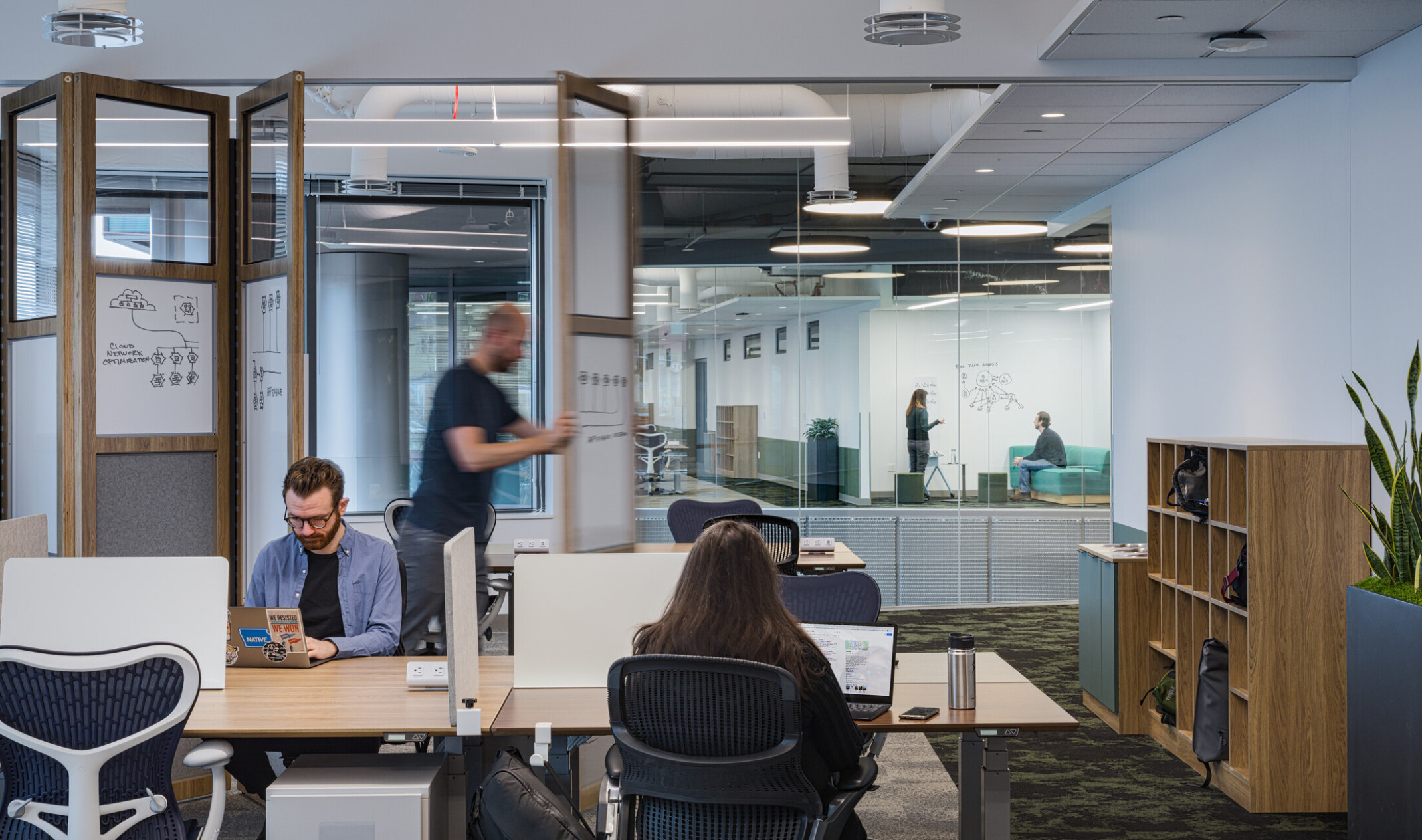
In response, integrated design teams are shaping customized engagement to surface what matters most before any layout is drawn or material selected. While we have foundational exercises to begin the process, the real value comes from crafting questions specific to each client’s needs or diving into new research to address emerging challenges. These sessions bring department stakeholders, facilities, and employees into a shared conversation, clarifying not just how the workplace should reflect culture, but what people need to do their best work.
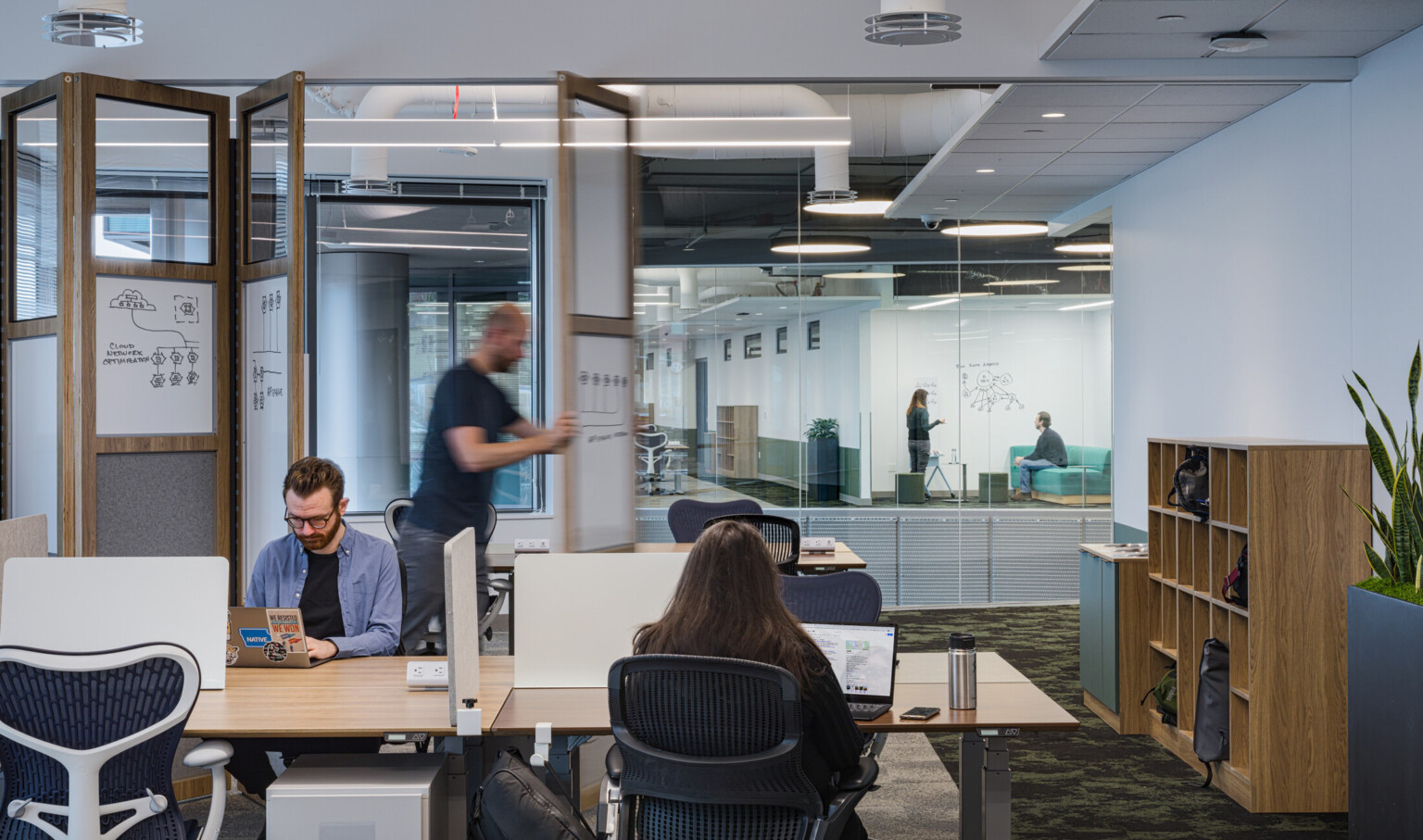
For one client, we paired their robust internal research with our design research on work modes, materiality, and wellbeing. The result: a series of prototype spaces featuring quiet pods for focus work, “prompt rooms” to support AI-driven tasks, and larger, casual collaboration spaces for team problem-solving. Through modular furniture and, in some cases, demountable walls, the prototypes can be quickly adjusted or reinvented if a space type underperforms. By testing these environments with AI-focused developers and tracking how each setting influences productivity, connection, and wellbeing, the campus functions as a living lab.
The trend for 2026 favors data-informed action, including smaller pilots, faster feedback loops, and intentional ideation of new ways of working that transform each project into a cycle of learning and refinement.
Authentic, Human-Centered Environments
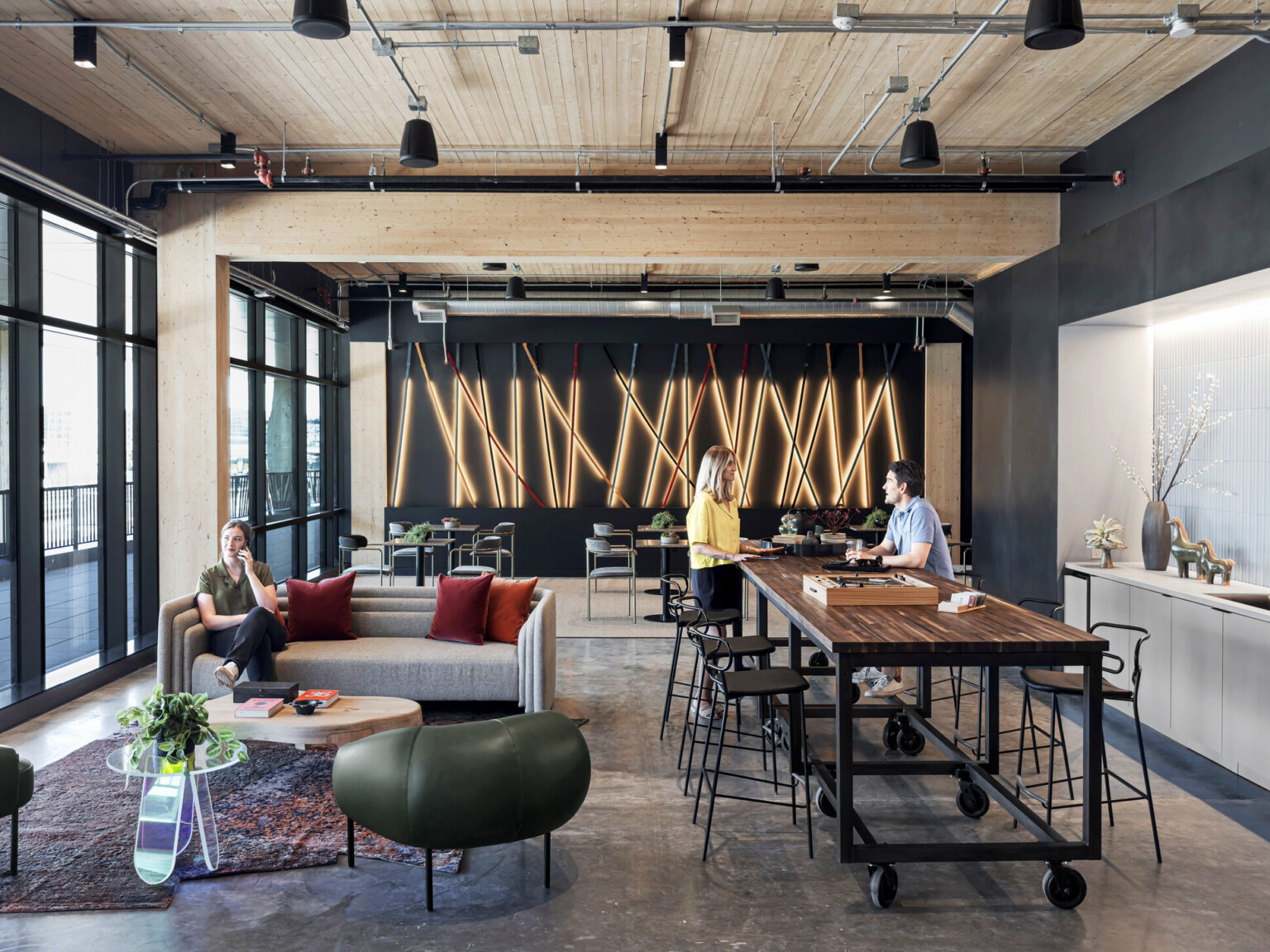
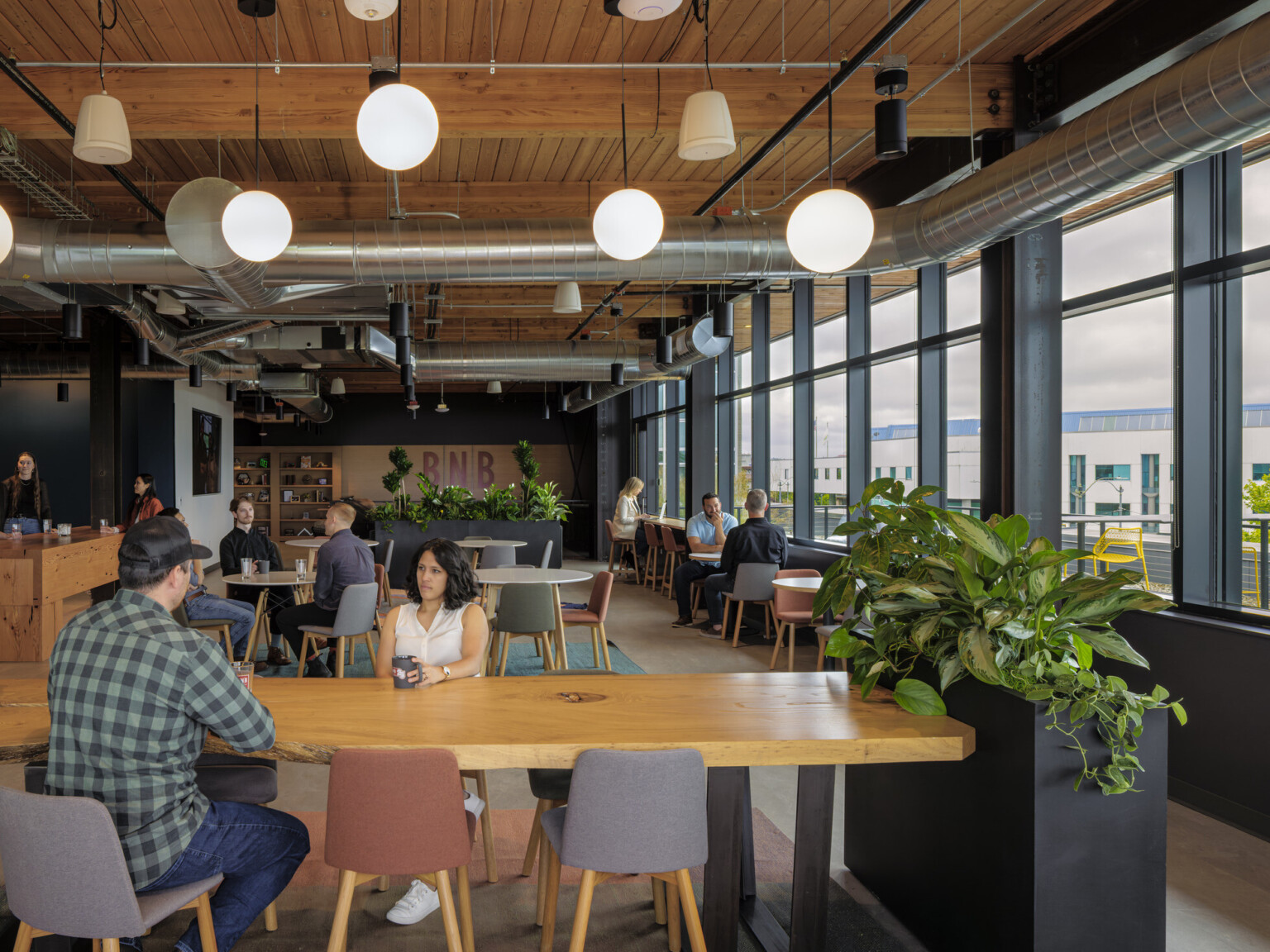
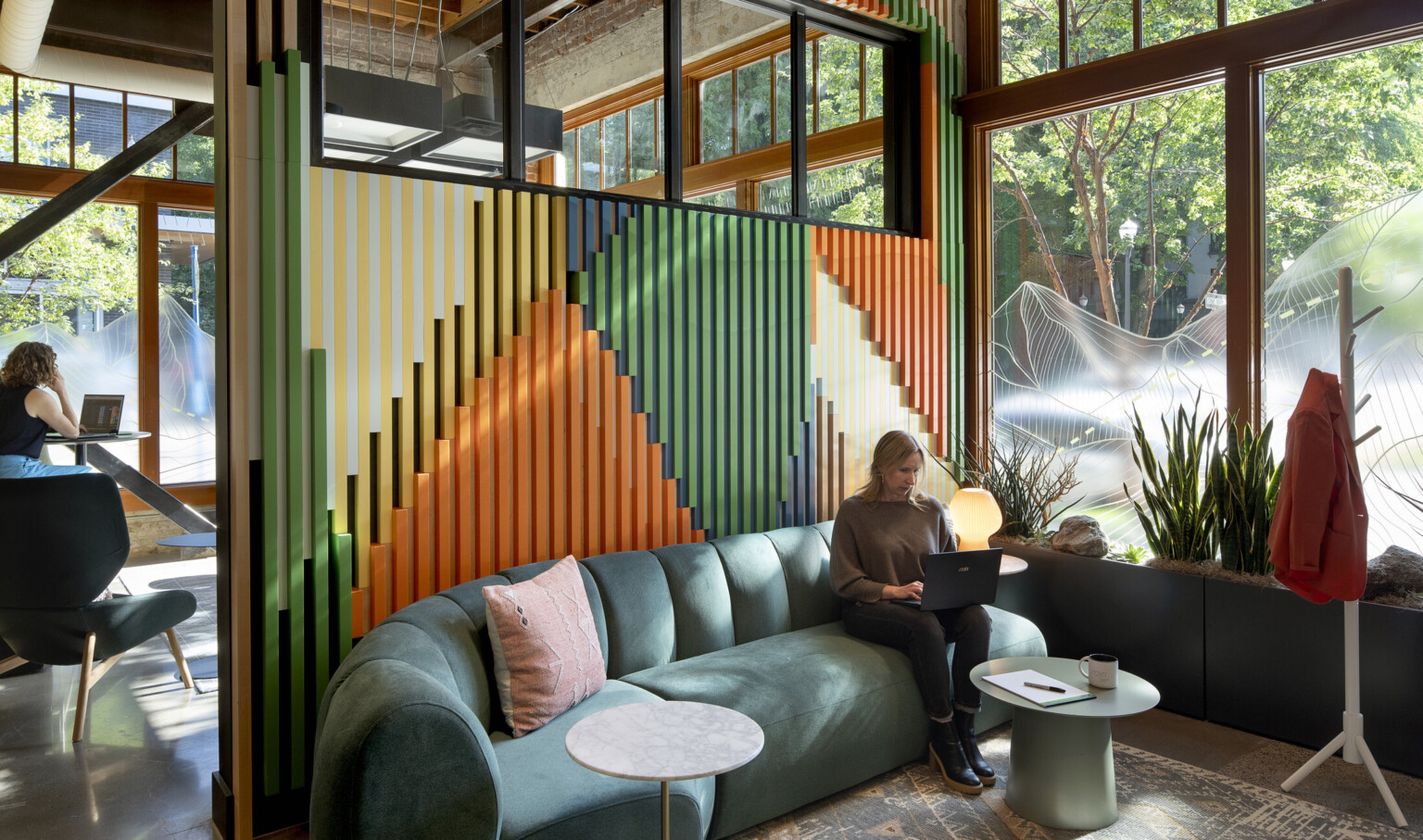
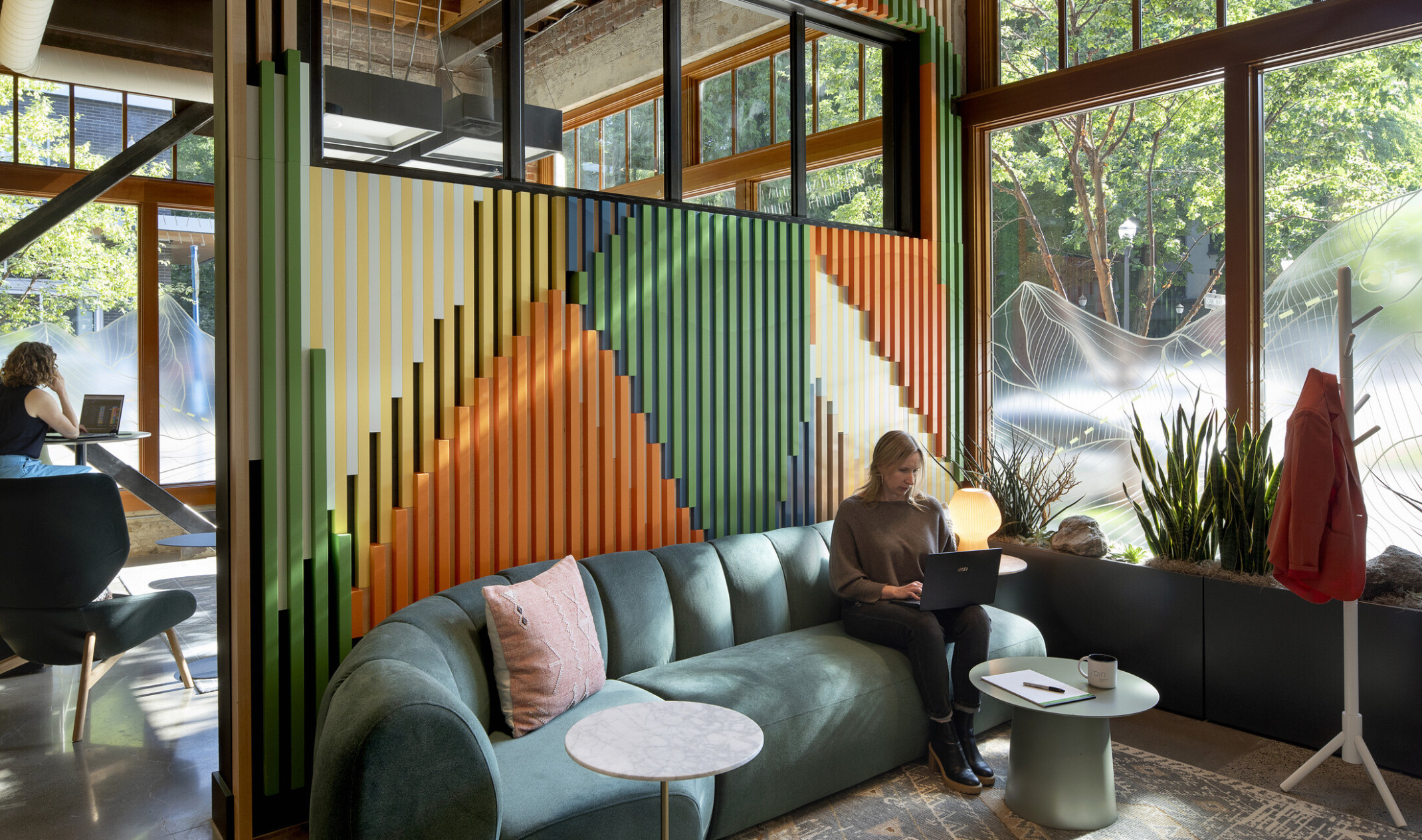
The next wave of workplace design is quieter, more grounded, and genuinely human. People are seeking spaces that feel local and lasting; spaces with character, comfort, and purpose, not themed concepts that look impressive in photos but lose relevance over time. These are spaces designed around how people work, move, and recharge.
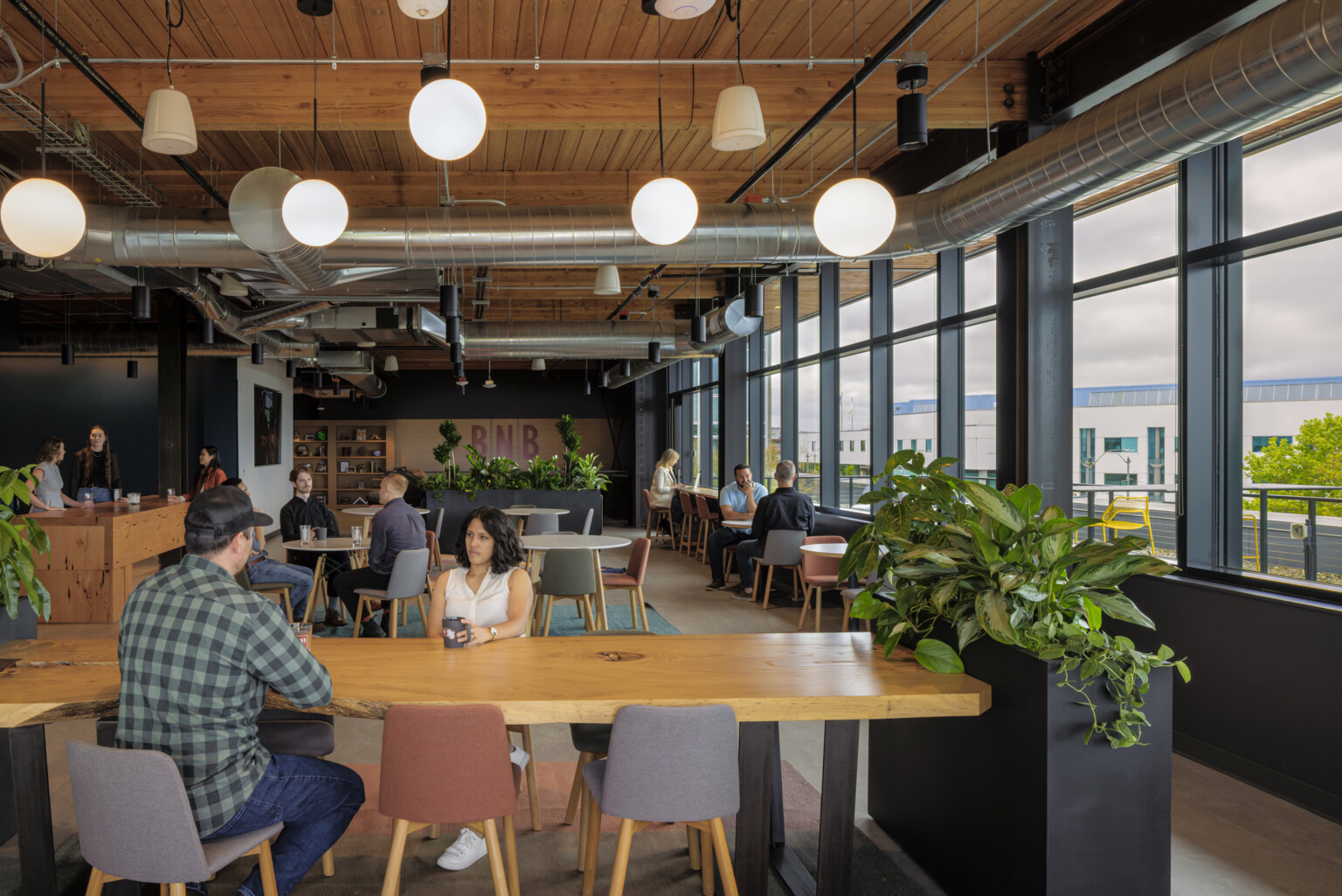
Materiality becomes the storyteller in this shift. Clients are gravitating toward warm woods, local art, and natural textures, supported by research showing that biophilic integration can boost wellbeing by roughly 15%, lift productivity by 6%, and spark up to 15% more creativity. Soft curves, muted palettes, and tactile finishes reinforce a sense of ease and familiarity.
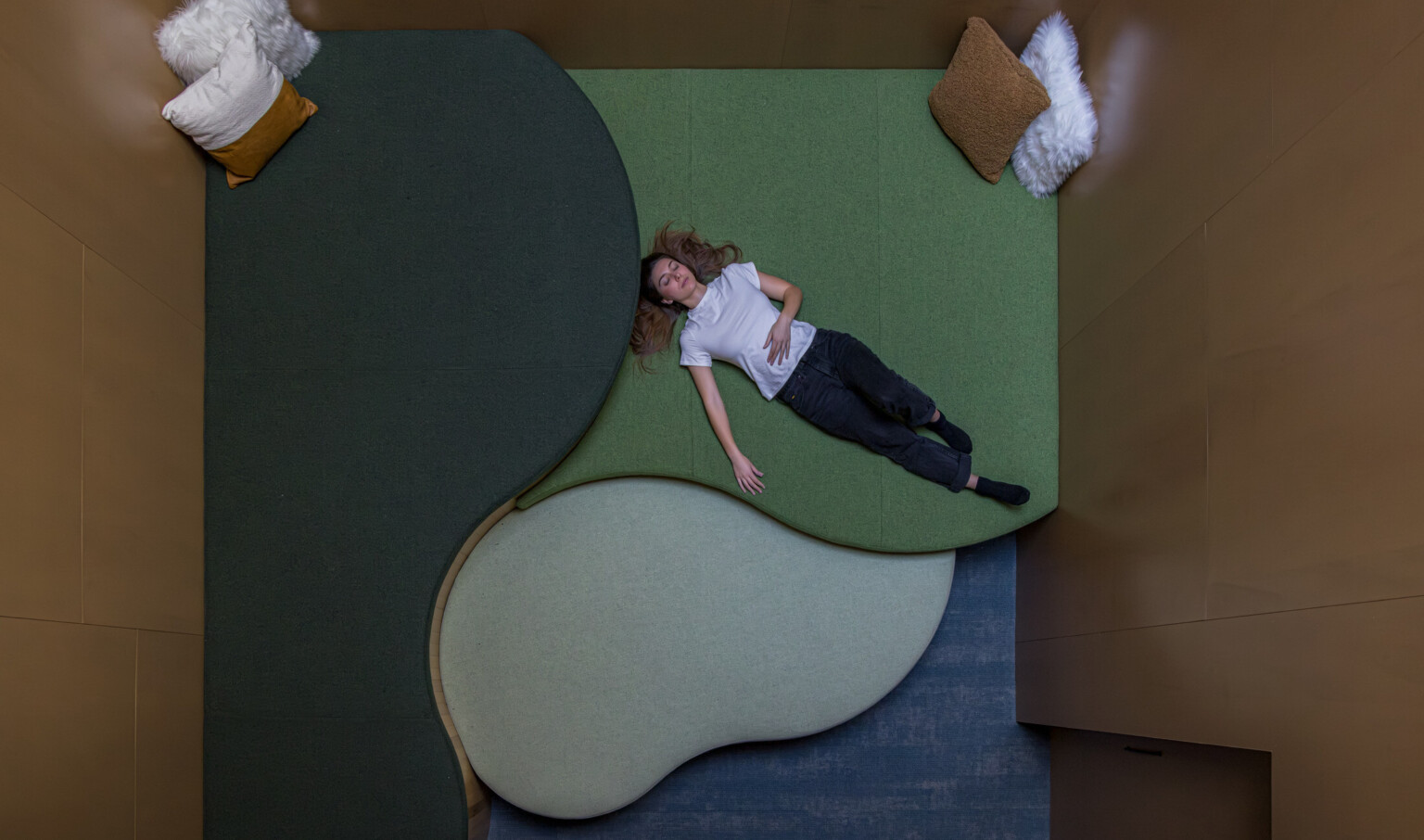
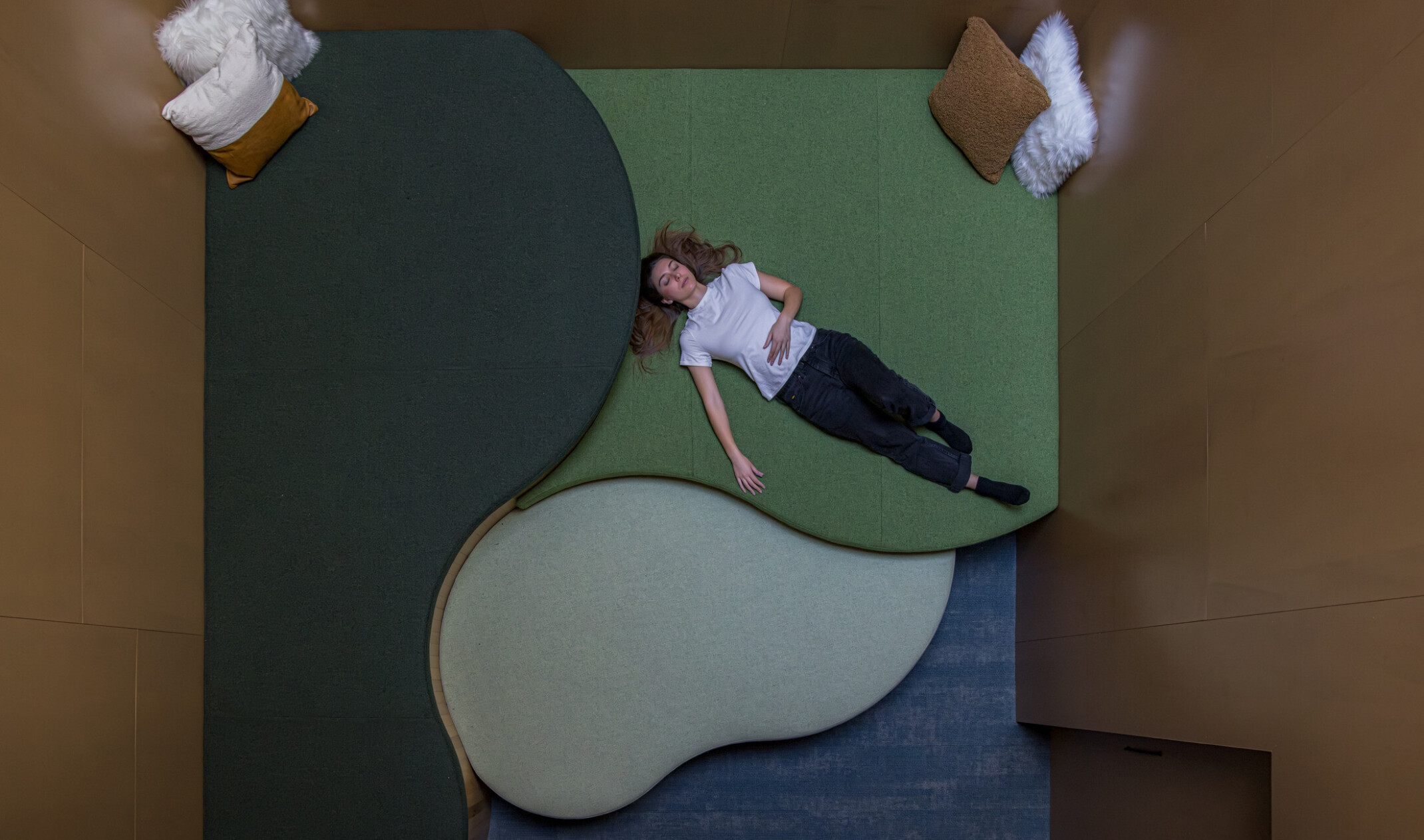
Within that calmer canvas, “escape rooms” are emerging. These tech-light spaces give employees a chance to step away from constant inputs, whether to regroup after a challenging moment, find uninterrupted focus, or simply breathe. Coupled with everyday conveniences and wellness-driven details, they make the workday feel more manageable, supportive, and authentically human.
AI in the Workplace: Intelligent Environments
AI is advancing rapidly, transforming how we work in ways we’re only beginning to imagine. But what might it do for the spaces themselves? While fully AI-integrated environments remain largely aspirational, the foundation is being laid. Sensor-rich buildings already adjust lighting, airflow, and sound in response to occupancy and environmental conditions, creating stable, comfortable settings for work, collaboration, and focus.
The next evolution is AI acting as an environmental curator, subtly tuning conditions to match how people are using a space. Think of it less as a set of personalized biometric presets and more as a workspace that transitions intelligently: a room may shift into “decompression mode” with softer light, warmer tones, and low-frequency soundscapes, or “deep focus mode” with task lighting, gentle white noise, and minimal visual stimuli. Or imagine walking into a meeting room and the system automatically dials in participants, pulls up your presentation, and ensures audio and video are working, removing small but cumulative frustrations that slow collaboration. Ultimately, AI has the potential to transform the workplace from a static backdrop into a responsive partner in everyday work.
Sustainable, Equitable Design
Sustainability and equity are increasingly part of the planning conversation, but they remain one of several factors shaping workplace design rather than top-line goals. Clients are exploring how design decisions can reduce carbon, support health, and create more equitable experiences across roles and locations.
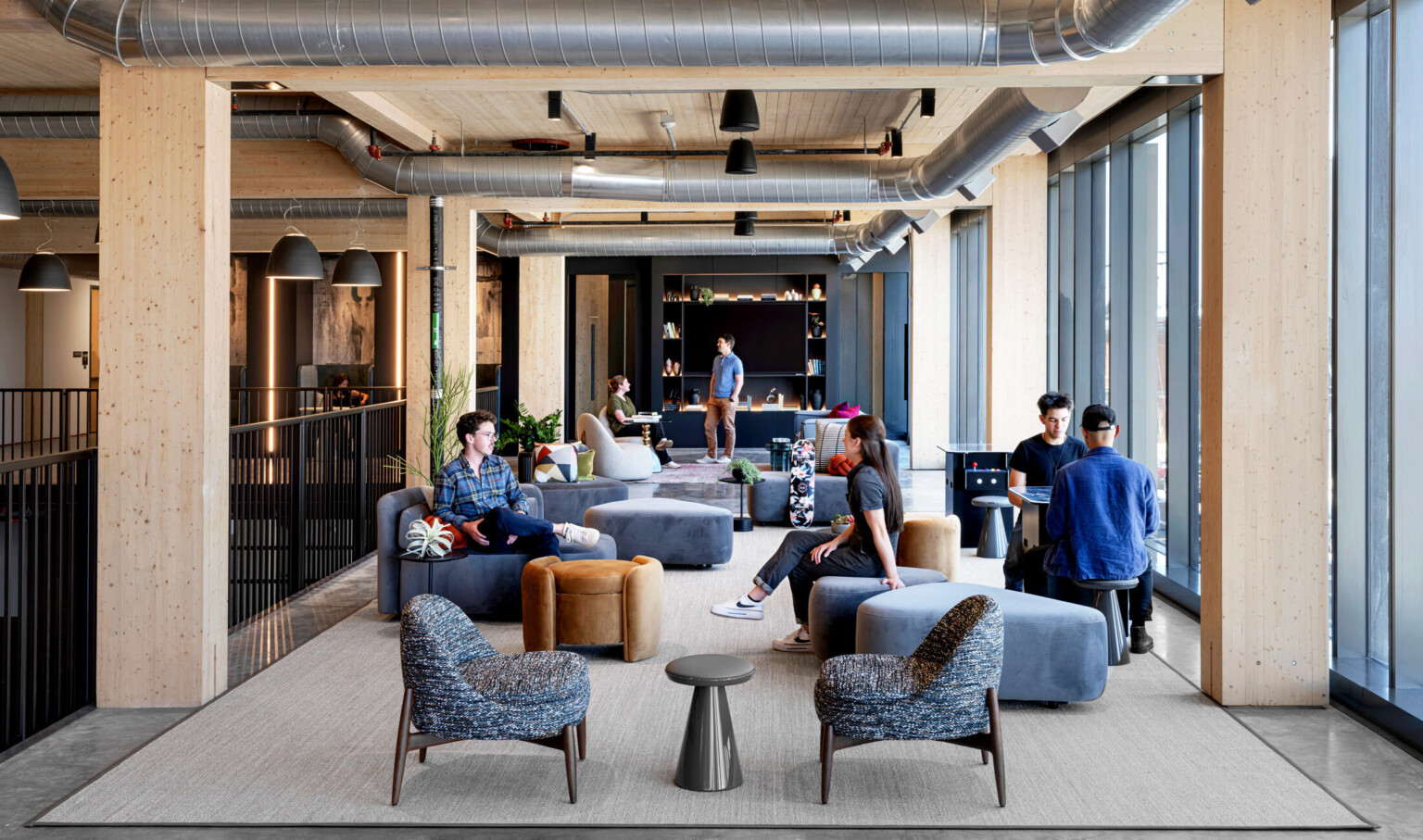
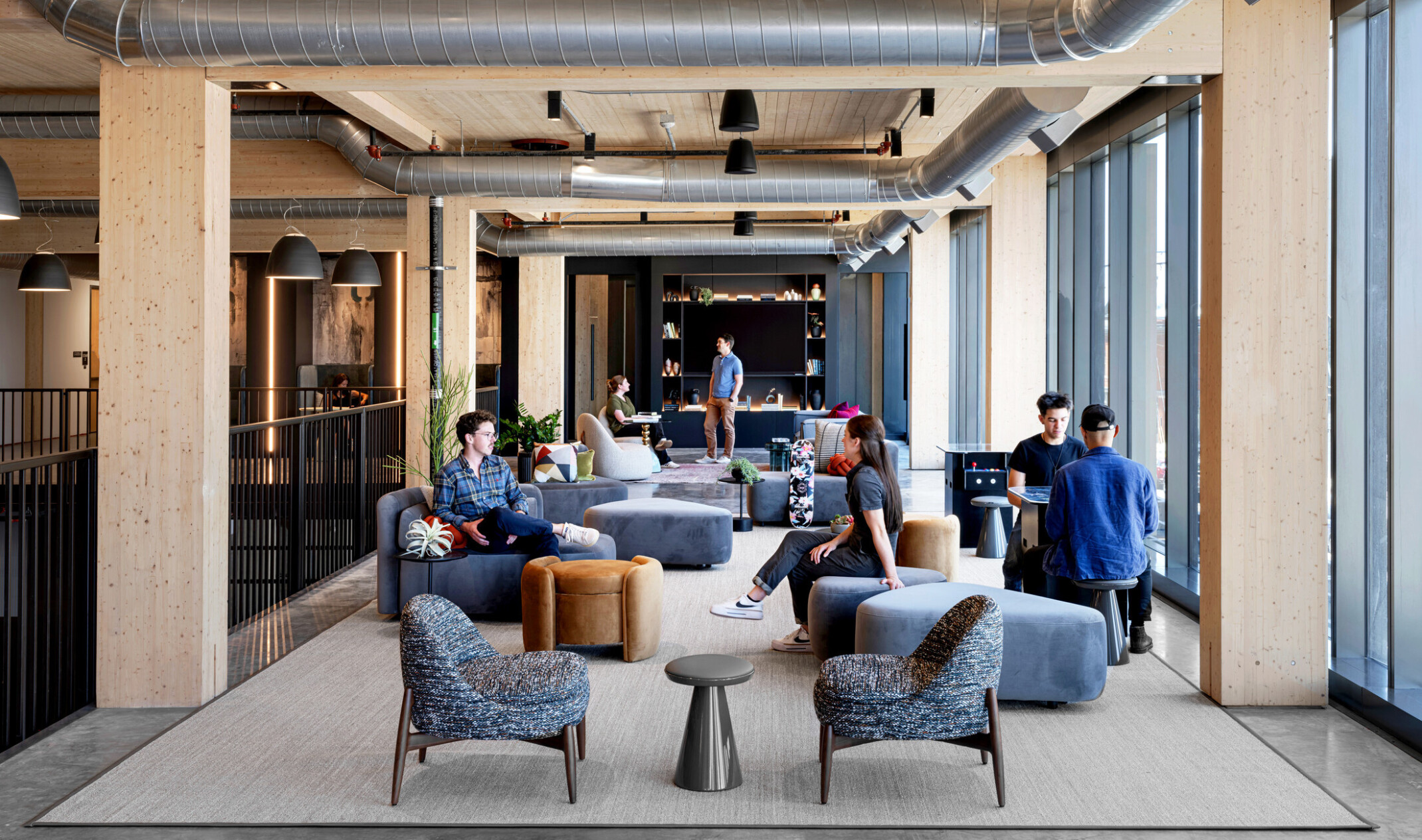
Material choices are an immediate and visible way to support sustainability goals. Mass timber, Red List-free finishes, and biophilic elements create warm, durable environments while significantly reducing the embodied carbon typically associated with concrete structures. Design teams complement these materials with high-performance strategies such as energy modeling, daylight analysis, and ongoing monitoring to maintain performance targets, lower energy and water use, and transform the building into a living dashboard.
At T3 FAT Village in Fort Lauderdale, a 180,000-SF mass timber superstructure currently under construction demonstrates how a structural system can materially advance sustainability. By replacing carbon-intensive materials with sustainability sourced wood, the project reduces embodied carbon while providing tenants the benefits of exposed wood interiors, rich amenities, and a high-performance building experience connected to wellness and comfort. Studies show that replacing concrete with mass timber can reduce the embodied carbon of a building’s structure by 20% or more, depending on the scale of substitution.
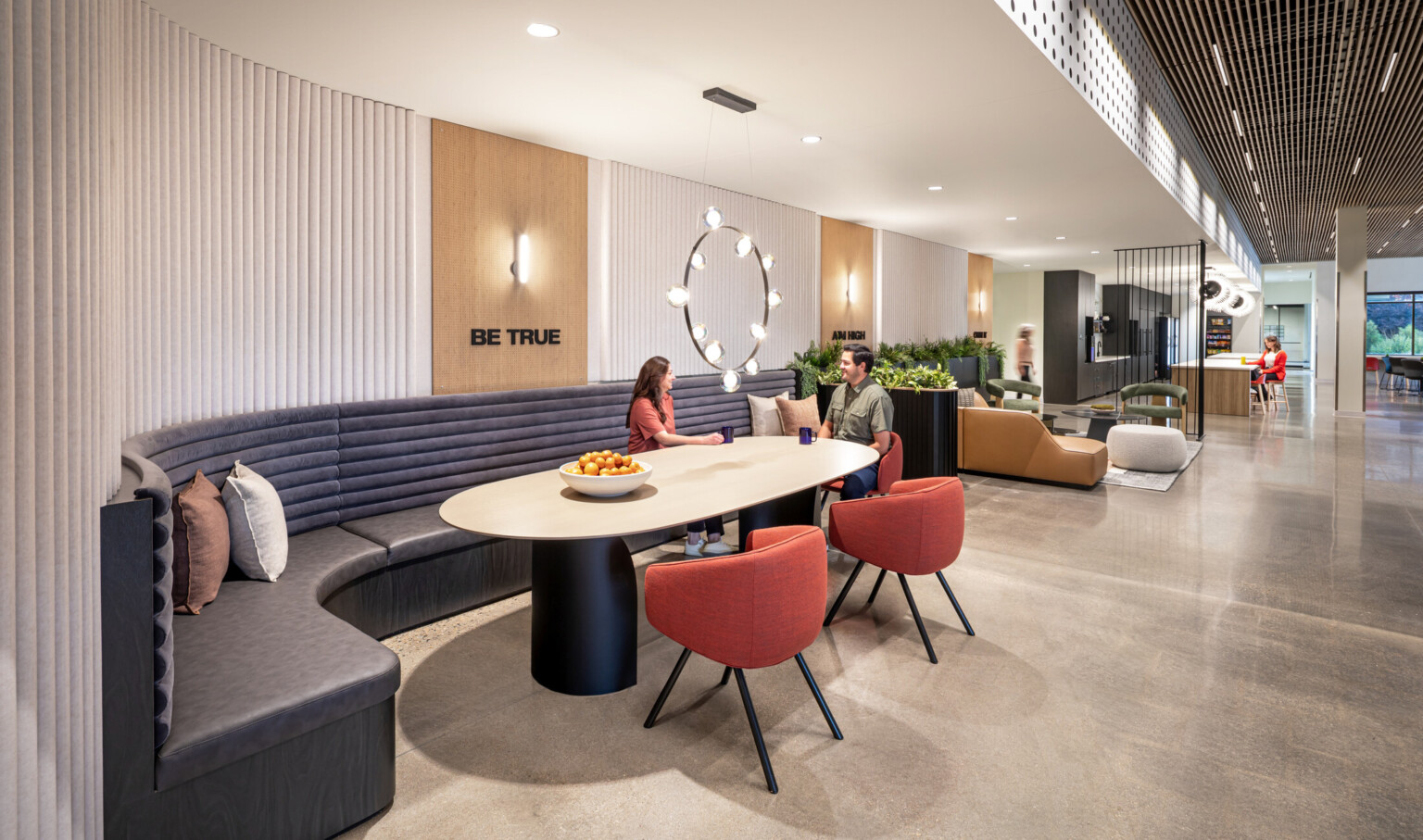
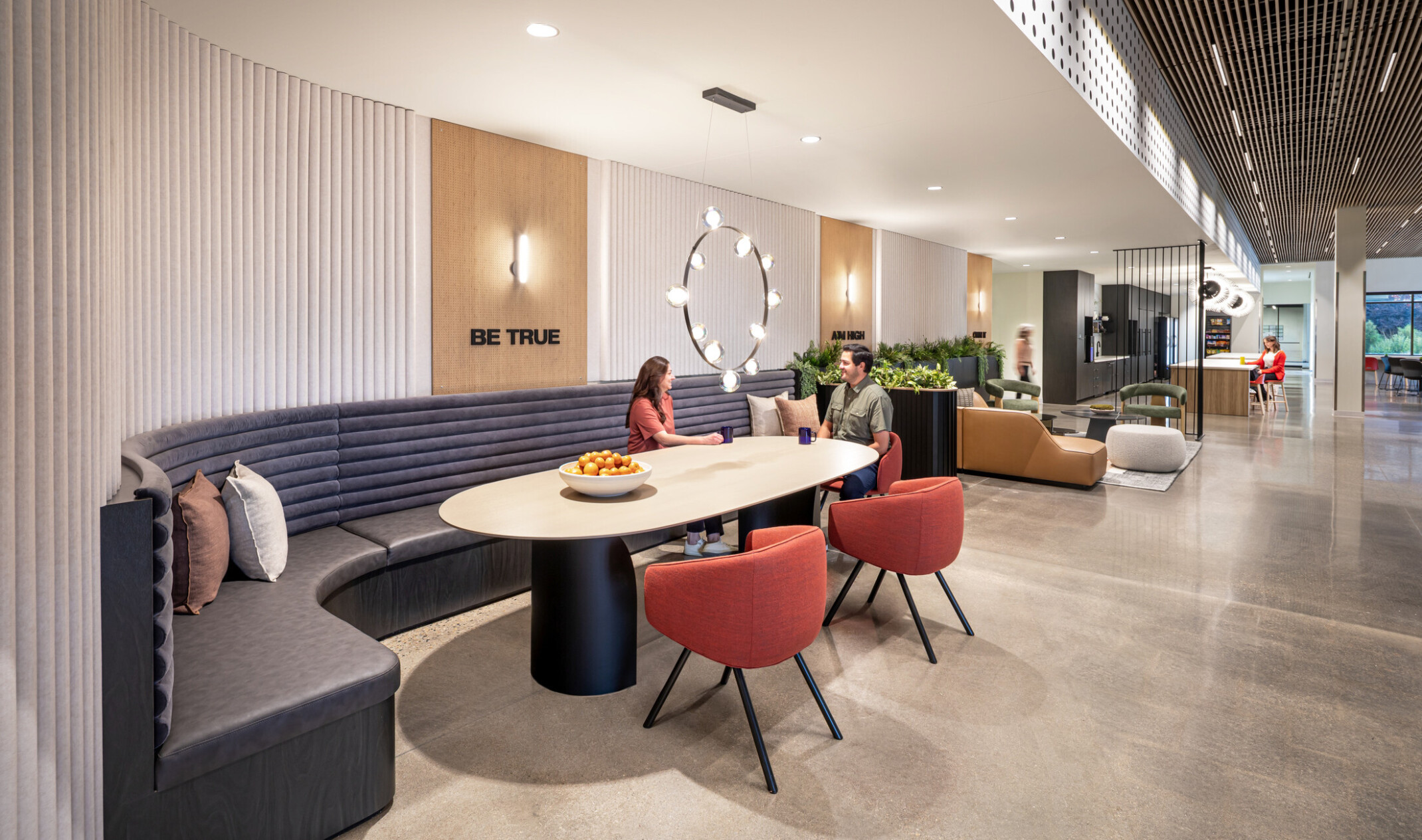
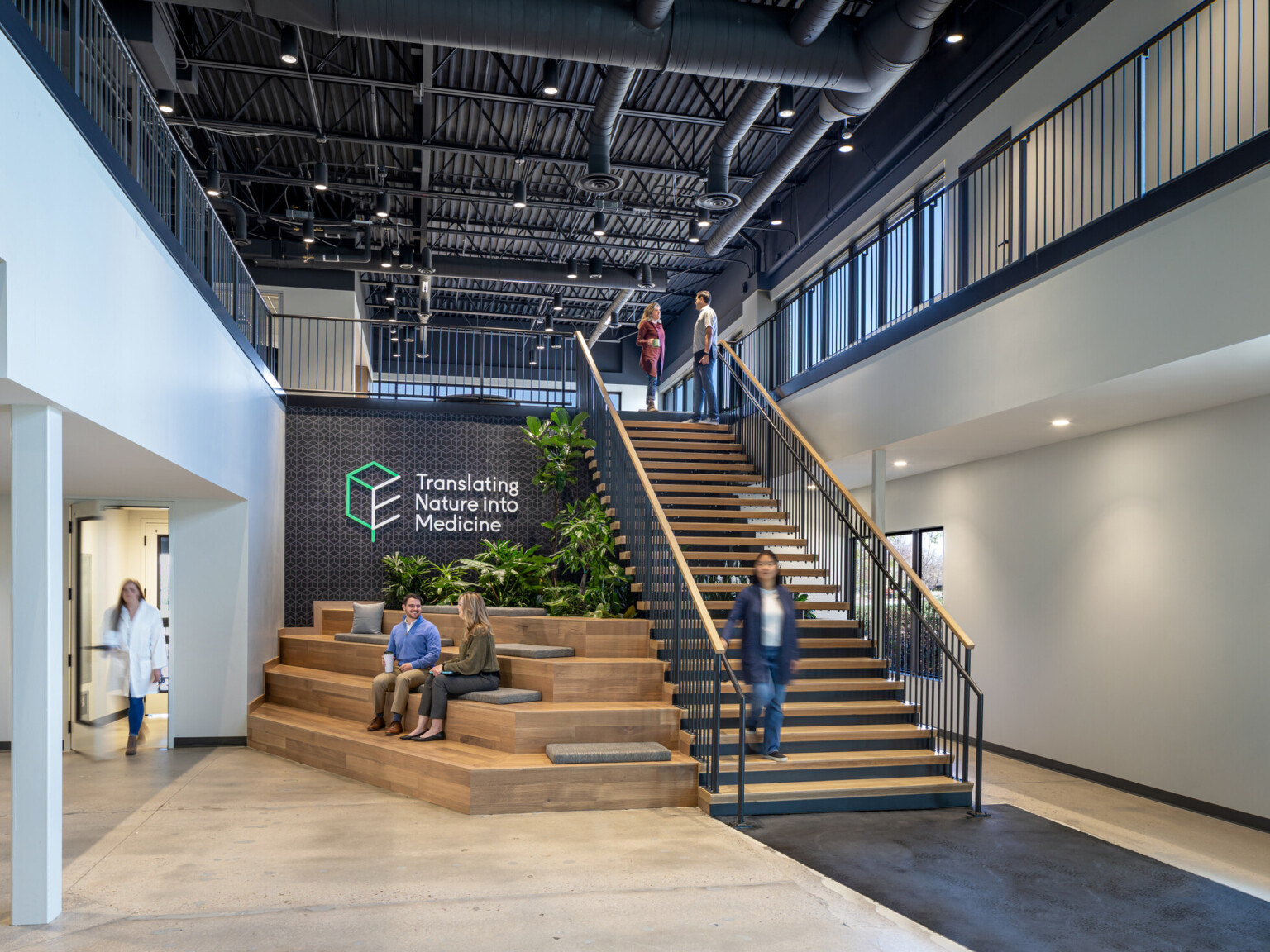
One way equity is taking shape is through the intentional design of shared spaces, where access and amenities are distributed to support every role and function. At Particle Measuring Systems in Colorado, this principle guided the consolidation of manufacturing, engineering, and service teams into a single hub. All staff, from hourly technicians to executives, share a central amenity spine and community room that opens to the outdoors, encouraging collaboration, transparency, and wellness while embedding equity into the everyday workplace experience.
In 2026, resilient workplace strategies will increasingly link sustainability, inclusive planning, and human-centered experience into one cohesive framework rather than treating them as separate checklists.
Taken together, these trends point to a different role for the workplace in 2026. When organizations move quickly yet thoughtfully, invest in authentic experience, integrate AI as a quiet helper, and align decisions with sustainability and equity, the workplace becomes a performance partner rather than a mandate.
Employees gain authentic spaces to connect and do their best work, and leaders gain a living platform that can adapt as work and technology evolve.
Learn more about the projects and approaches shaping the future of workplace design.
Ideas
Recommended Reads