Material Consequences: Maximizing Interiors for Human Potential

Americans spend up to 90% of their time indoors, where pollutant levels often exceed outdoor concentrations by two to five times. The central suspects here are volatile organic compounds, which often evaporate from building materials at room temperature.


Beyond the documented health impairments, research reveals something more striking: cognitive scores associated with indoor environmental quality condition with low concentrations of VOCs were higher than cognitive scores associated with days with indoor environmental quality conditions with high concentrations of VOCs.
Our choice of materials, in other words, has an outsize bearing on our wellbeing. They can either throttle or unleash our potential.
Two Proven Approaches
There are essentially two ways to make our interiors healthier: using better materials and using less of the harmful materials where no alternatives exist.
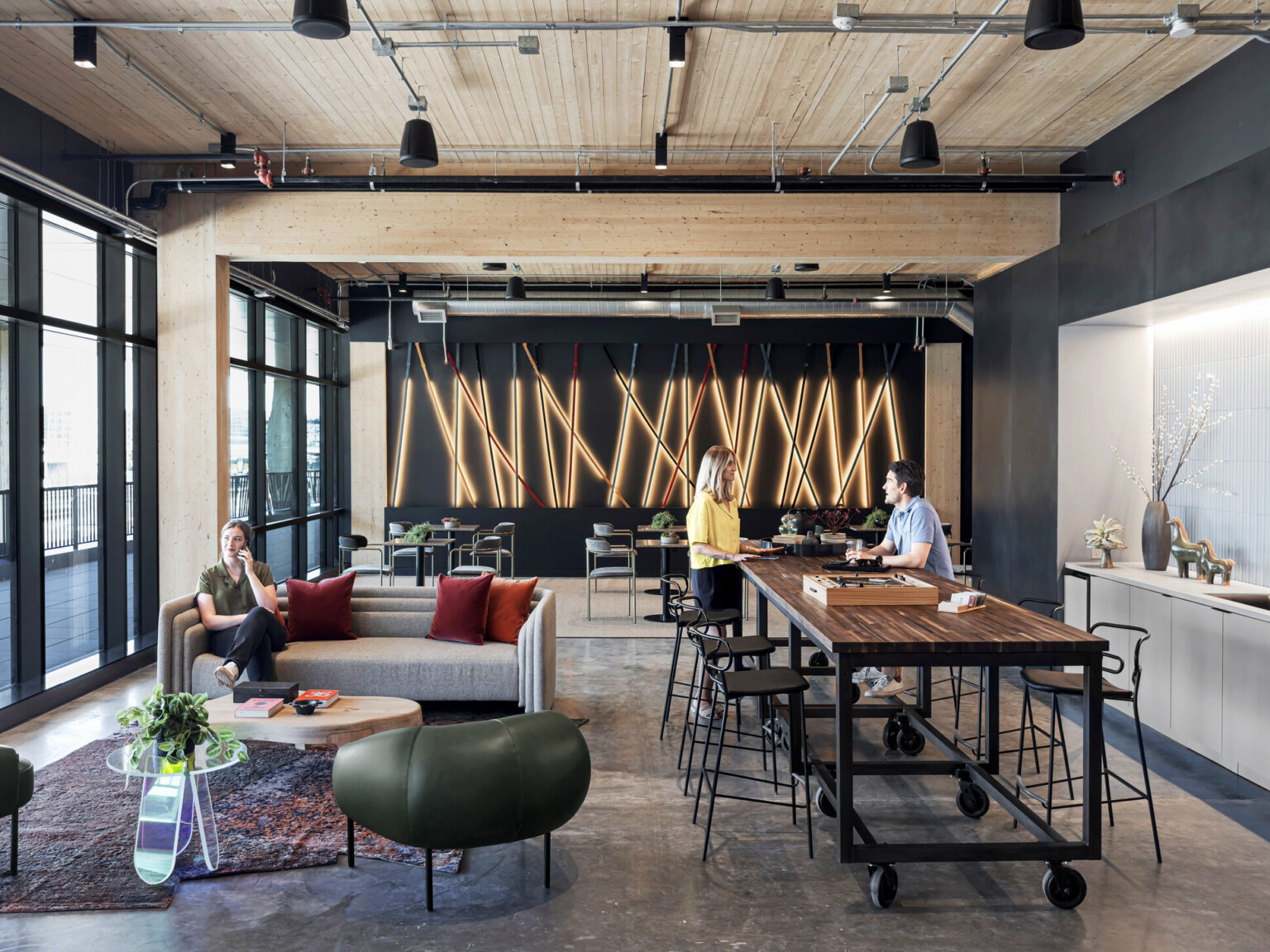
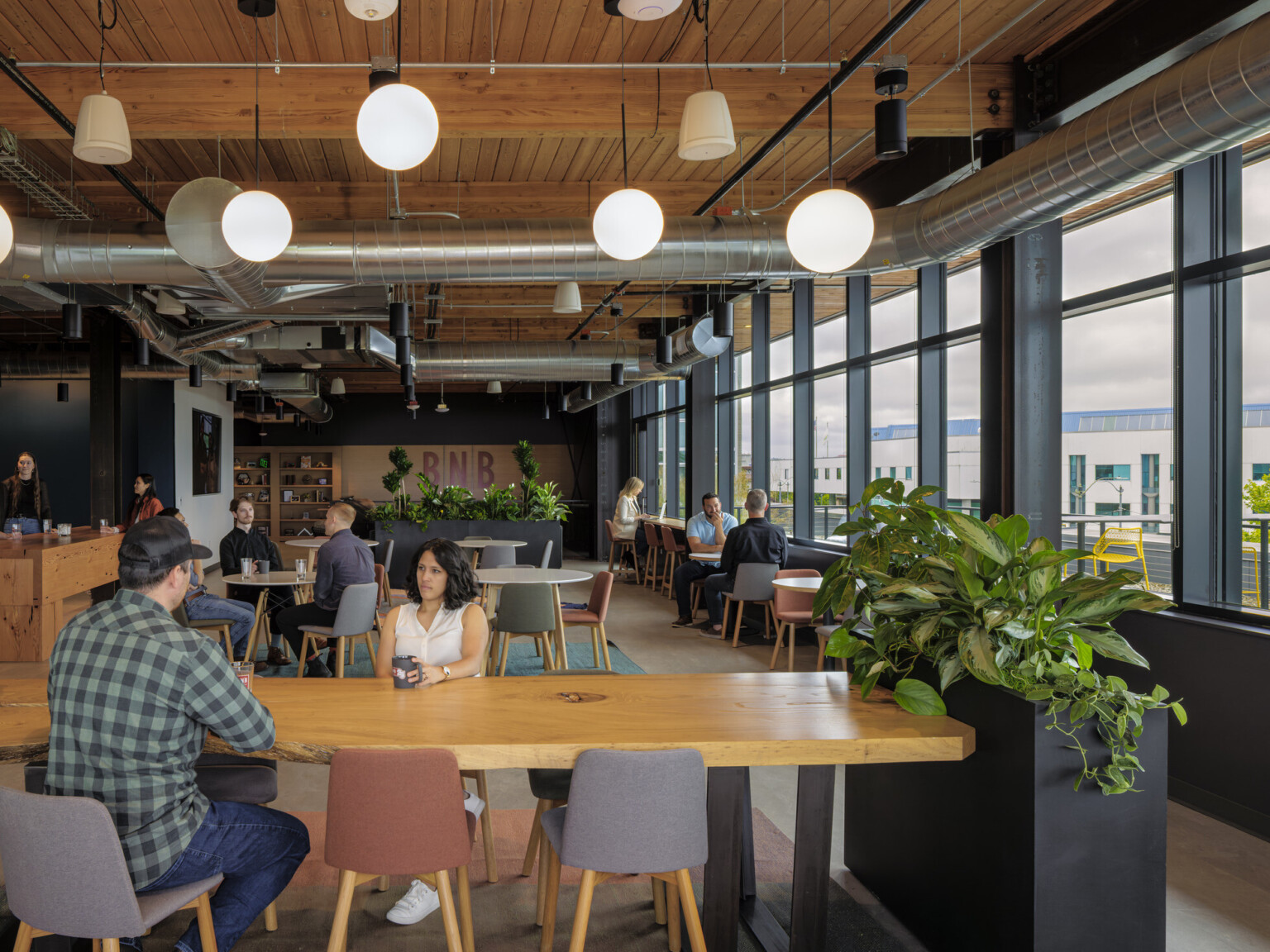
The first approach is exemplified by Swarthmore College Dining and Community Commons, which employs mass timber construction. Mass timber avoids composite wood products that depend on formaldehyde-laden adhesives, achieving structural integrity through the material itself. Although sealants applied to timber can carry a negligible VOC load – which can be minimized by smart specification – it’s dramatically lower than off-gassing from toxic glues found in other common building materials.
The complementary approach – using less – is exemplified by our Orlando studio. While we specified materials like recycled PET acoustic panels, low-VOC paint, and minimal surface treatments wherever possible, our workspace strips away unnecessary layers to eliminate emissions at the source. The minimalism is aesthetic, but it’s also calculated reduction: fewer layers, fewer toxins, less disposal.


Conclusion
Healthy workspace adoption has accelerated, driven by a convergence between economic and environmental factors. Firms are joining together to specify healthy materials simultaneously, and manufacturers adjust production rather than lose contracts. But an even more significant shift stems from changing client expectations. When workers in healthy environments demonstrate measurable cognitive improvement, the business case writes itself. Reduced sick days and sharper decision-making flip the cost-benefit analysis: healthy materials become the smarter financial choice.
Ideas
Recommended Reads