Skip Main Links
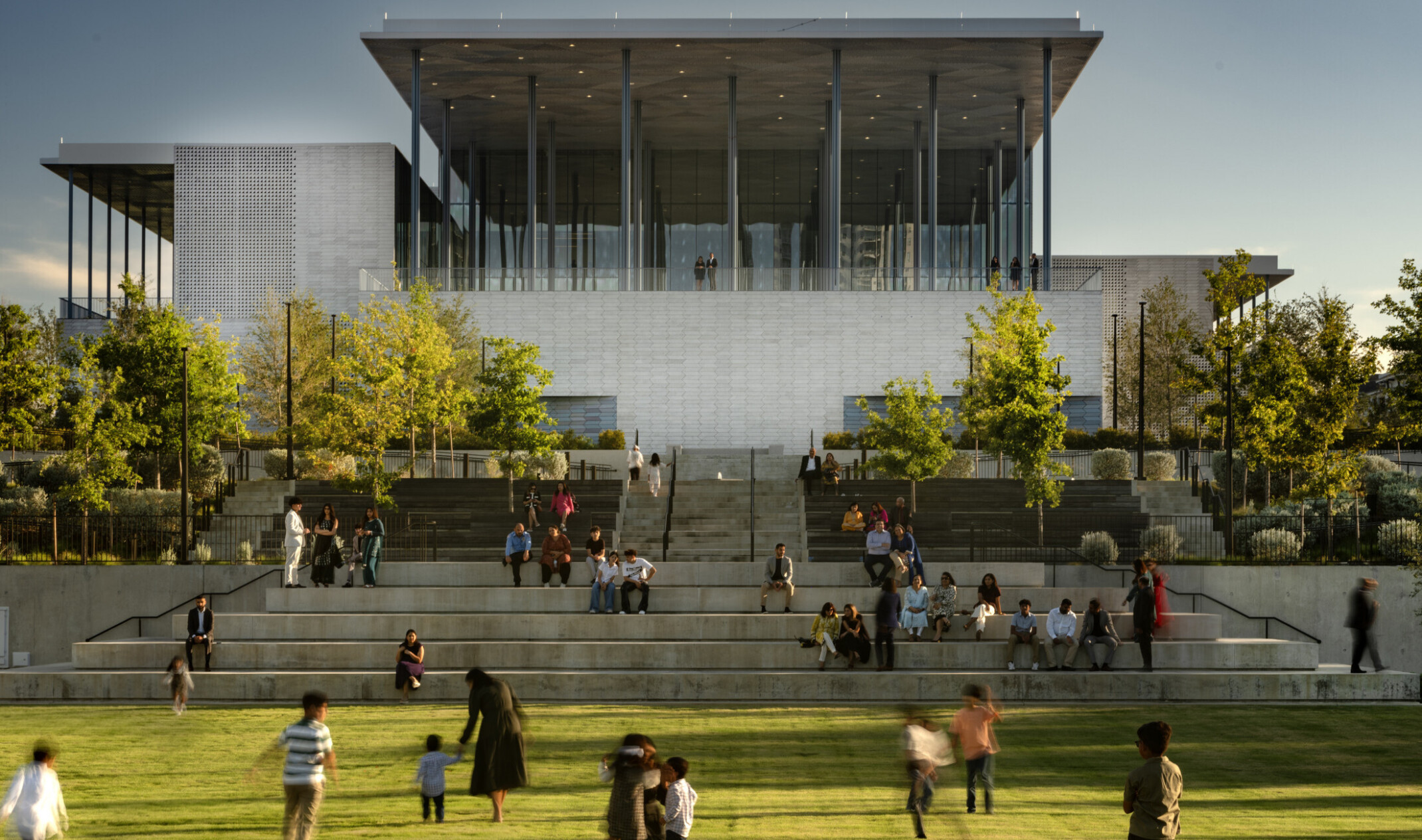
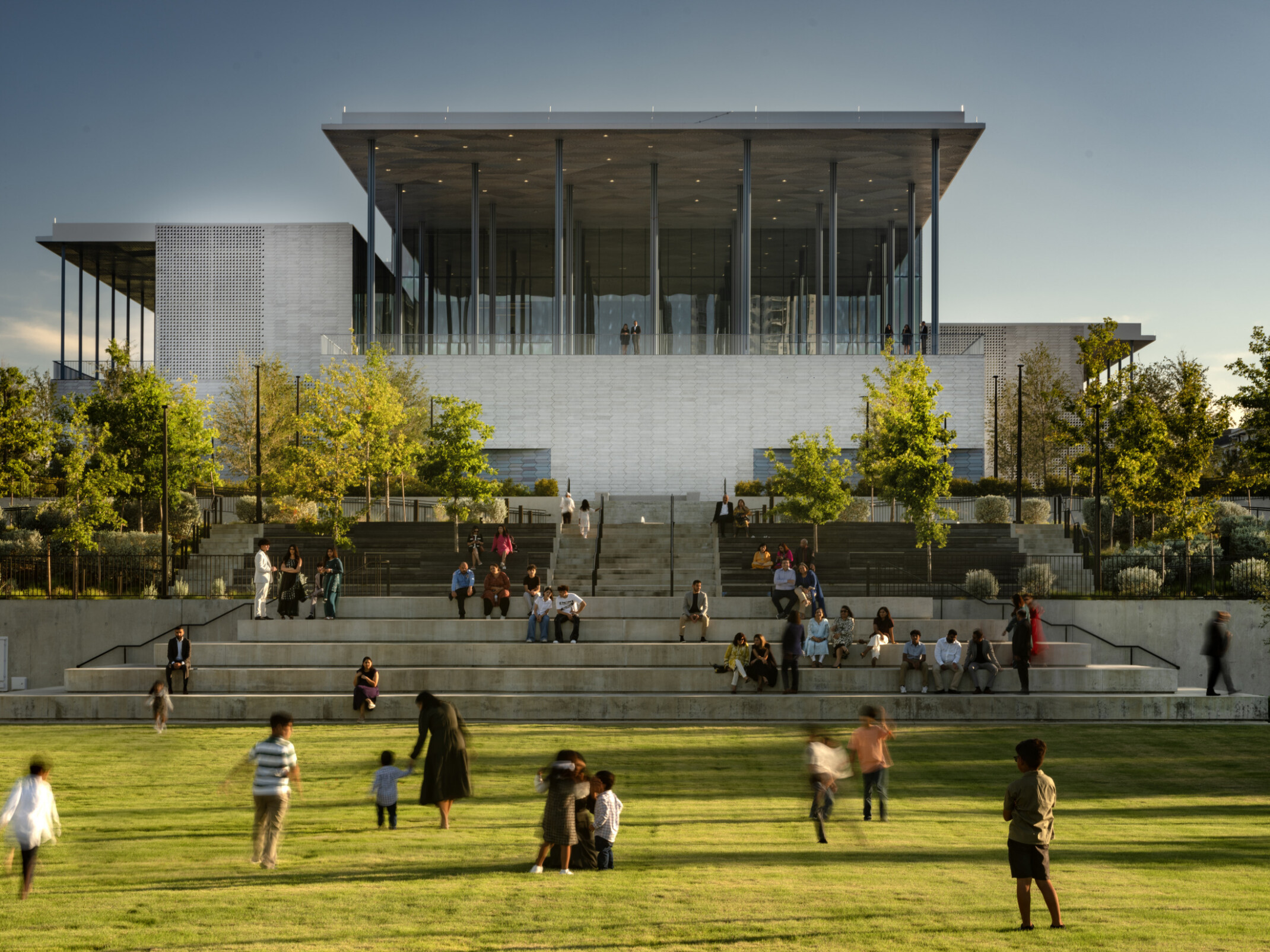
Front lawn of Ismaili Center, Houston; people playing in grass

Ismaili Center, Houston

A Beacon of Unity

Project Location

Houston, TX

Client

Imara Houston Inc., Agent for Aga Khan Foundation U.S.A

Area

150,000 SF

Scope

Architect and Engineer of Record; provided MEP engineering, site work coordination, acoustics, audiovisual, lighting, theater design services, and sustainability oversight

The Ismaili Center, Houston is the first Ismaili Center to open in the U.S. and the seventh in the world. It represents both a milestone for the Ismaili Muslim community and a meaningful addition to Houston’s cultural landscape.

With a 100-year lifecycle, the 150,000-SF building is a major new architectural landmark for the City of Houston. It contains extensive cultural and civic spaces for the public, including an exhibition gallery, a black box theater, banquet halls, meeting rooms, educational spaces, a café, and a prayer hall, creating a vibrant hub for both spiritual reflection and civic life.

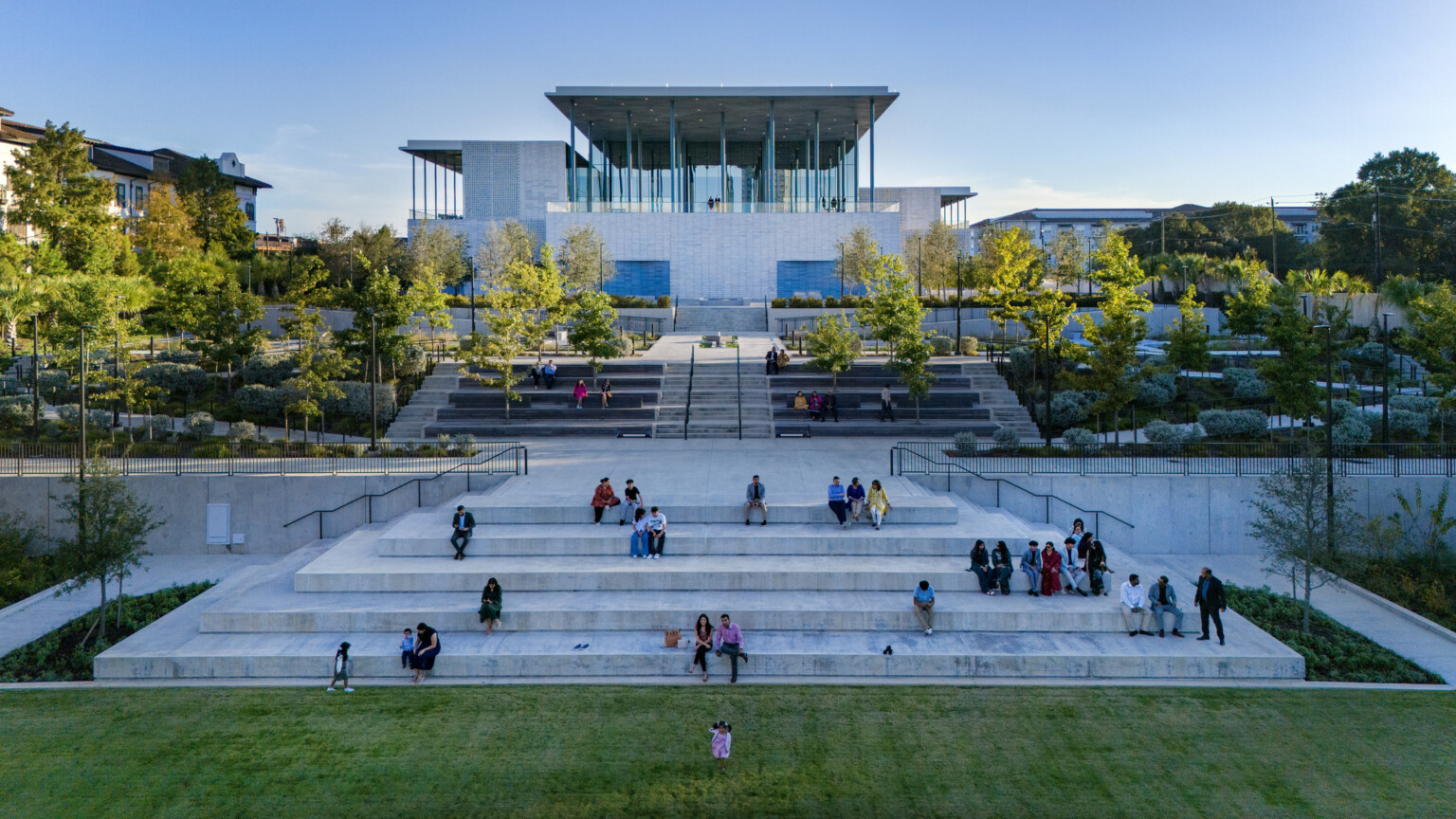
Set within an 11-acre site along Montrose Boulevard between W. Dallas Street and Allen Parkway, the Ismaili Center, Houston serves as both a space of prayer and a venue for dialogue, culture, and education.

The Center joins a network of six other Centers across the world – London (1985), Vancouver (1985), Lisbon (1998), Dubai (2008), Dushanbe (2009), and Toronto (2014) – acknowledging the Ismaili community’s 1,400-year history and embodying the community’s values and ethics.

The Ismaili Center, Houston was designed by architect Farshid Moussavi and Nelson Byrd Woltz Landscape Architects in partnership with DLR Group (architect and engineer of record), AKT II (structural, civil, geotechnical, bioclimatic​,​ and facade engineer), and McCarthy Building Companies (contractor).
A Bespoke Cultural Building

The Ismaili Center, Houston balances past and present, traditions and modern technologies, the local fabric of Houston and global Ismaili community. Rather than replicate historical styles, the architecture translates enduring ideas from across the Muslim world – structure as legible order, ornament as human scale, repetition as unity, and light as material – through contemporary craft. Bridging cultures and design influences, it serves as a welcoming space for prayer, education, cultural exchange, and interfaith dialogue.


01
Design

Islamic Tradition Meets Modern Innovation

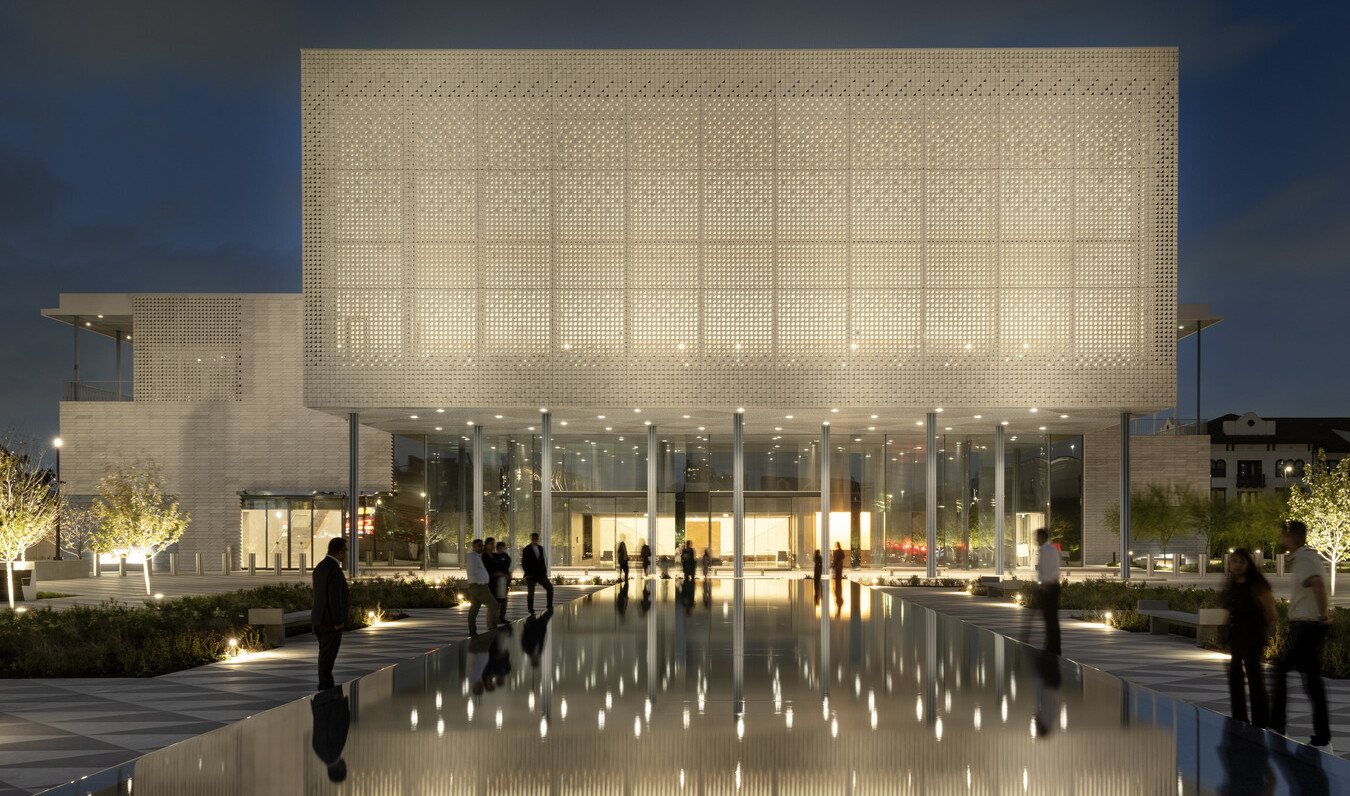
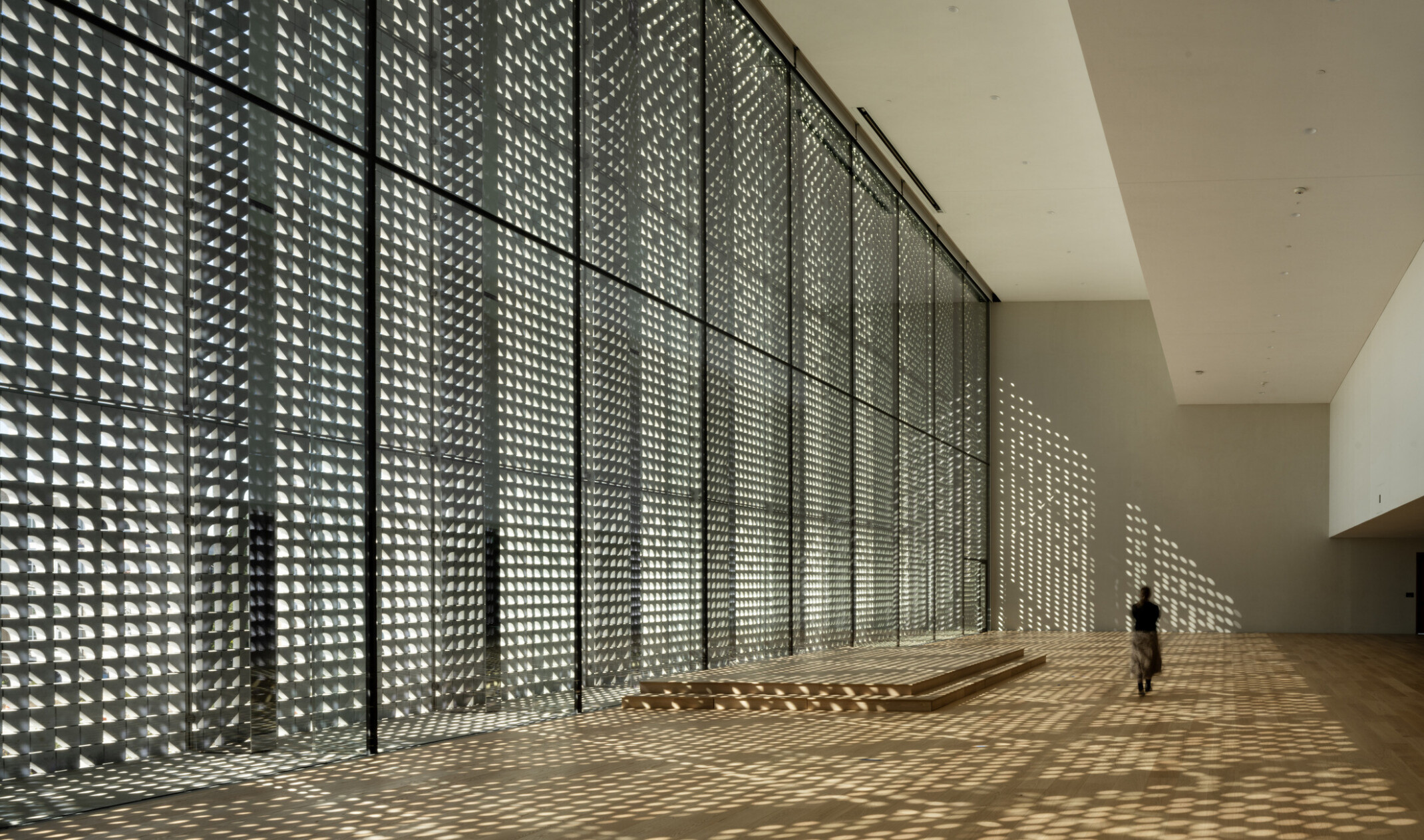
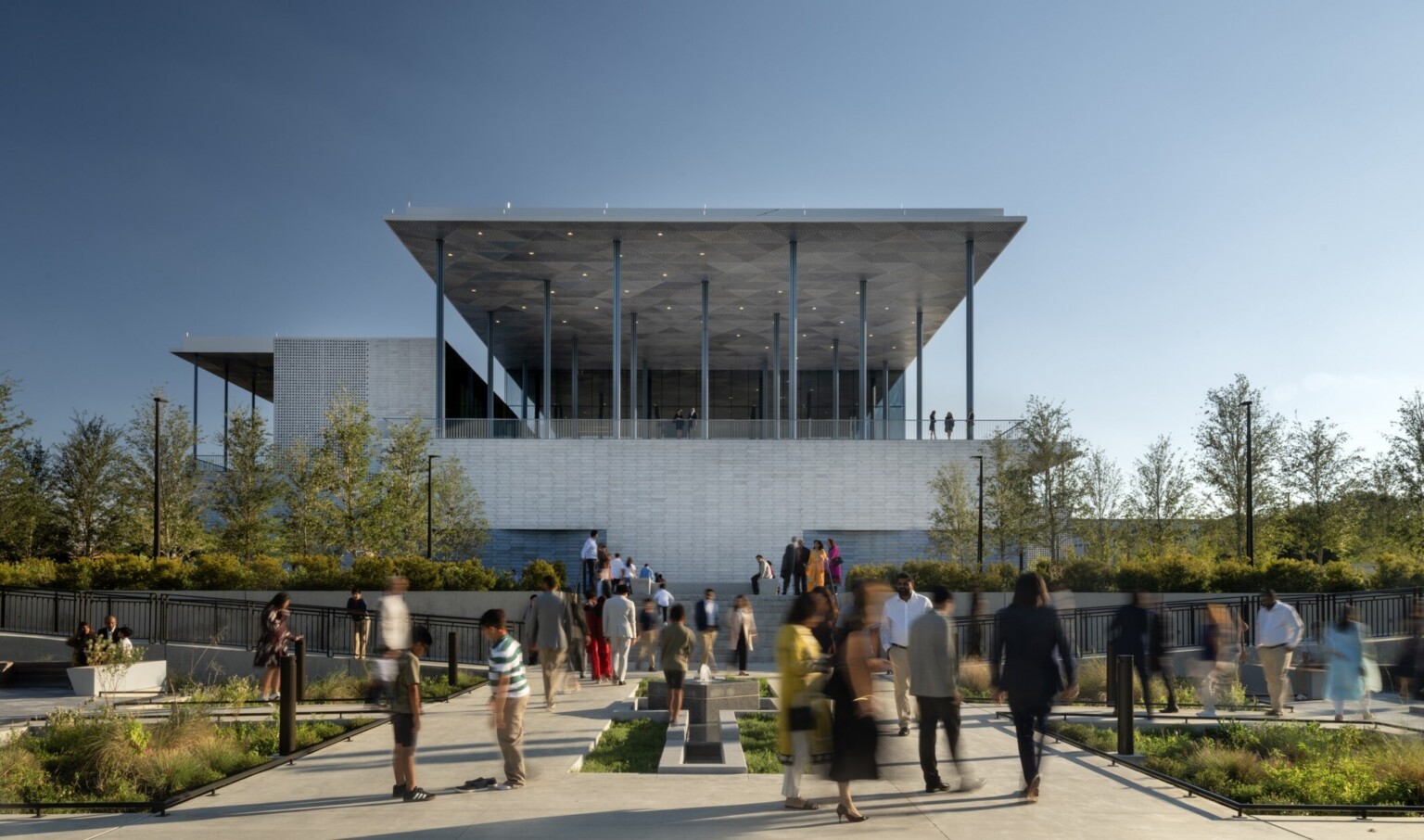
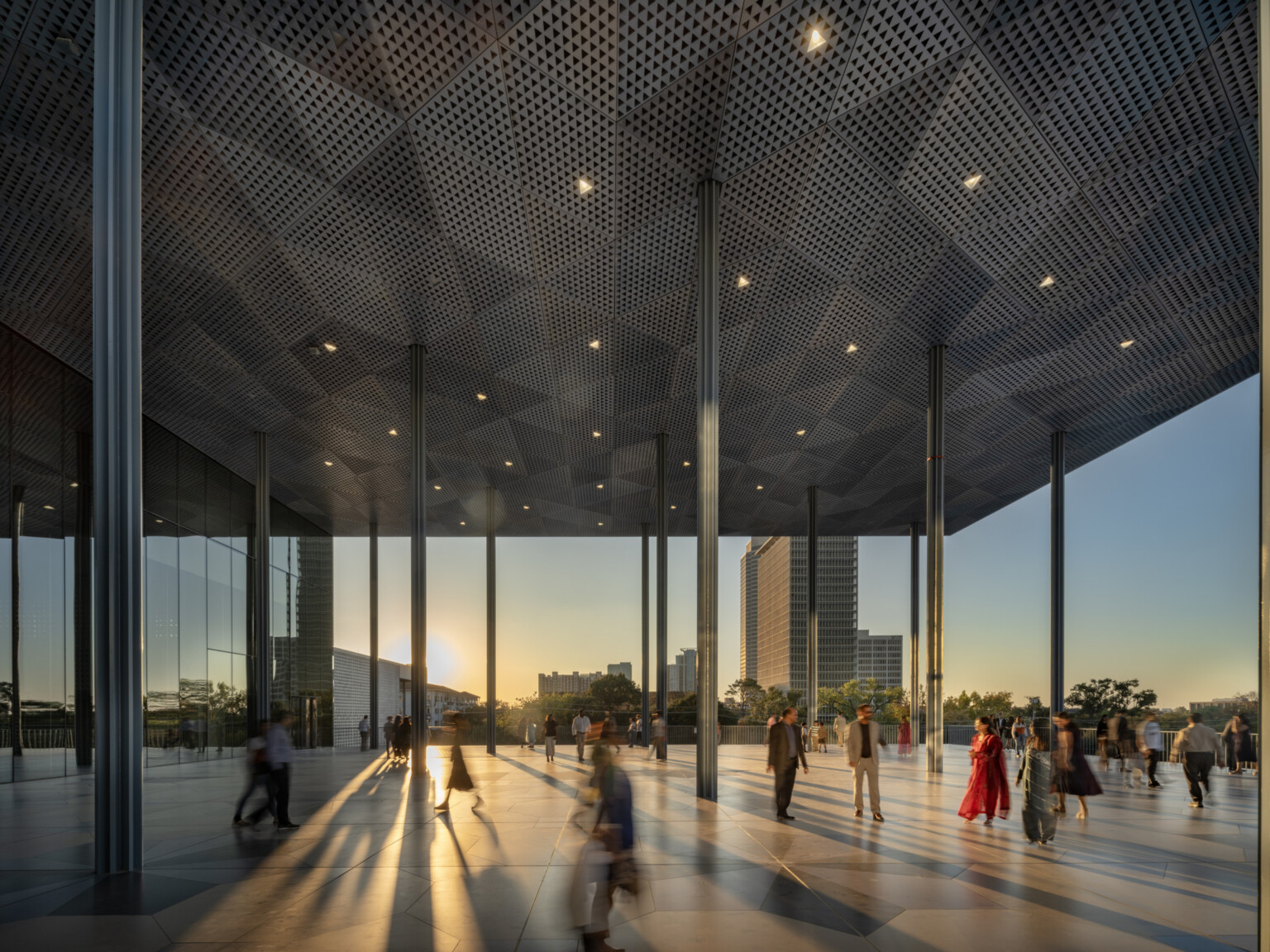
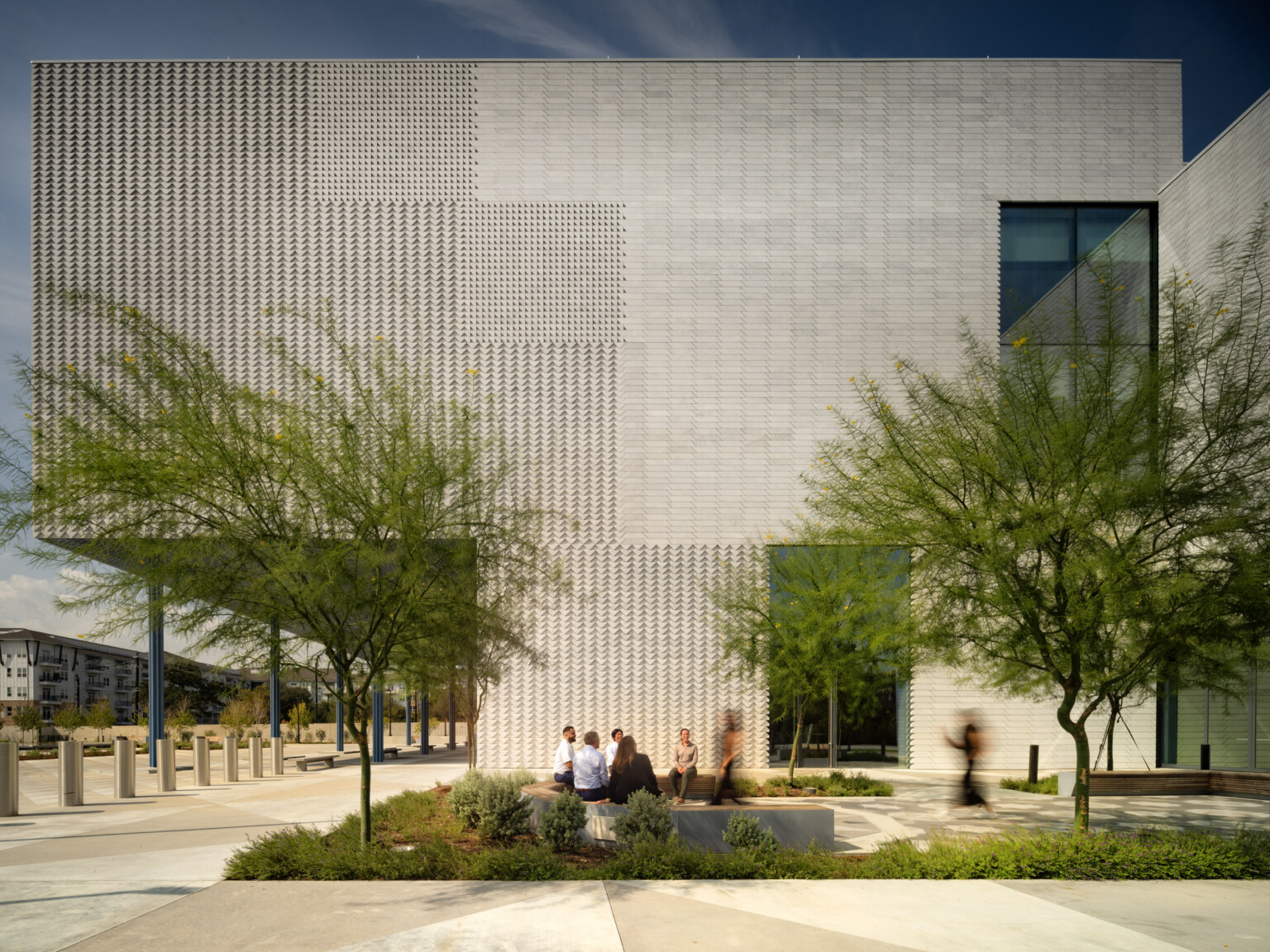
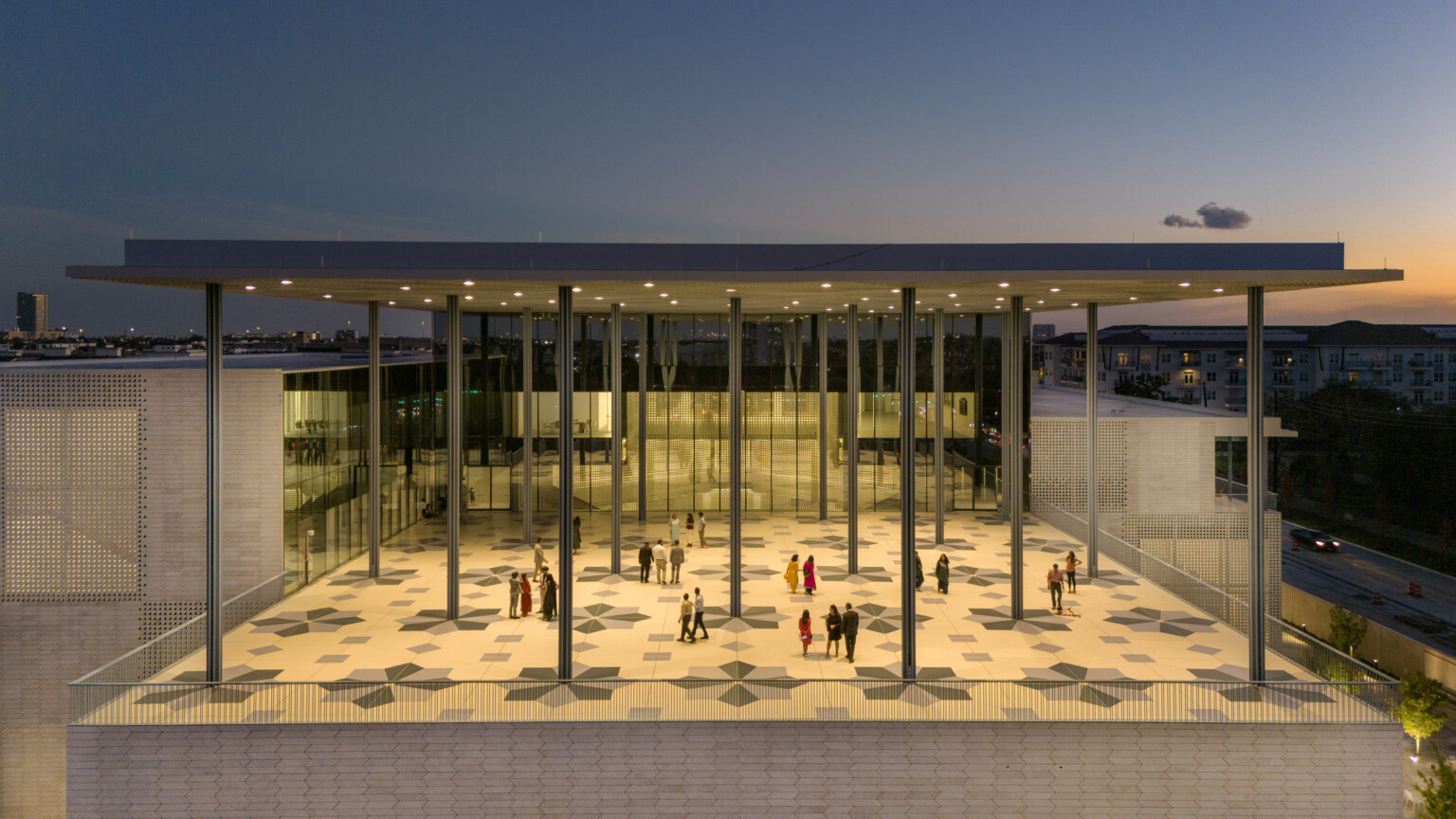
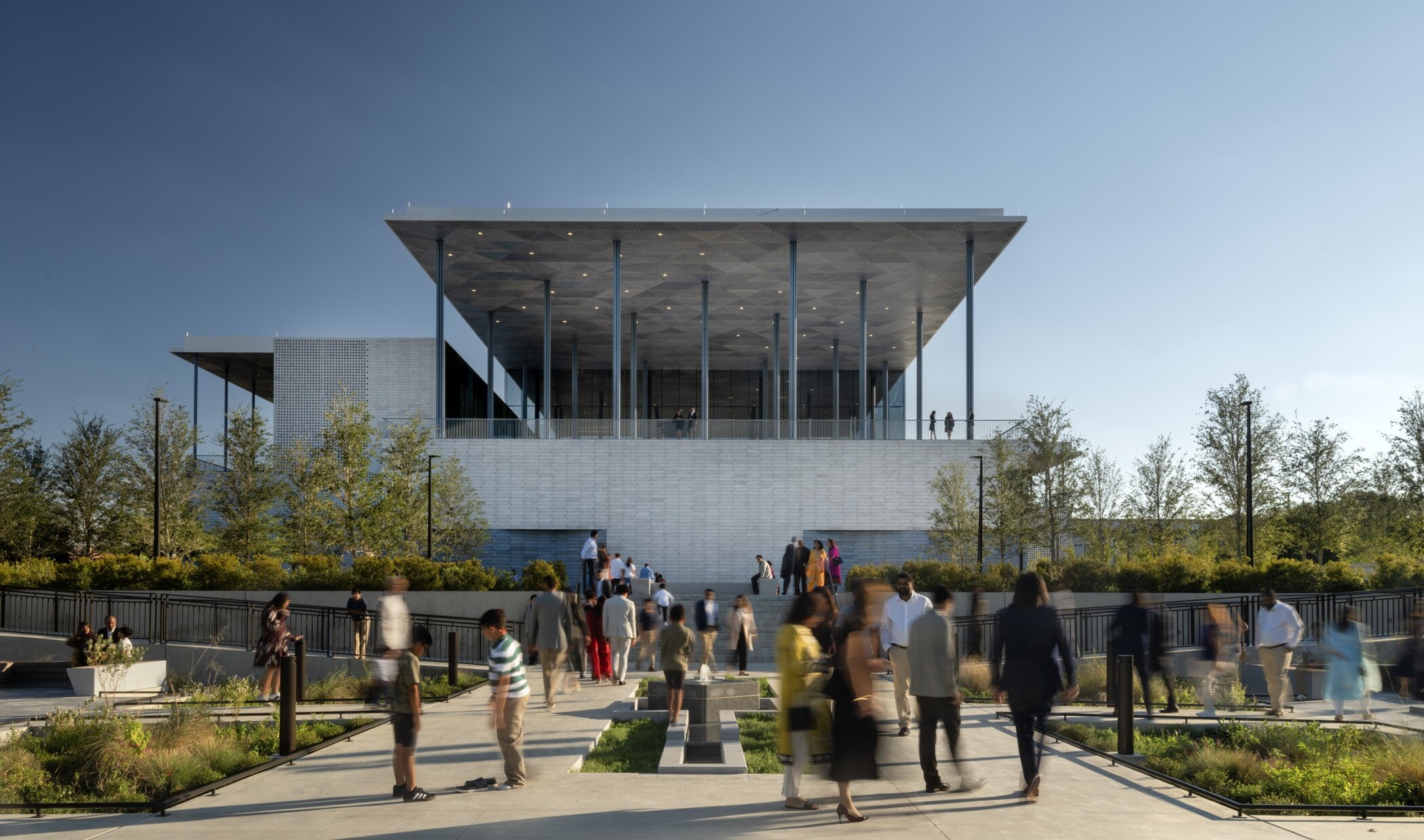
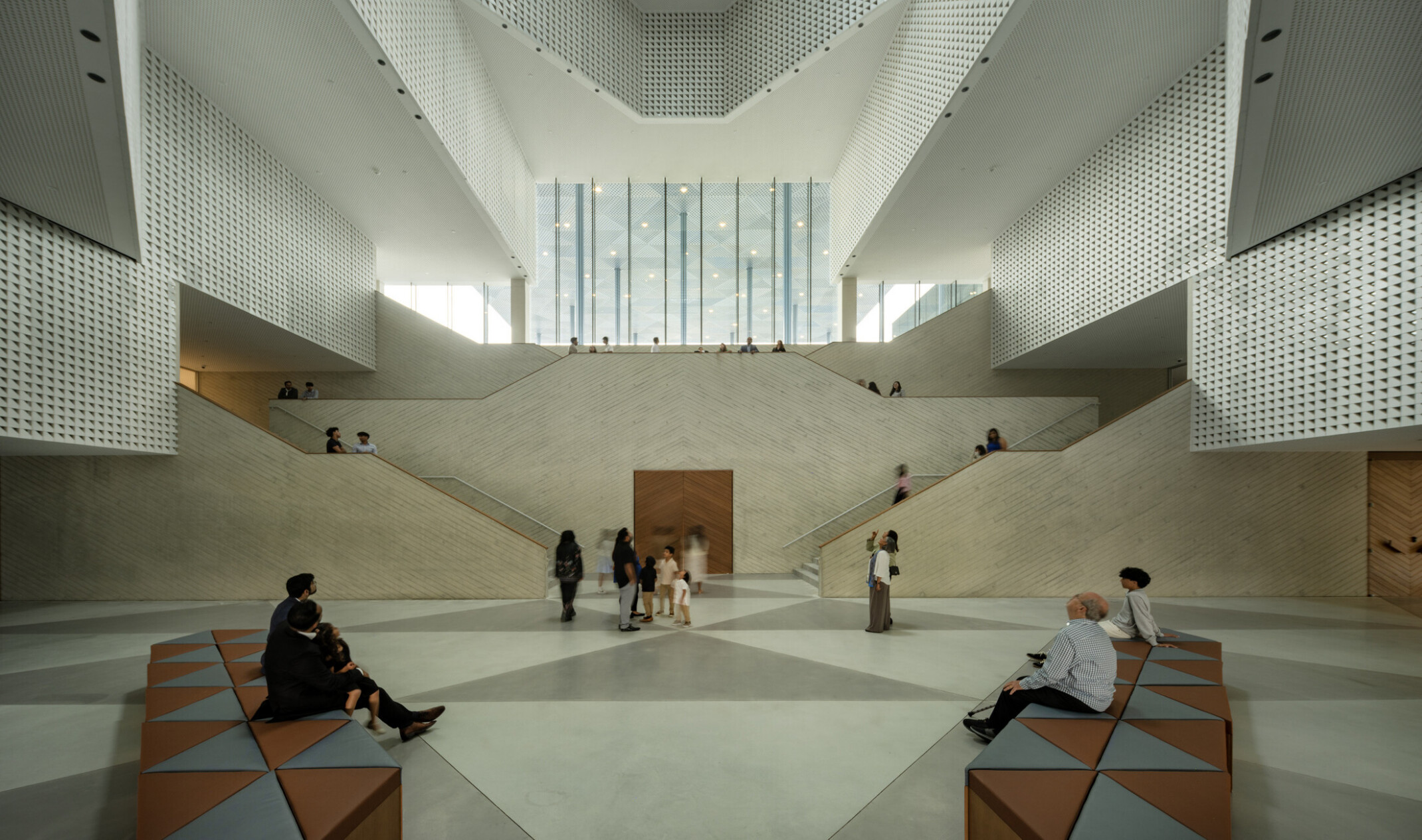
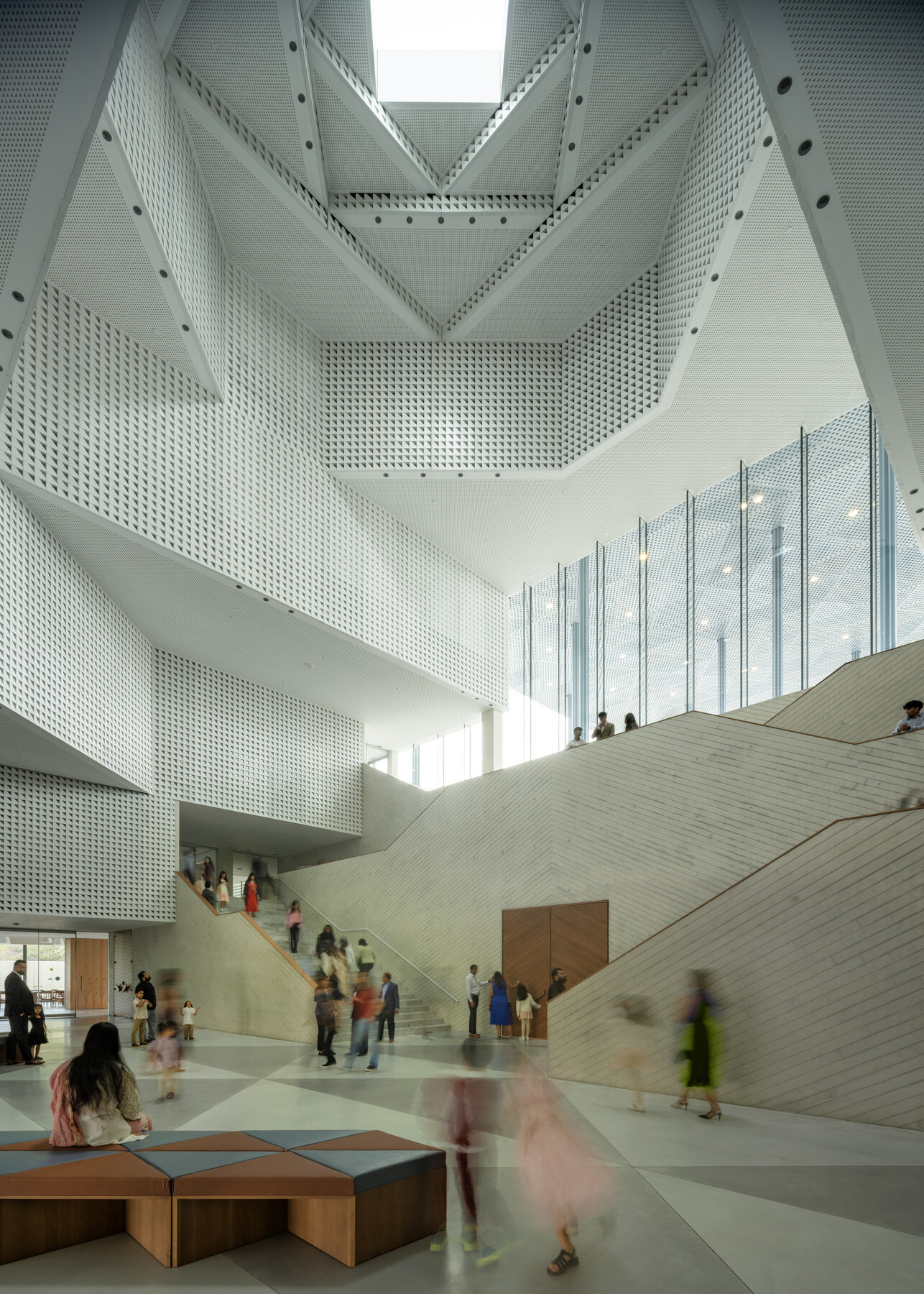
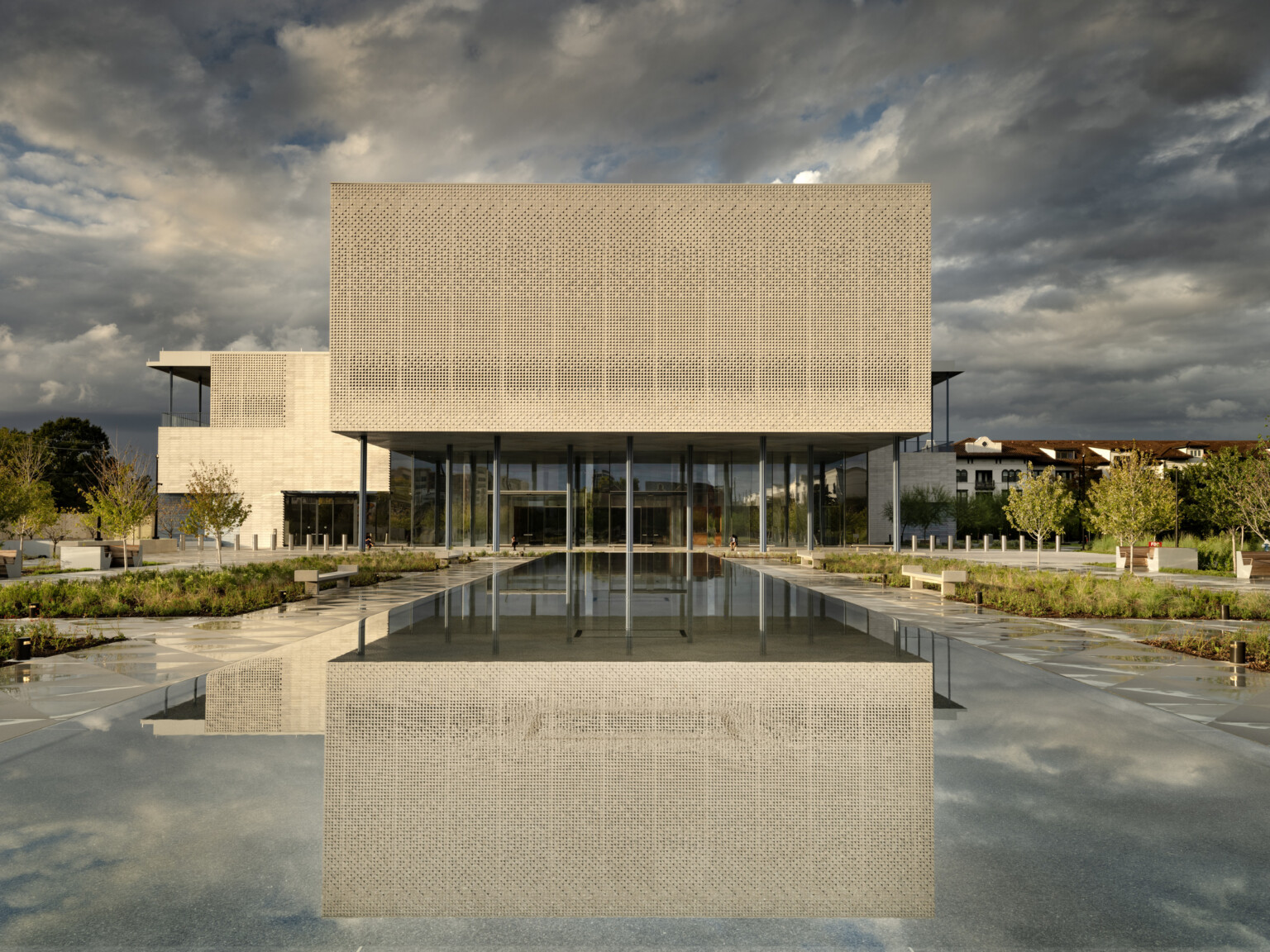
Surrounded by expansive green spaces, the five-story tripartite structure integrates Islamic design influences with contemporary architectural technology. Three volumes are connected by eivans – elevated verandas rooted in Persian architectural tradition. Mashrabiya-inspired concrete screens in the atrium and walls crafted like tapestry in stone offer modern reinterpretations of Persian and Islamic architectural traditions, reduce artificial lighting, and reinforce a sense of openness and fluidity.

02
Local Influences

Houston Context and Climatic Conditions

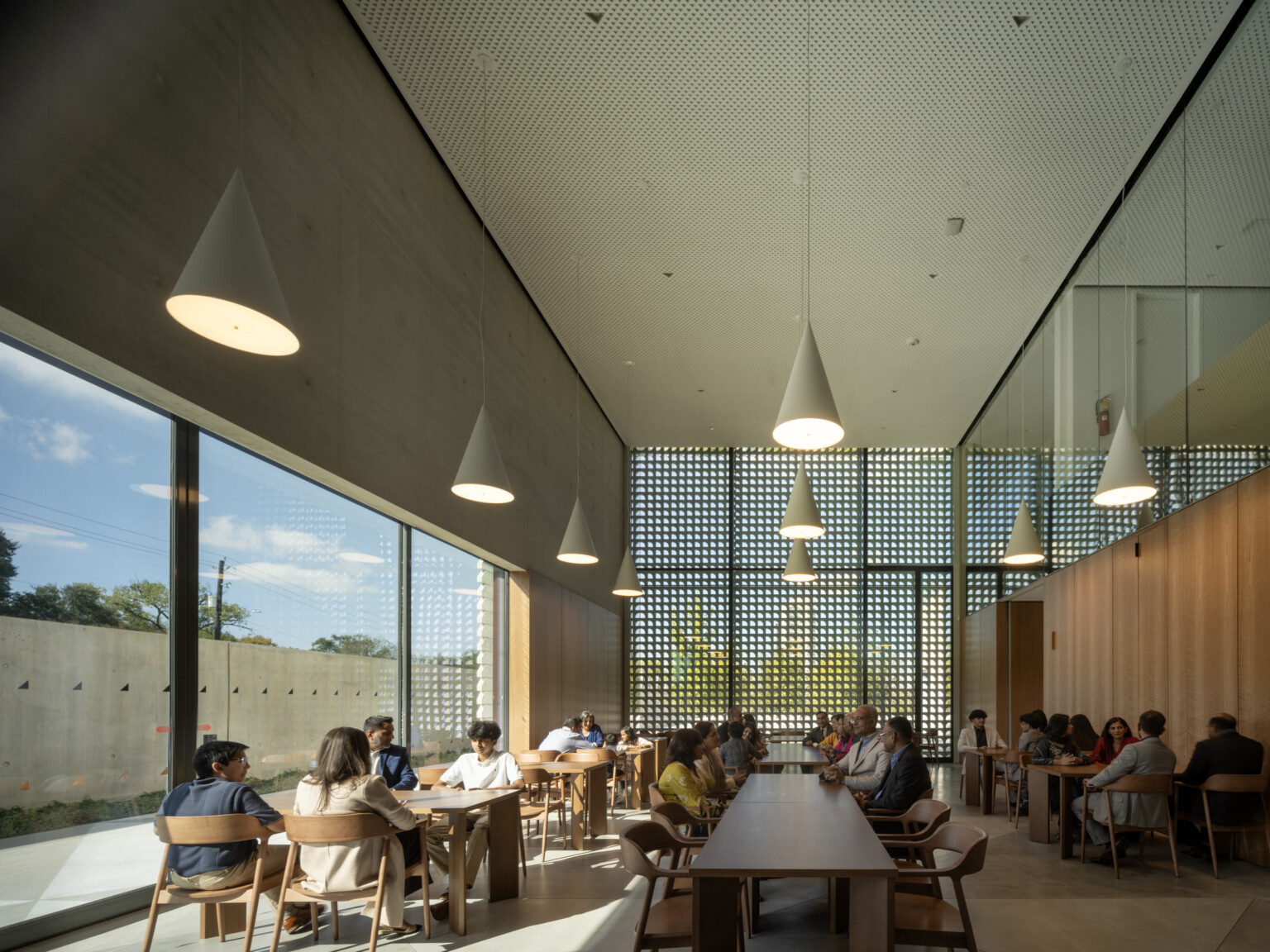
In Houston’s hot, humid climate, Turkish marble screens shade interiors while inviting natural light and garden views. Gardens designed with Islamic landscape traditions and Texas ecologies manage stormwater. Persian-inspired eivans provide shade, air movement, and gathering space year-round. Multipurpose spaces for lectures, conferences, recitals, and exhibitions celebrate Houston’s diversity and arts and culture while the café encourages social gathering in a daylight-filled double-height space.

People walk under a large, modern pavilion with geometric patterned ceiling at sunset.
Museum café interior with visitors seated at wooden tables beneath pendant lights. A tall marble screen wall filters natural light on the right, while warm wood paneling lines the back wall.
03
Sustainability Leadership

Built for a 100-Year Future

The concrete encased steel structure is designed for longevity and flood resilience. The project achieves energy reductions through efficient HVAC systems and a climate-appropriate facade, achieving a 30% artificial lighting reduction below baseline. Water conservation achieves 58% outdoor and 45% indoor reduction. Carbon reduction includes 2.5M lbs/SF sequestration through planting, supplementary cementitious materials replacing cement, domestically-produced EAF steel, and low-impact refrigerant infrastructure.

A modern building with a glass façade sits atop stone steps surrounded by lush greenery.
A building exterior clad in light gray/sand colored marble arranged in varying patterns and shapes to evoke a tapestry in stone. An exterior courtyard features flowering trees and plantings, geometric patterned floor tiles, and seating
04
Engineering

Structural Innovation Meets Aesthetics

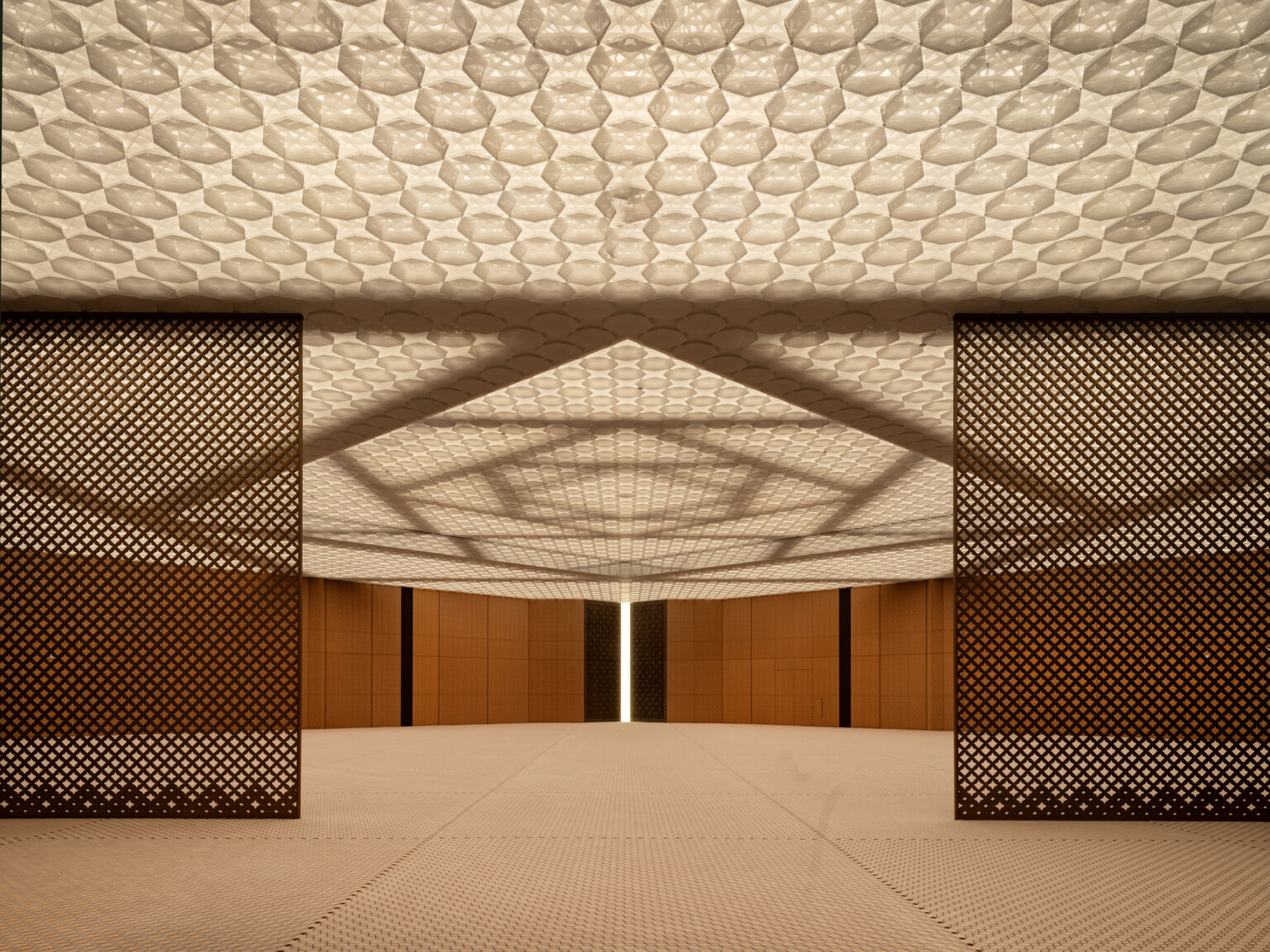
DLR Group and AKT II merged European and U.S. codes to achieve 100-year lifecycle protocols with enhanced concrete cover protection. The Jamatkhana (Prayer Hall) uses deep steel girders for column-free worship space beneath an ornate ceiling. The North eivan's steel diagrid roof acts as its own diaphragm without monolithic topping. Slender star-shaped columns provide fire resistance while maintaining aesthetic profiles. The central atrium employs composite steel-concrete trusses for material efficiency and minimal deflection across multiple stories.

A prayer hall with wooden walls and a ceiling with integrated lighting. The ceiling features layers of patterned, perforated aluminum creating a soft ethereal effect. The structural system of steel beams in interlocking squares is visible above the ceiling.
A modern building at sunset with a large, covered veranda supported by columns. Geometric patterns adorn tile floors.

Intricately patterned screens on the building exterior of a building against a reflection pool
Ismaili Center, Houston in Houston, TX.

Contact Us

Contact Us

  • This field is for validation purposes and should be left unchanged.