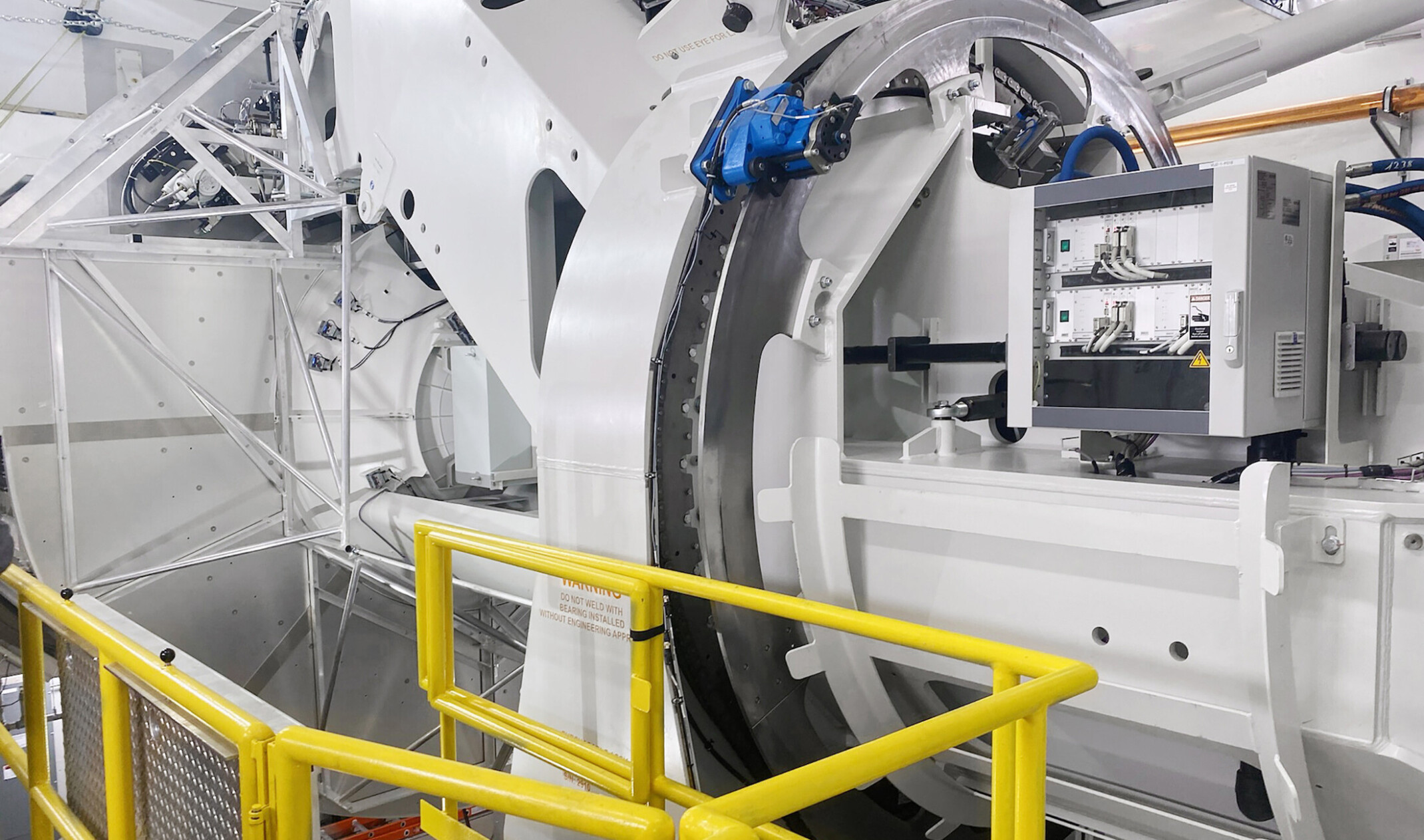
At Penn Medicine’s Ann B. Barshinger Cancer Institute, leadership sees innovation as a pathway to expand access to life-saving treatments across Central Pennsylvania. In service of this mission, they envisioned a future where advanced proton therapy could be offered closer to home, without the duplication of services or disruption to existing care. DLR Group | Tsoi Kobus Design’s design accomplishes this vision by integrating the world’s first clinical installation of Varian’s compact ProBeam 360 gantry into an active outpatient cancer center, with design completed in under five months to meet Penn Medicine’s aggressive schedule.
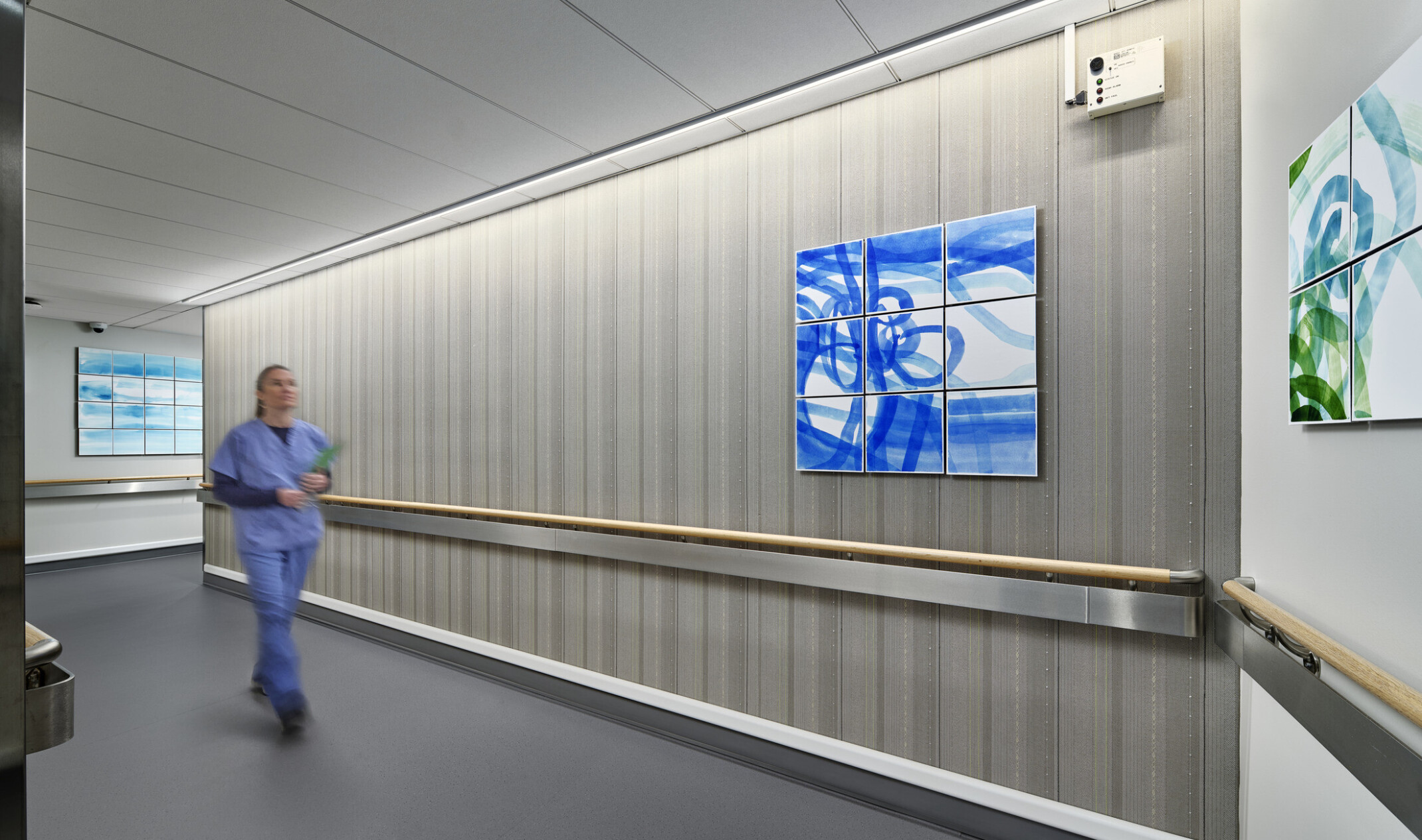
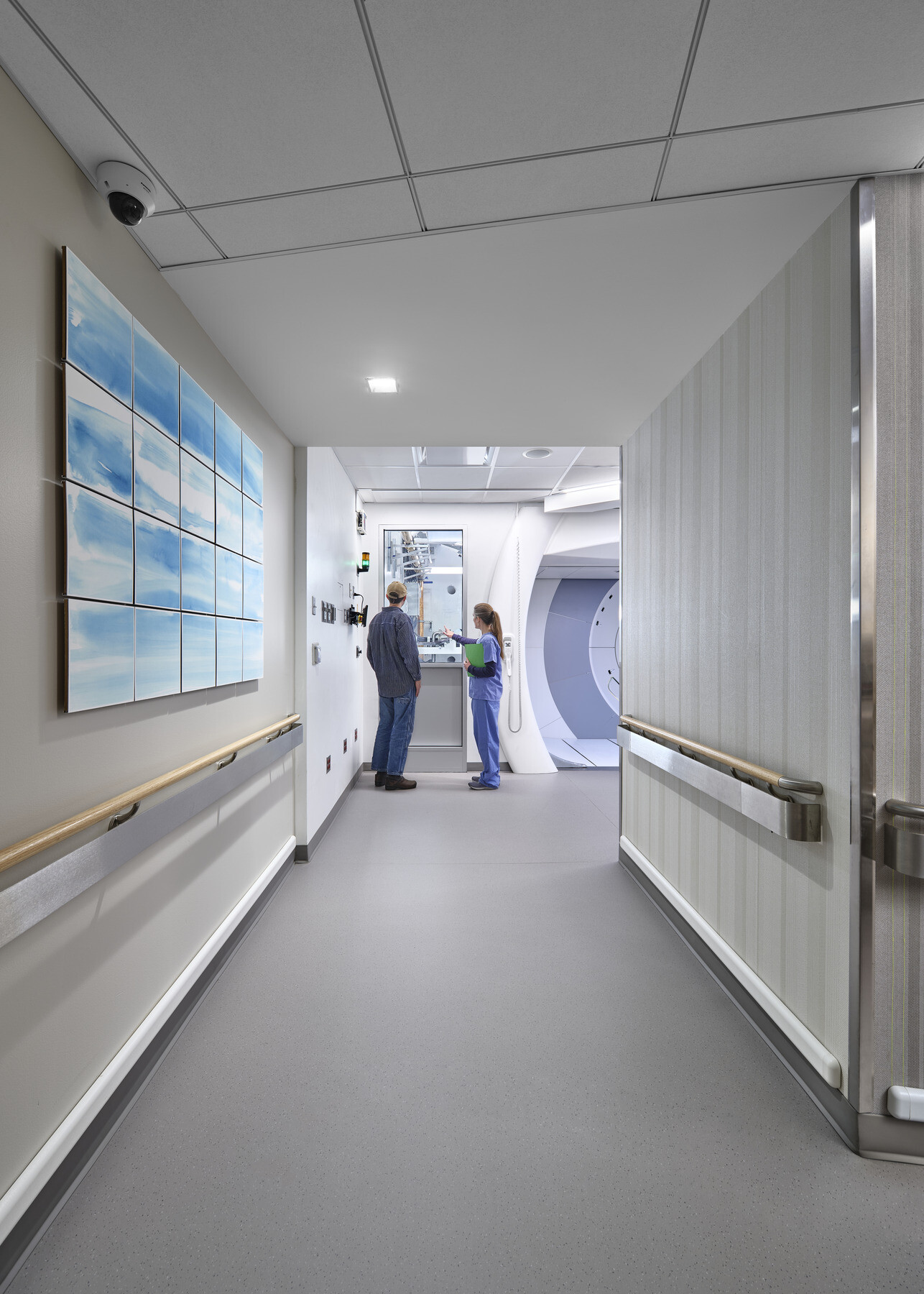
The addition enhances the patient experience through art, natural light, and spatial continuity with the existing facility. A commissioned piece by artist Daniel Kohn weaves scientific and artistic themes into a visual narrative that begins in the waiting room and carries through to the treatment space. A tranquil garden, visible from floor-to-ceiling windows, offers moments of calm along the care journey. The design supports Penn Medicine’s mission to make the most advanced treatments more accessible, while honoring the values and needs of the Lancaster community. Part of a coordinated rollout with a companion site in New Jersey, the Lancaster facility still reflects a distinct design response rooted in the local model of care and community priorities.
The 12,100-SF proton therapy addition includes a single-room treatment vault and associated support spaces connected to the existing radiation oncology department. The program strategically leverages existing imaging, waiting, and exam rooms to avoid duplicating functions and reduce project costs while maintaining clinical efficiency. By studying departmental resource utilization, the design team minimized scope while meeting all clinical and technical needs. Site integration and adjacency planning prioritized efficient patient flow from arrival through treatment. The project team coordinated closely with Varian to accommodate evolving equipment specifications, requiring real-time, creative design adaptations to accommodate changing vendor requirements. The schedule incorporated a longer technical commissioning process to account for FDA 510-K clearance of the new system. The Lancaster site is part of a larger hub-and-spoke strategy that connects regional proton therapy centers to Penn Medicine’s Roberts Proton Therapy Center in Philadelphia, reinforcing the system’s broader vision for expanding access to advanced cancer treatment. DLR Group | Tsoi Kobus Design provided architecture, engineering, interiors, and planning services.
This project was completed by Tsoi Kobus Design prior to DLR Group’s acquisition in January of 2025.