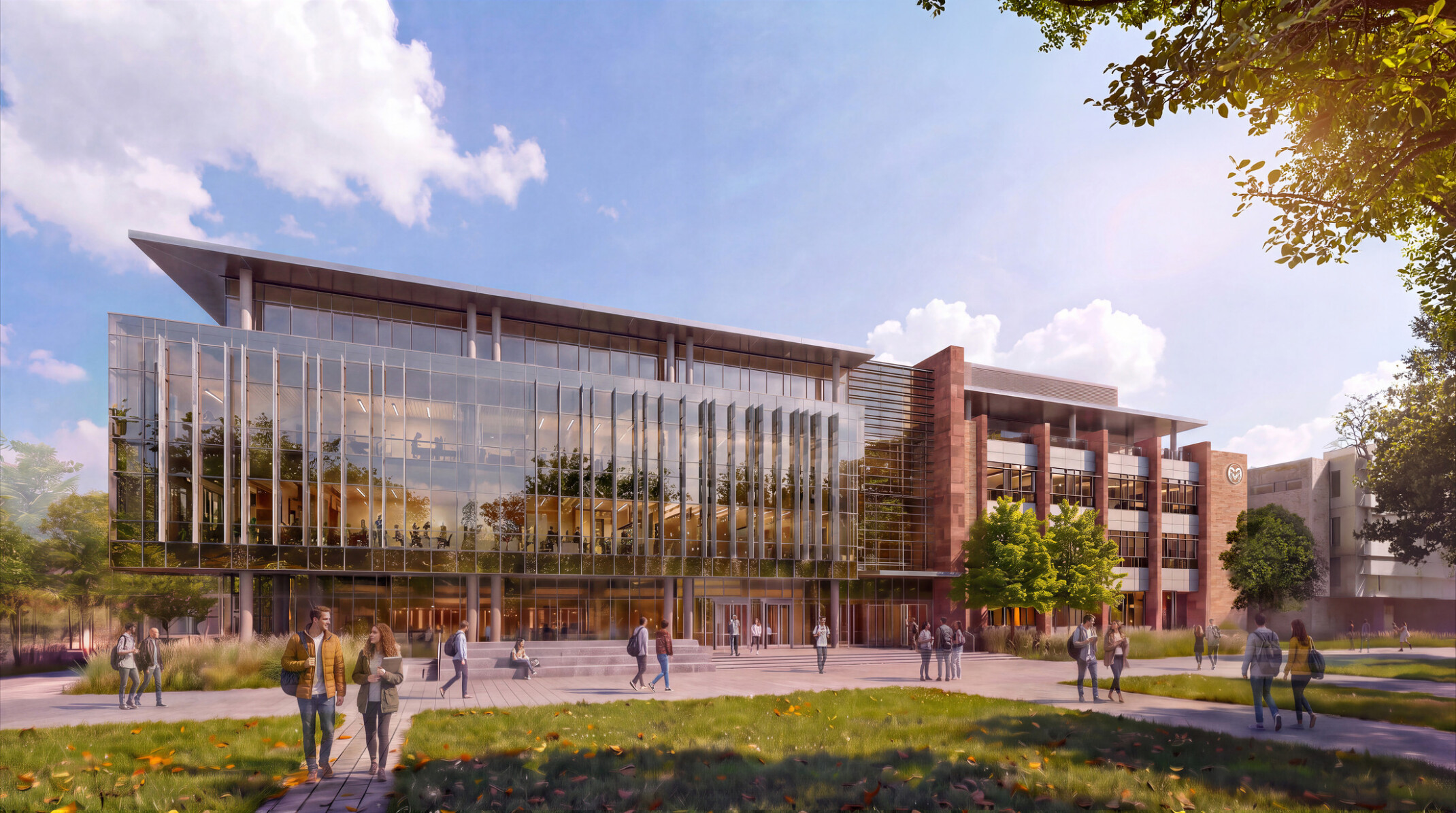
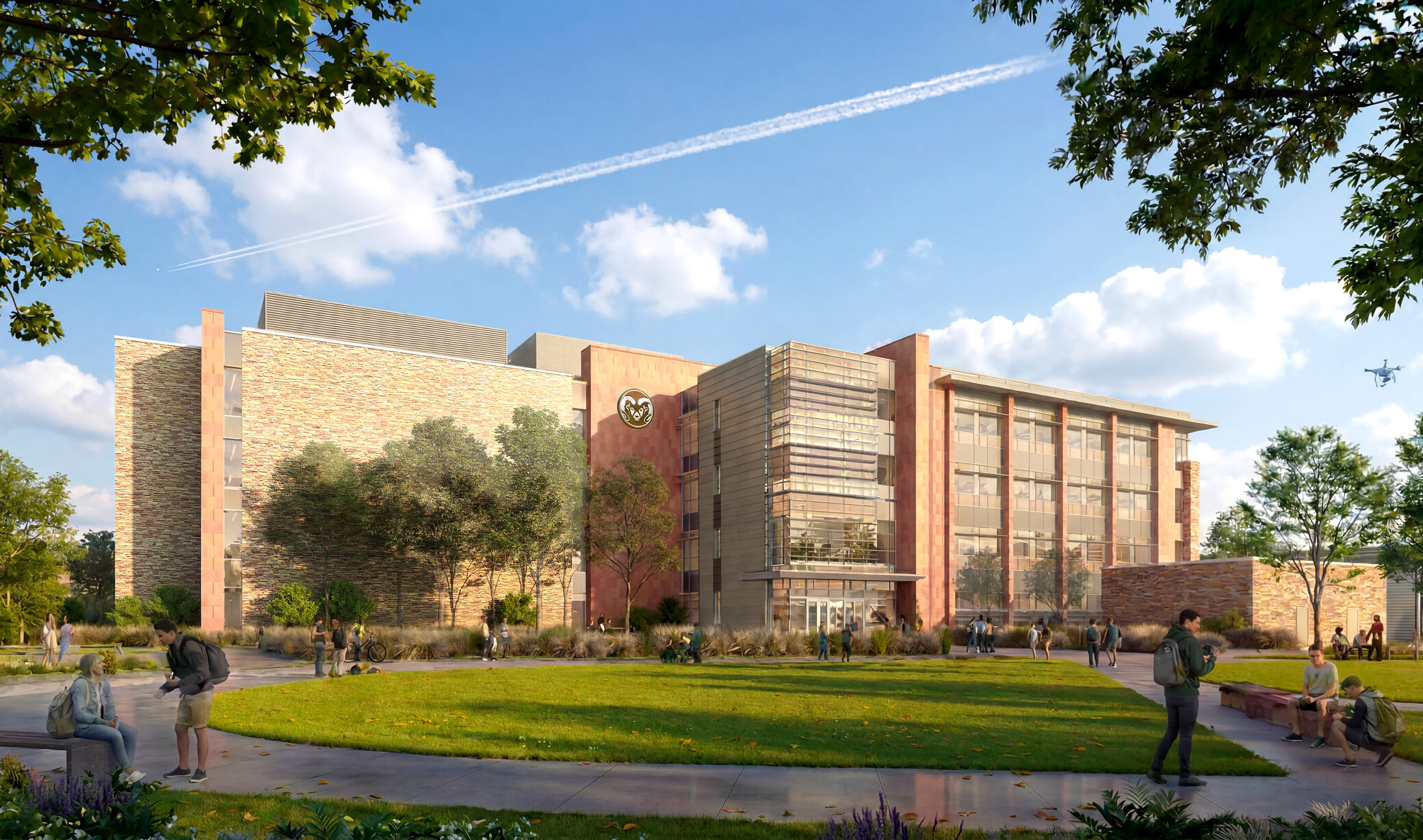
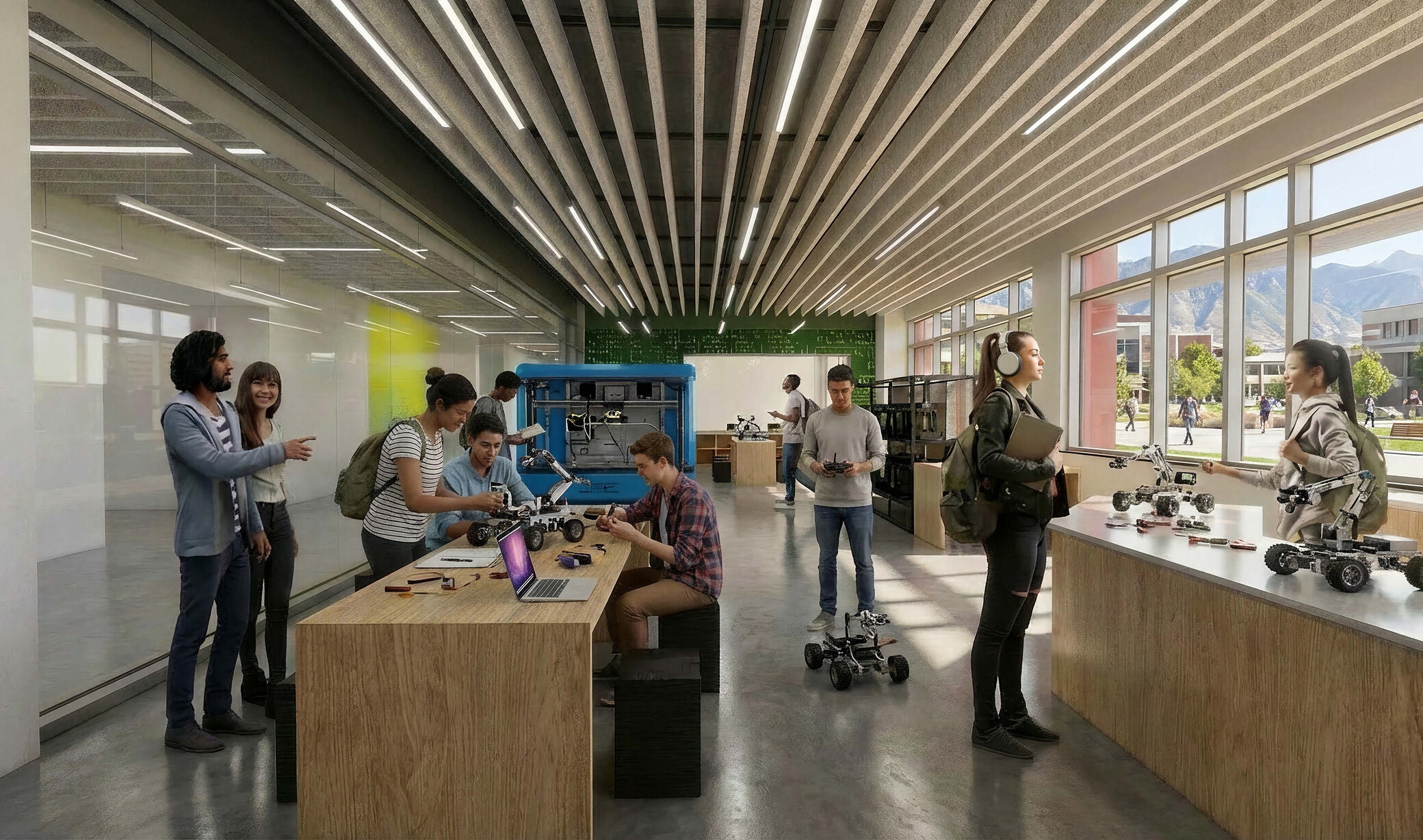
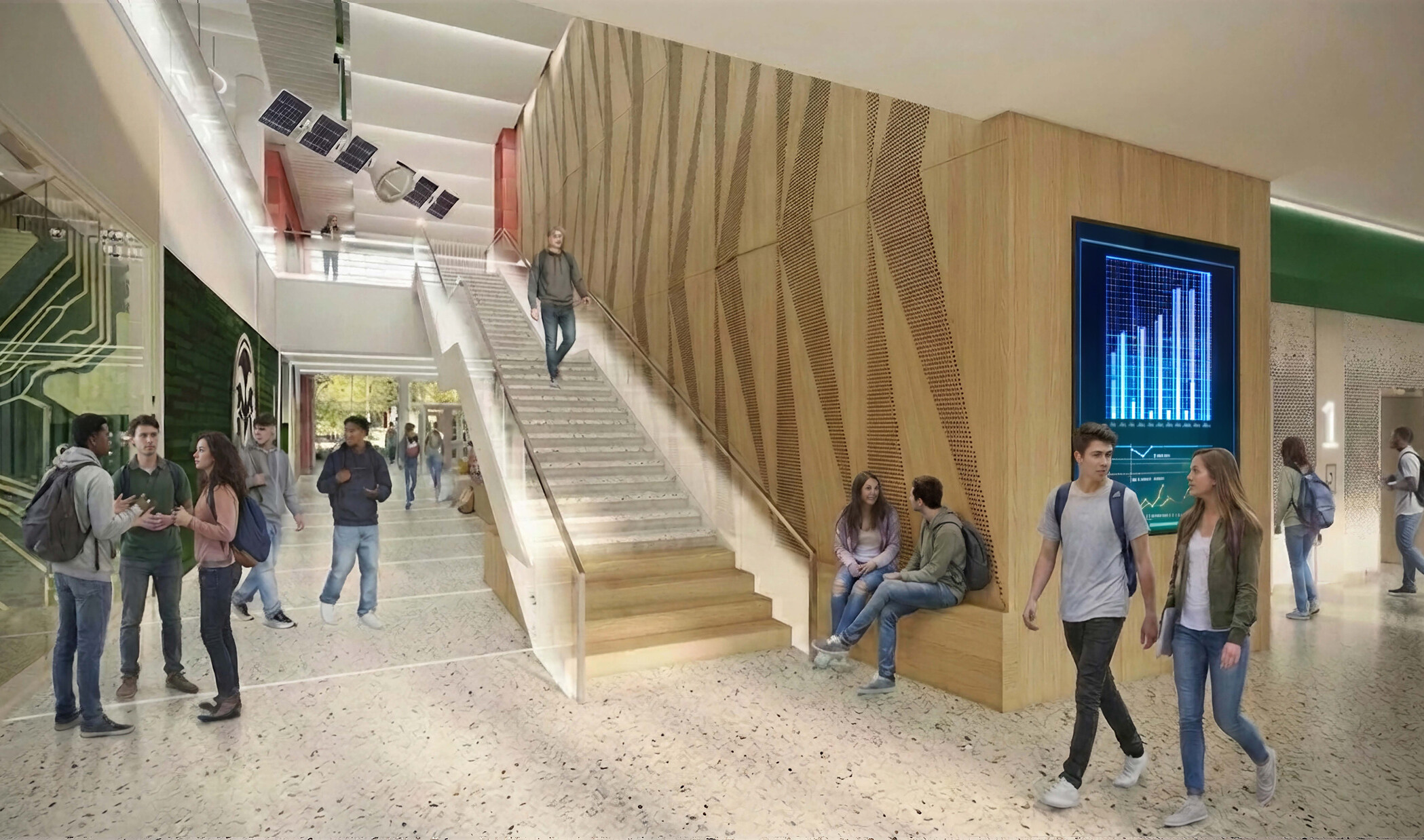
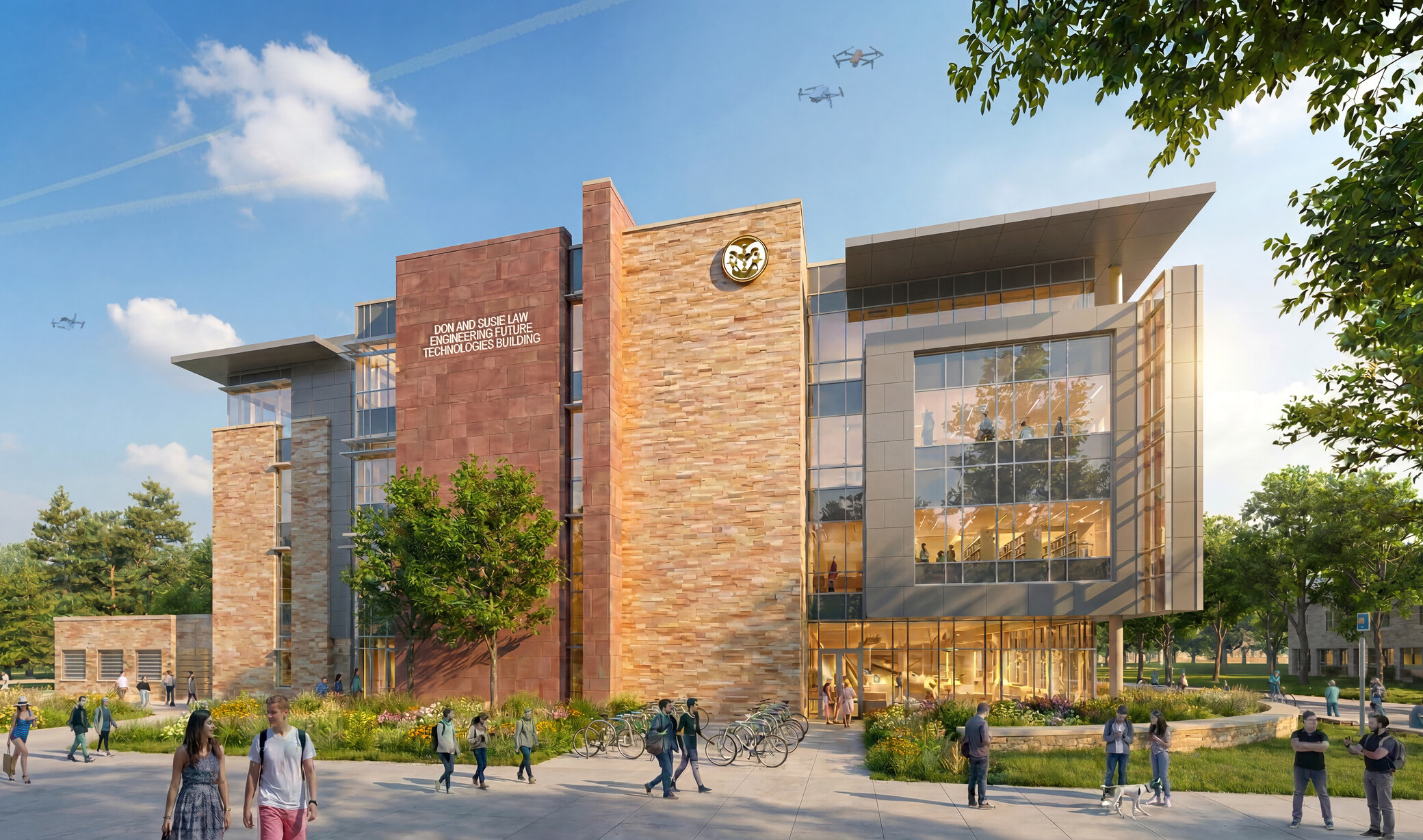
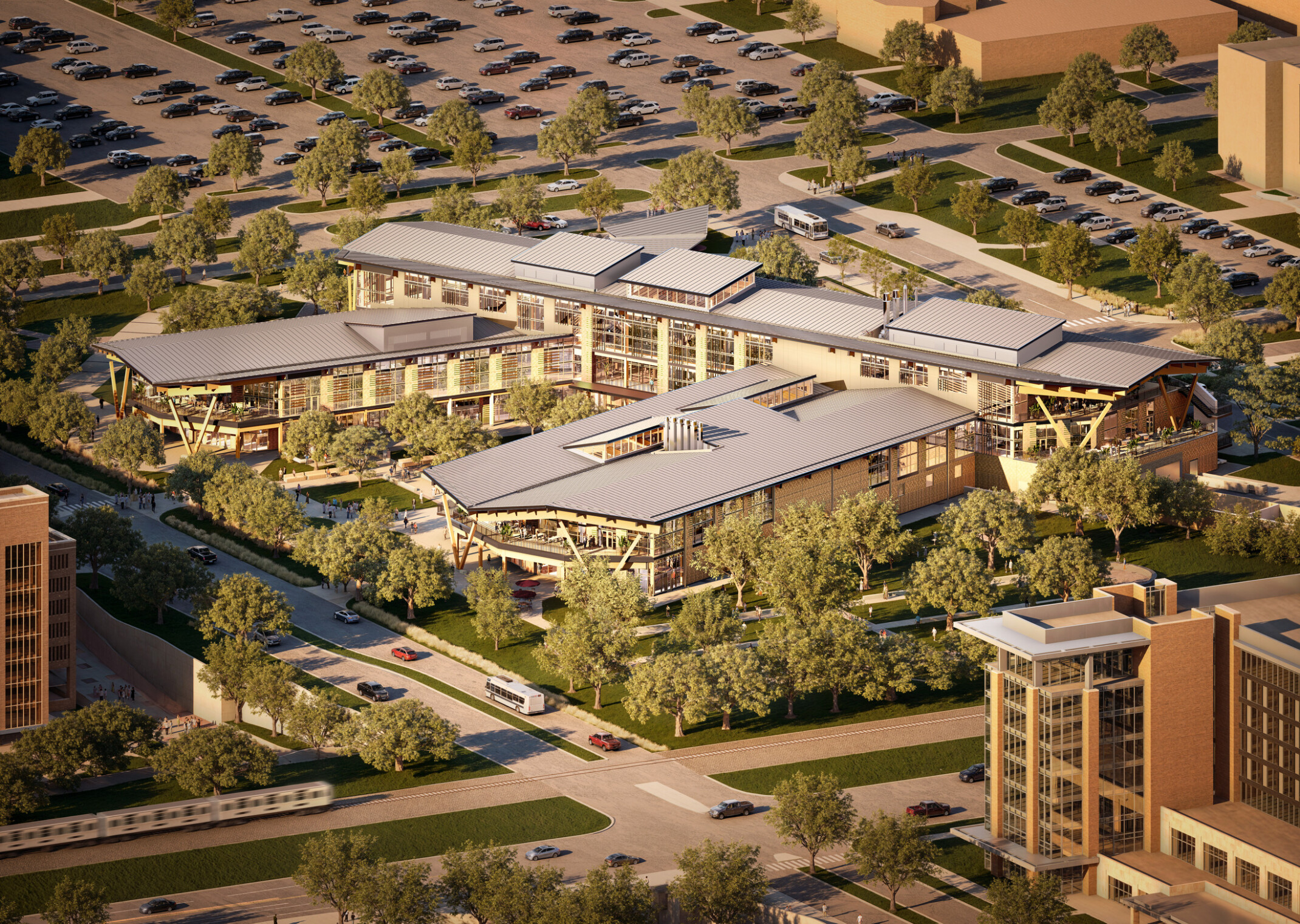
At the heart of Colorado State University’s campus, the Don and Susie Law Engineering Future Technologies Building strengthens a connected, interdisciplinary culture while staying true to the unique Mid-Century Prairie style of campus. The university’s goals were to break down traditional silos and enable partnerships across engineering, computer science, and emerging technologies. Our design achieves this vision by bringing together laboratories for prototyping and discovery, adaptable classrooms, and collaboration spaces that turn CSU’s hands-on approach into daily practice.
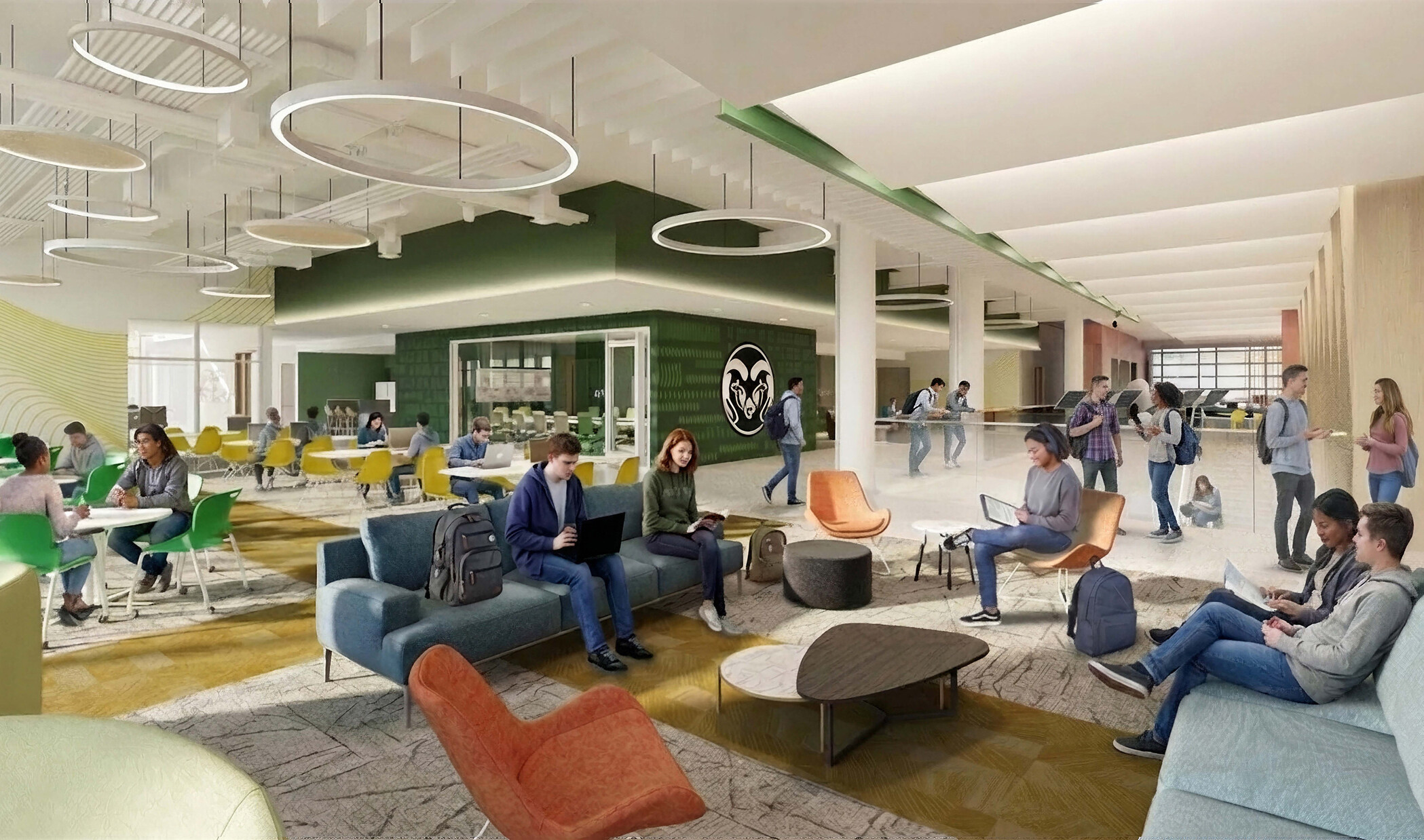
The architecture emphasizes transparency, accessibility, and sustainability, with daylighted routes, clear entrances, and inclusive places to learn, make, and share ideas. It clarifies movement between making, teaching, advising, and research, shortens daily steps, and puts student-support services in visible, easy-to-reach locations. Active edges and open stairs invite movement and chance connection, while quiet rooms and focus labs offer refuge for concentrated work. Natural materials and biophilic elements pair with visible technology to make the building a campus anchor that signals innovation and Ram Pride. The design also integrates input from faculty, students, and industry partners so the building reflects the aspirations and values of its future users.
New construction of the Don and Susie Law Engineering Future Technologies Building will deliver a 125,000-SF facility replacing the 52,000-SF Glover Building, including demolition and phased relocation of existing telecom infrastructure. The program includes digital and physical prototyping labs, AI makerspaces, experiential learning labs, startup garages, classrooms, offices, and student support centers. Key spaces include 6,000-SF Main Street commons, 11,600 SF of classrooms, and 16,000 SF of hands-on prototyping labs with AR/VR suites. The project targets LEED Gold and integrates high-performance strategies such as displacement ventilation, heat recovery, red-free materials, biophilic design principles, solar modeling, and photovoltaic readiness. Flexible utilities and robust floor loading anticipate equipment changeover, and universal-design strategies support access for all users. Site improvements include stormwater management, outdoor classrooms that extend learning beyond the building, shaded study areas, and pollinator plantings, while phased sequencing maintains safe campus operations during construction.