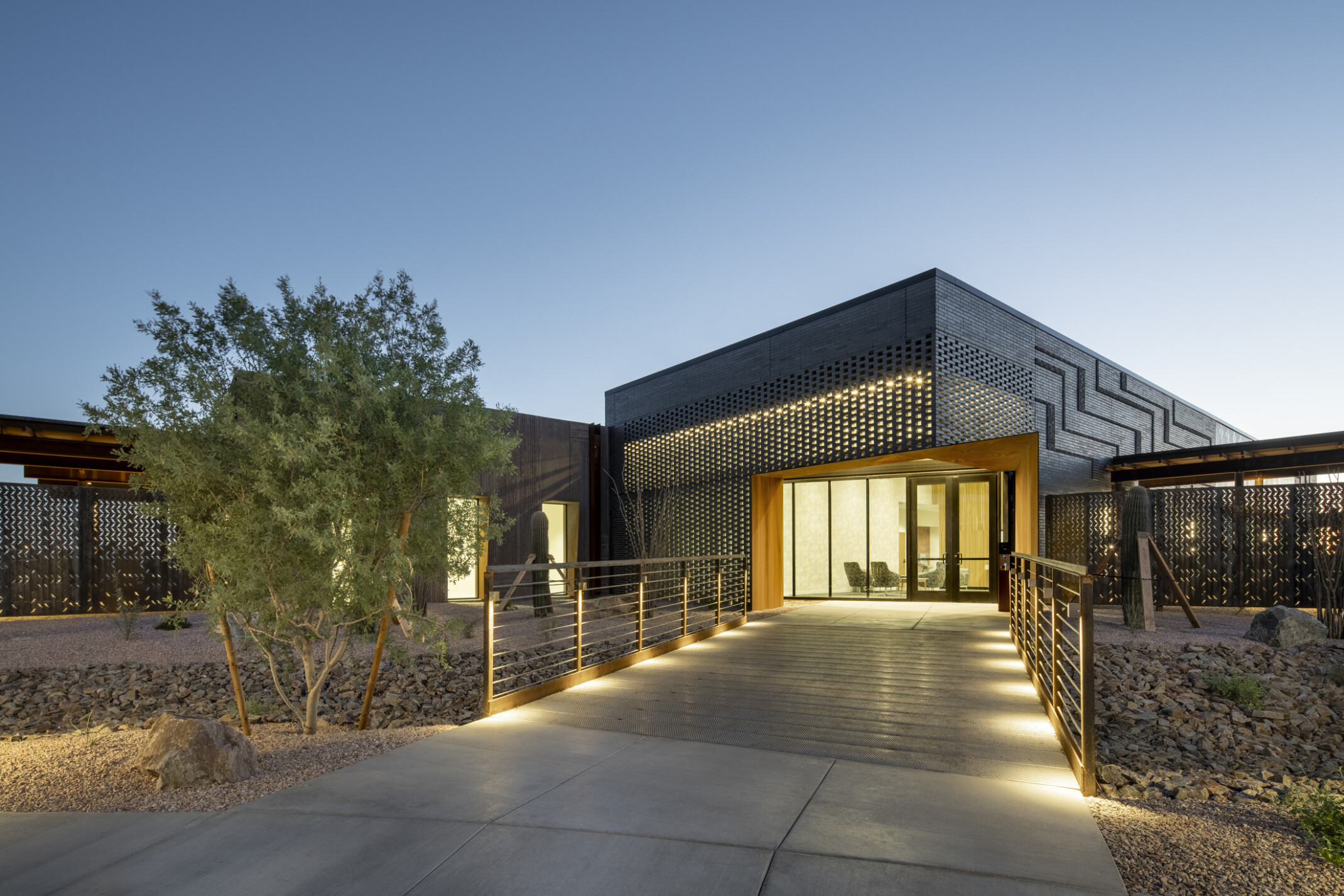
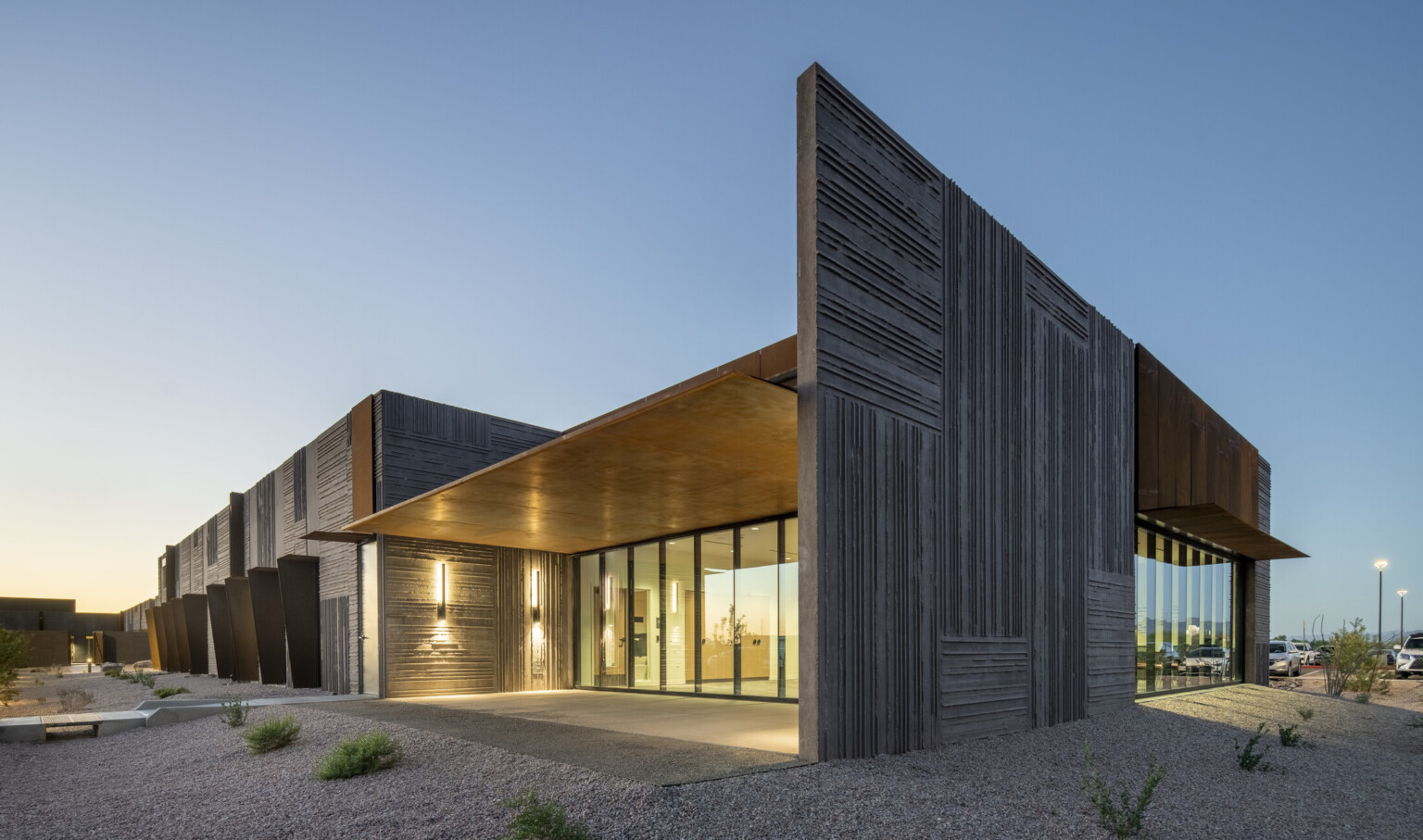
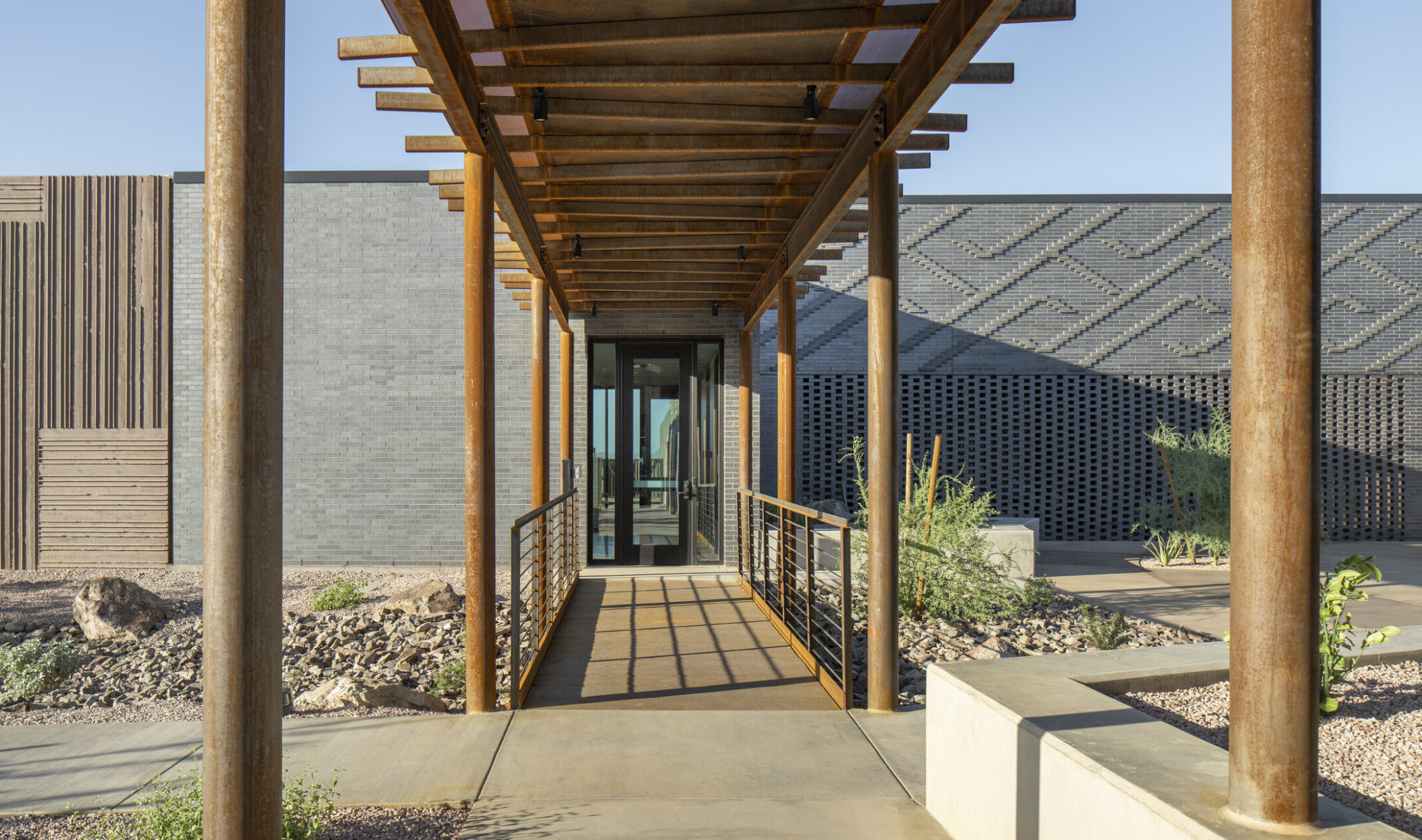
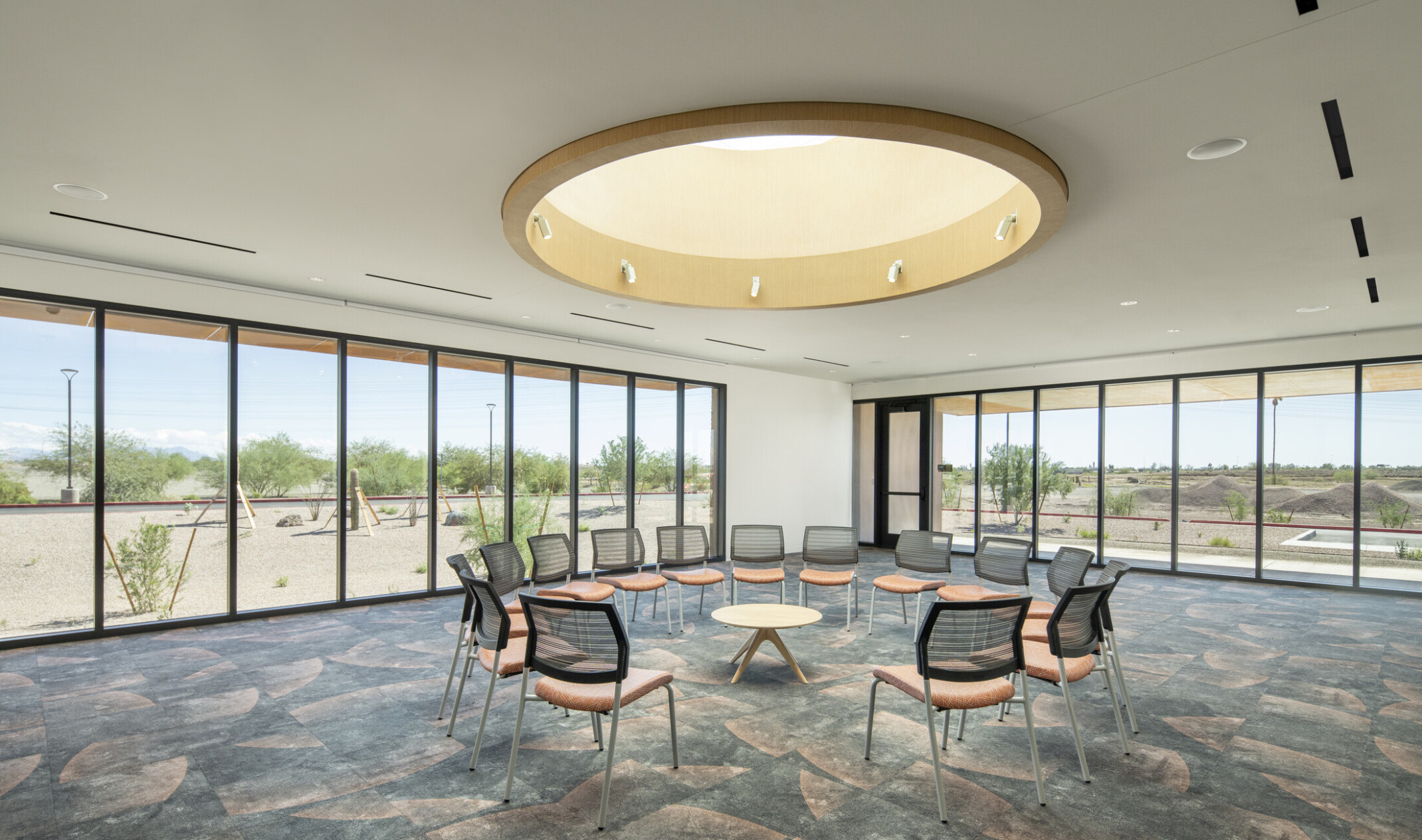
The Salt River Pima-Maricopa Indian Community envisioned a new, ground-up addiction recovery facility for its “Journey to Recovery” program to support addiction treatment throughout the community. Our design celebrates and infuses the idea of communal gathering while thoroughly integrating principles related to the cultural values and history of the Pima-Maricopa, as well as sustainable strategies that promote harmony with the natural context.
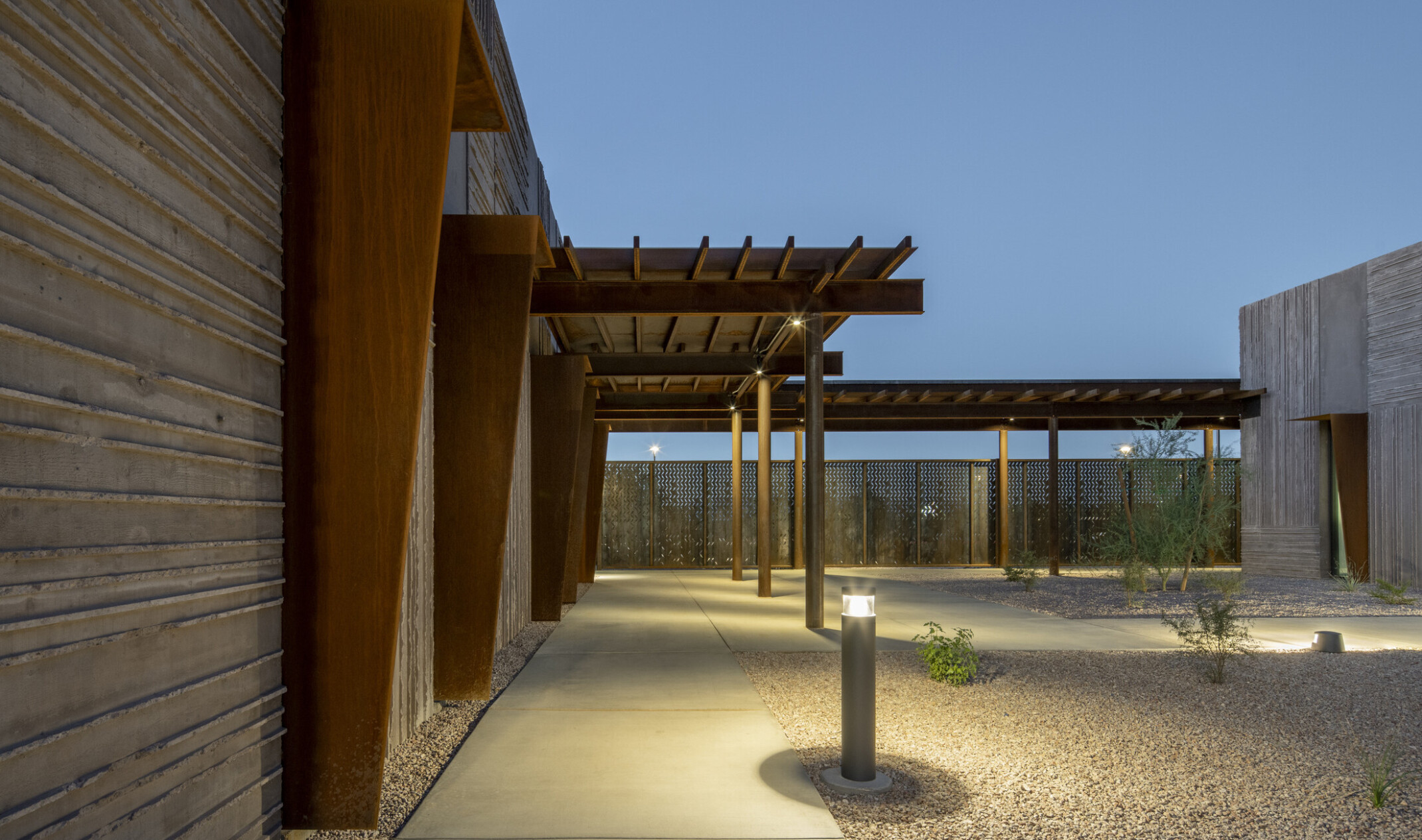
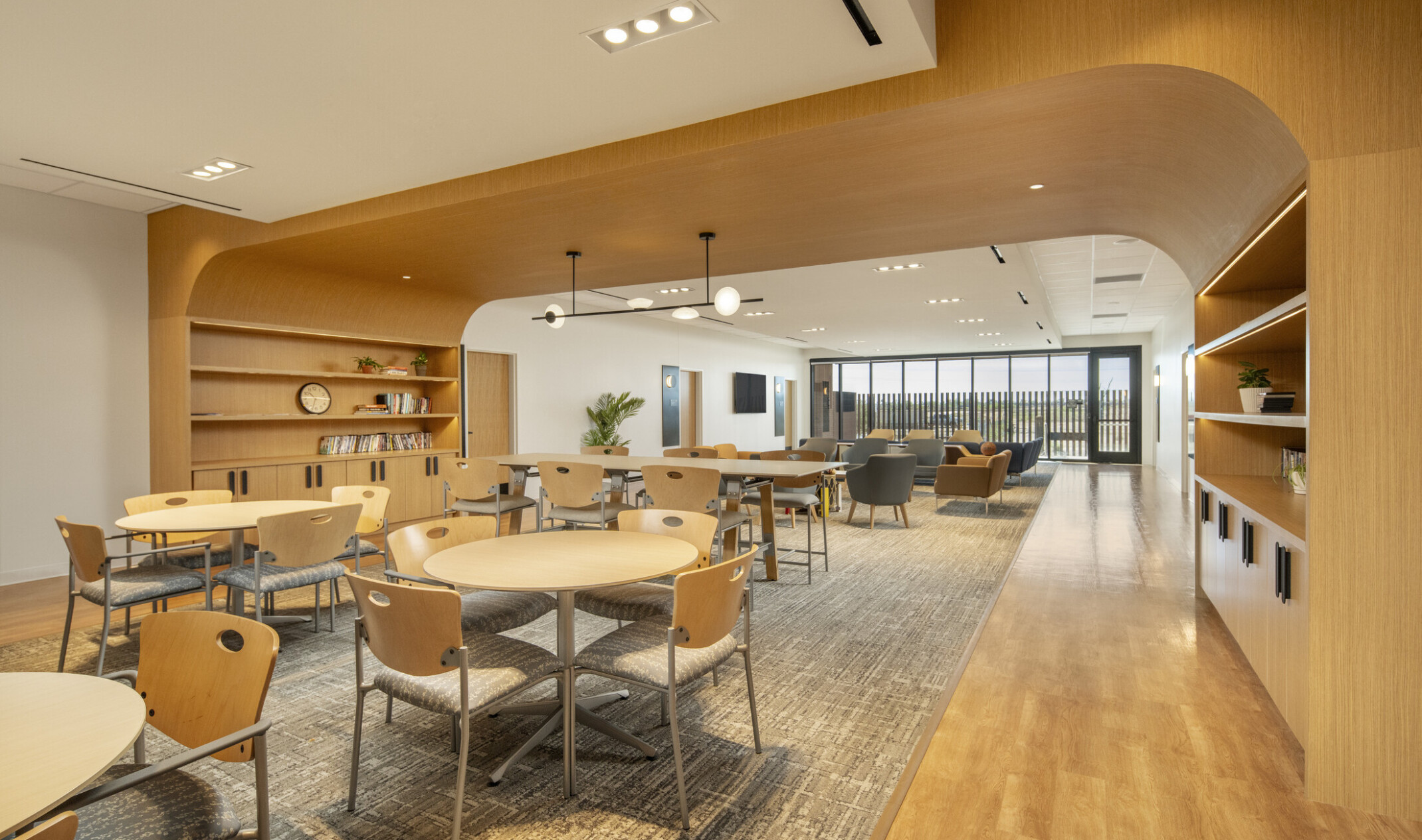
Elements of the program are divided into modular components and articulated as smaller pavilion or residential-like masses clustered around a primary centralized, secure courtyard in the spirit of communal gathering at the highest order. The facility and site amenities provide a welcoming, home-like environment where community members receive treatment with privacy and dignity and are encouraged to remain engaged in the program. Building and site elements operate sustainably, in harmony with nature, and offer opportunities for both communal gatherings and private reflection.
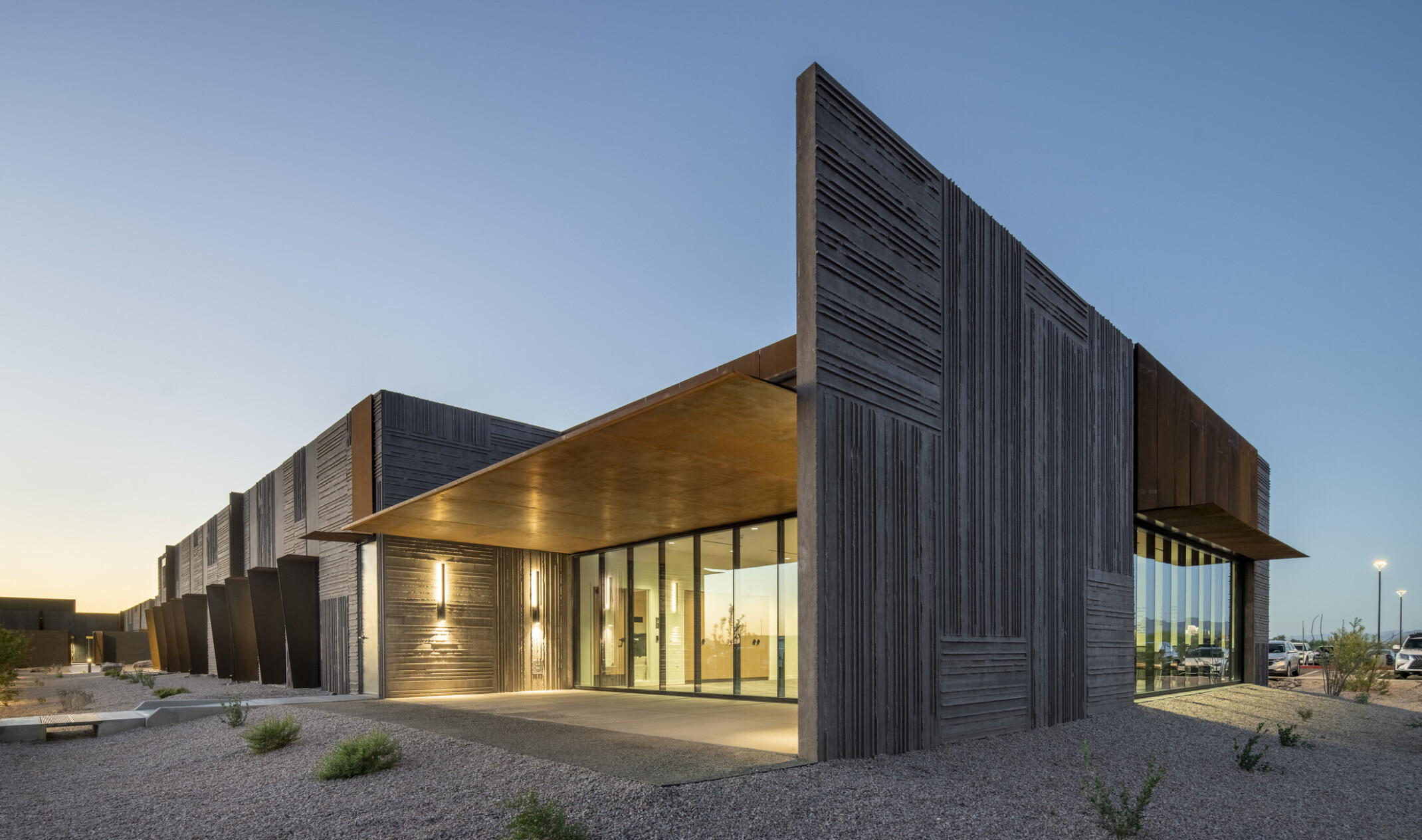
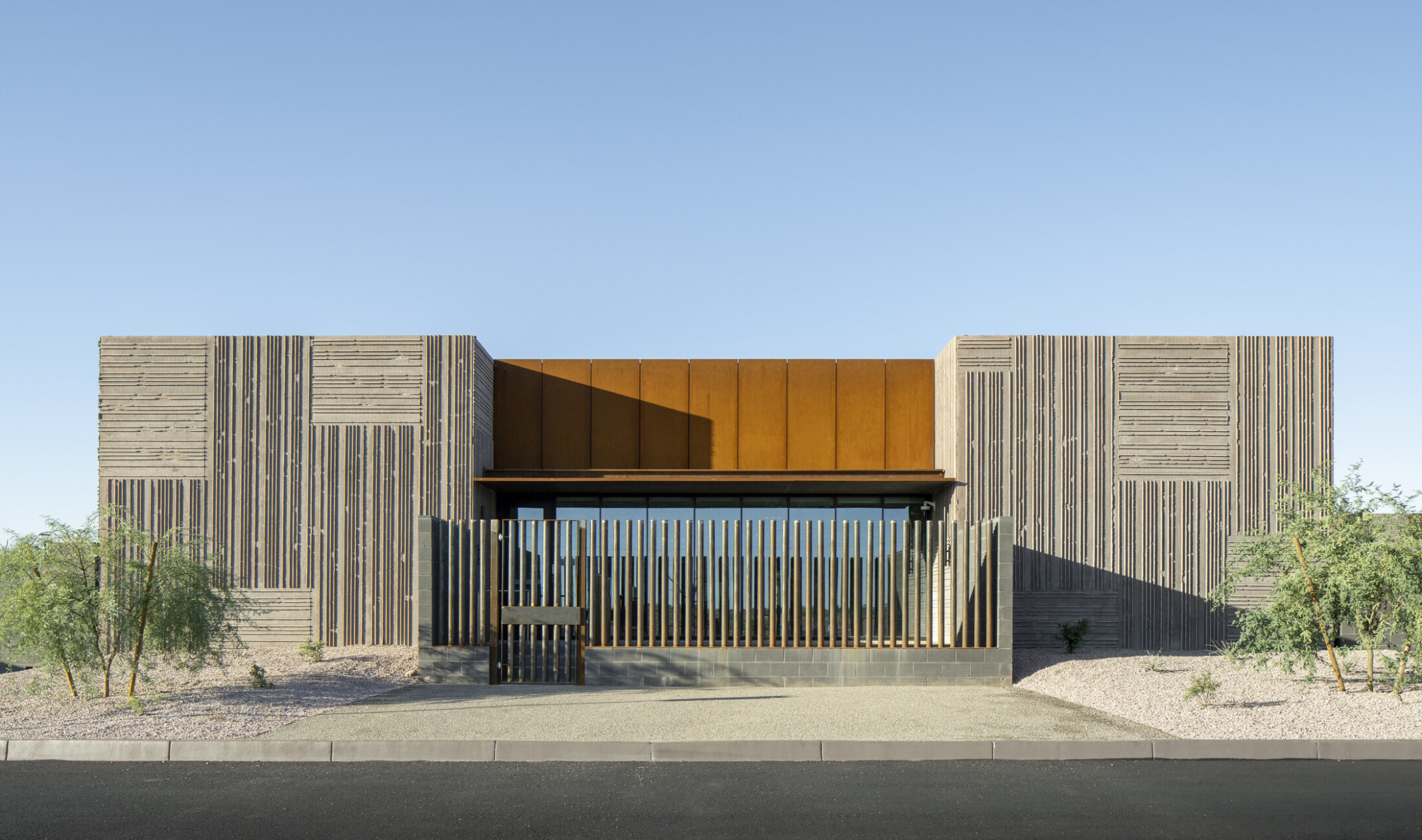
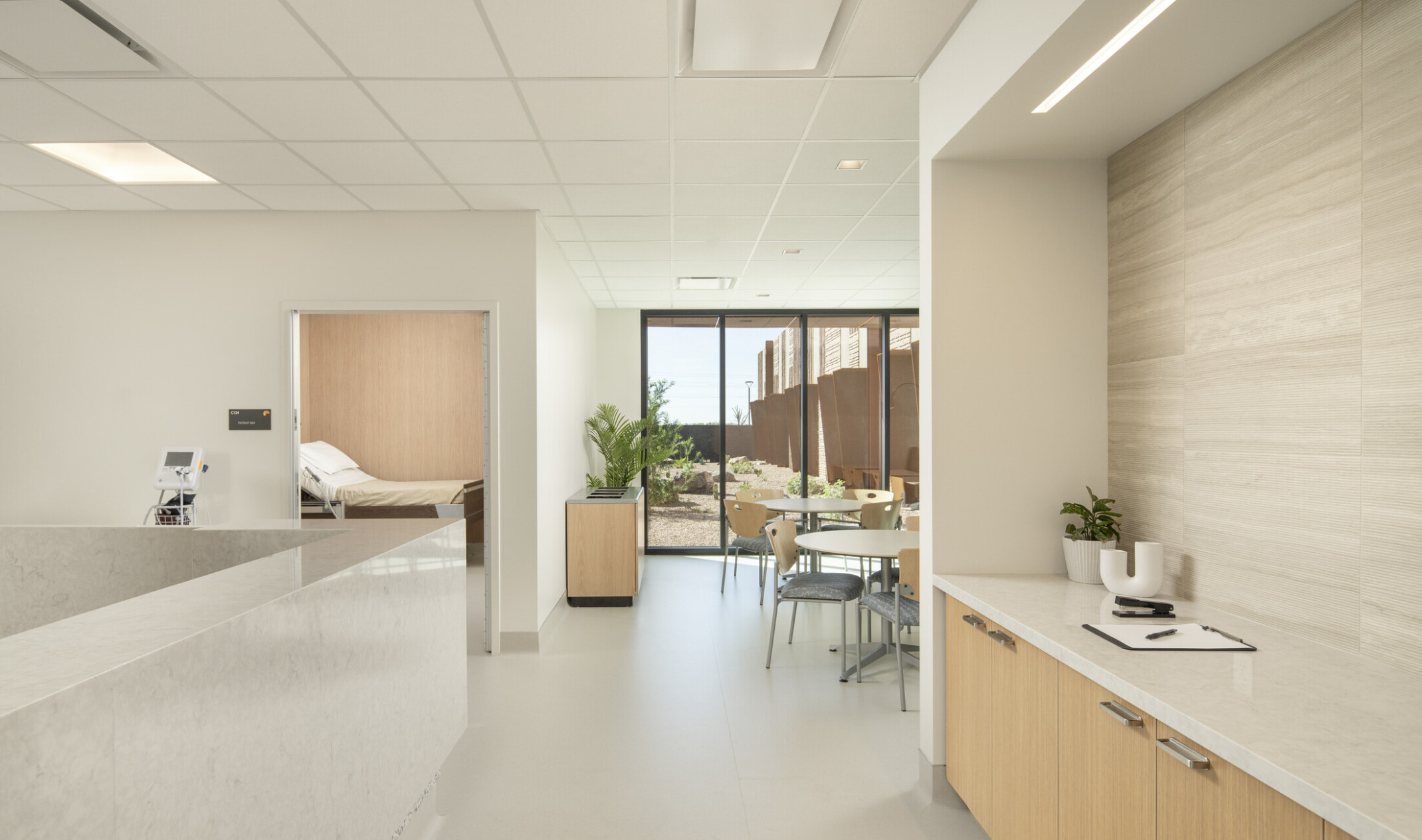
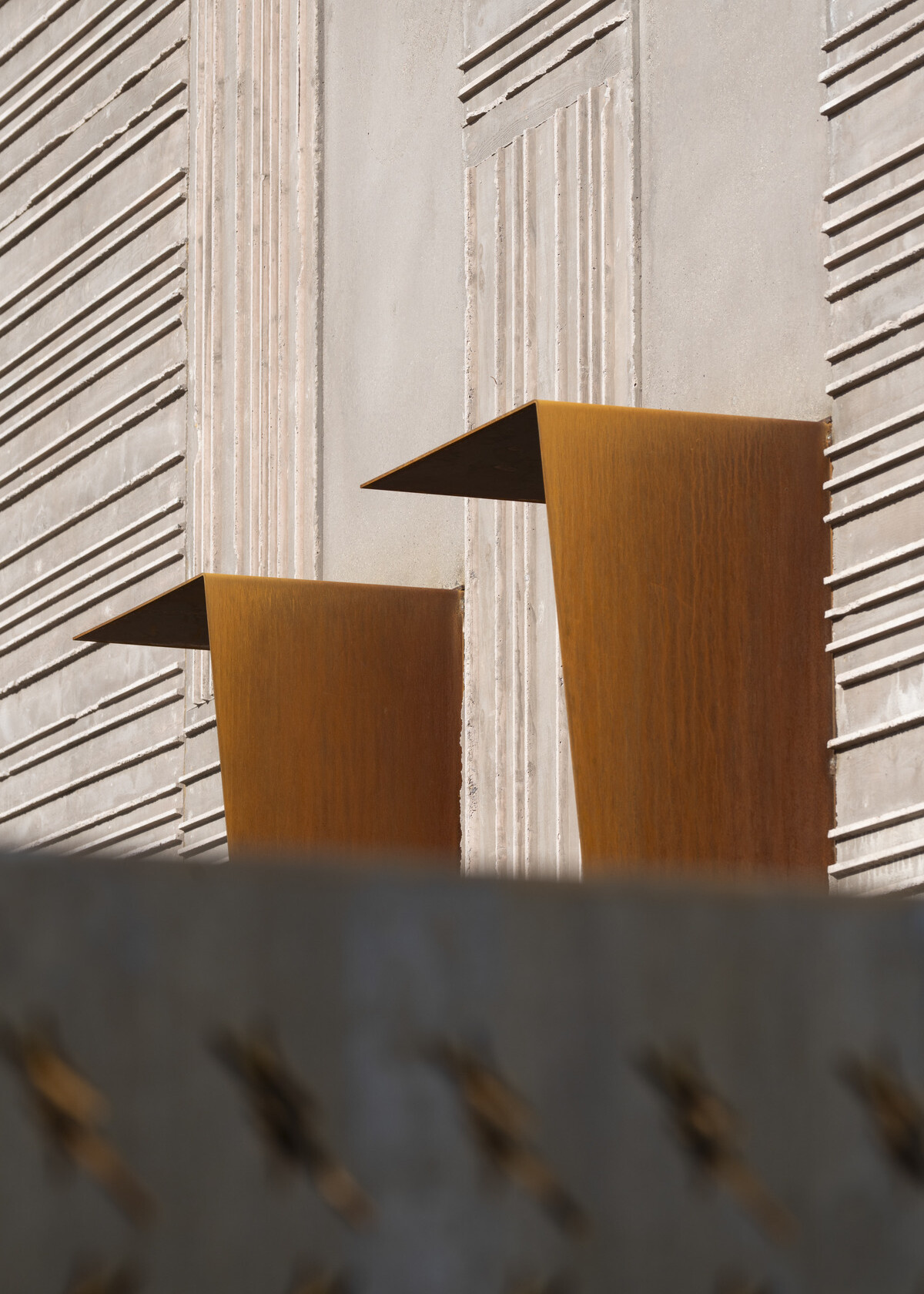
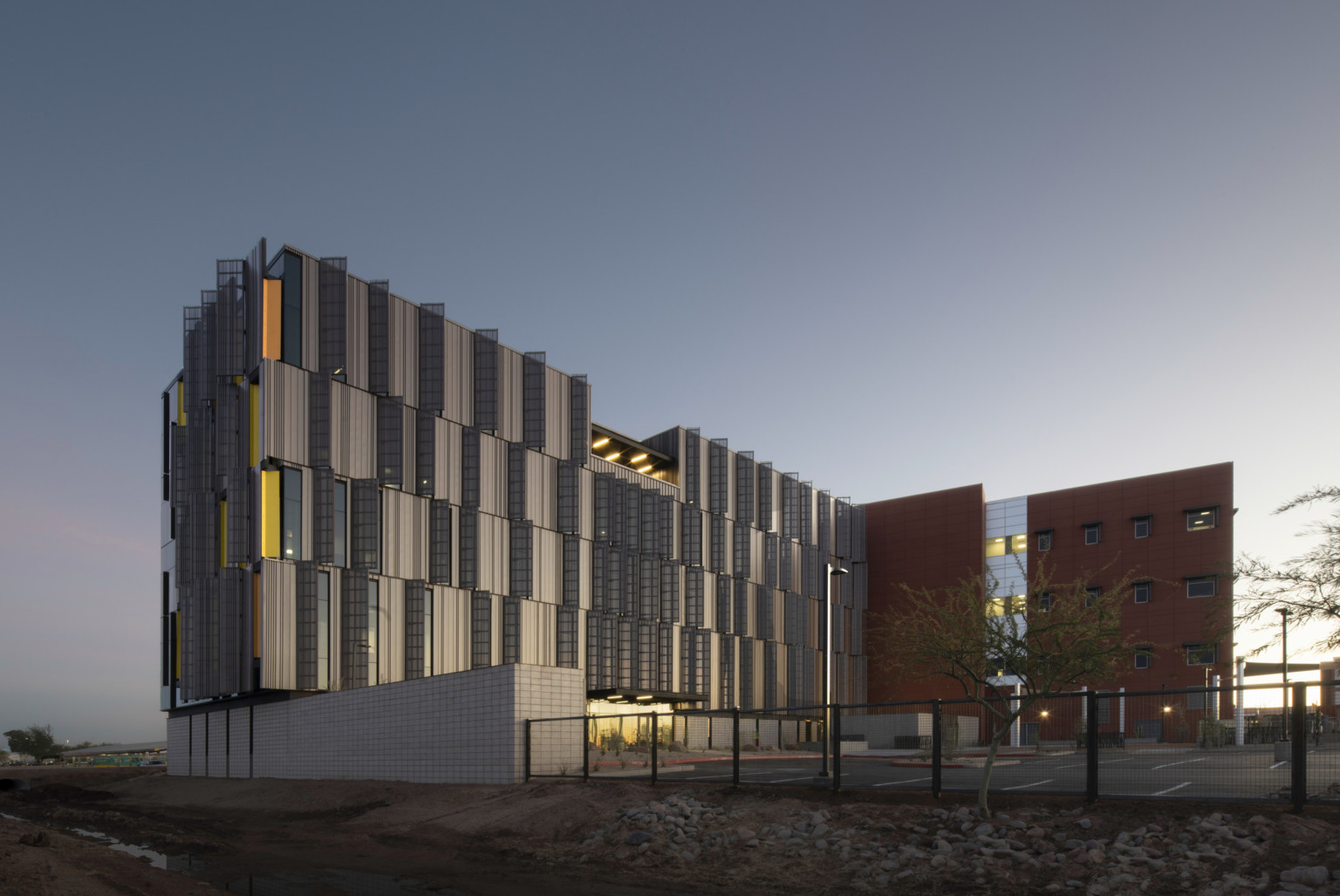
The project encompasses 48,000 SF of new construction delivered in a single phase, while allowing for potential future development through the preservation of roughly 35% of the site. In response to the hot, arid climate, building orientation is optimized along the east-west axis, massing is simplified, and openings are strategically sized and located. The building form, related shading structures, and the use of native landscaping create gradual transitions and microclimates from the exterior to the interior, providing usable space for residents and staff. Centrally located communal spaces are expressed with higher building volumes and are surrounded by lower, more intimate individual spaces. Natural building materials, both exterior and interior, take cues from the locality and blend with the surrounding land and mountains. By weaving the program with the site, landscape, nature, and community, the design fosters symbiotic relationships that support healing along one’s journey to recovery. The project includes a 48-bed, 21,000-SF residential unit; resident common areas; a commercial kitchen; intake and detox spaces; and daycare facilities. In addition, a 7,800-SF outpatient building supports the broader continuum of care. We provided architecture, interiors & FFE, mechanical, electrical, and plumbing engineering, audiovisual design, IT, and construction administration services.