Skip Main Links
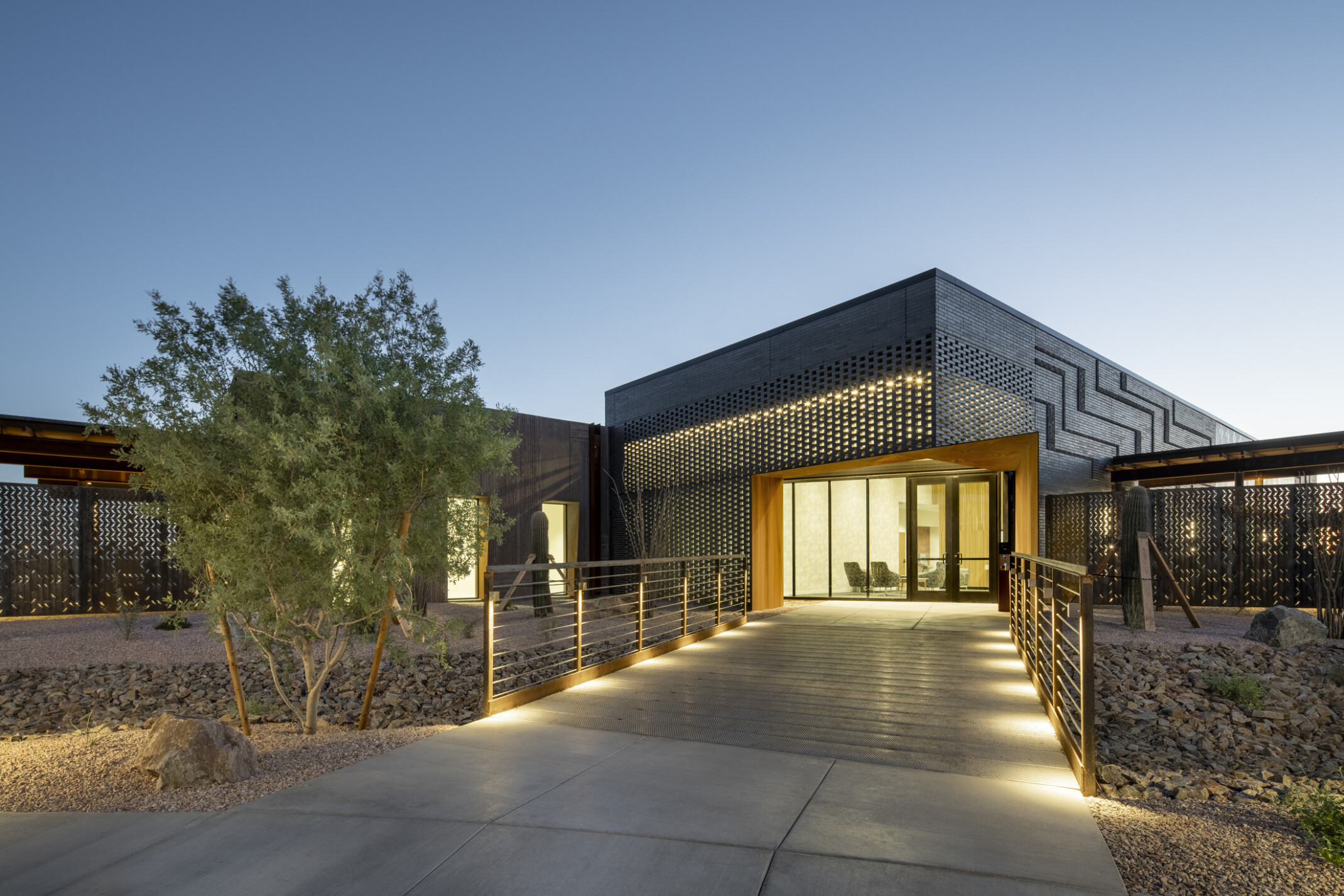
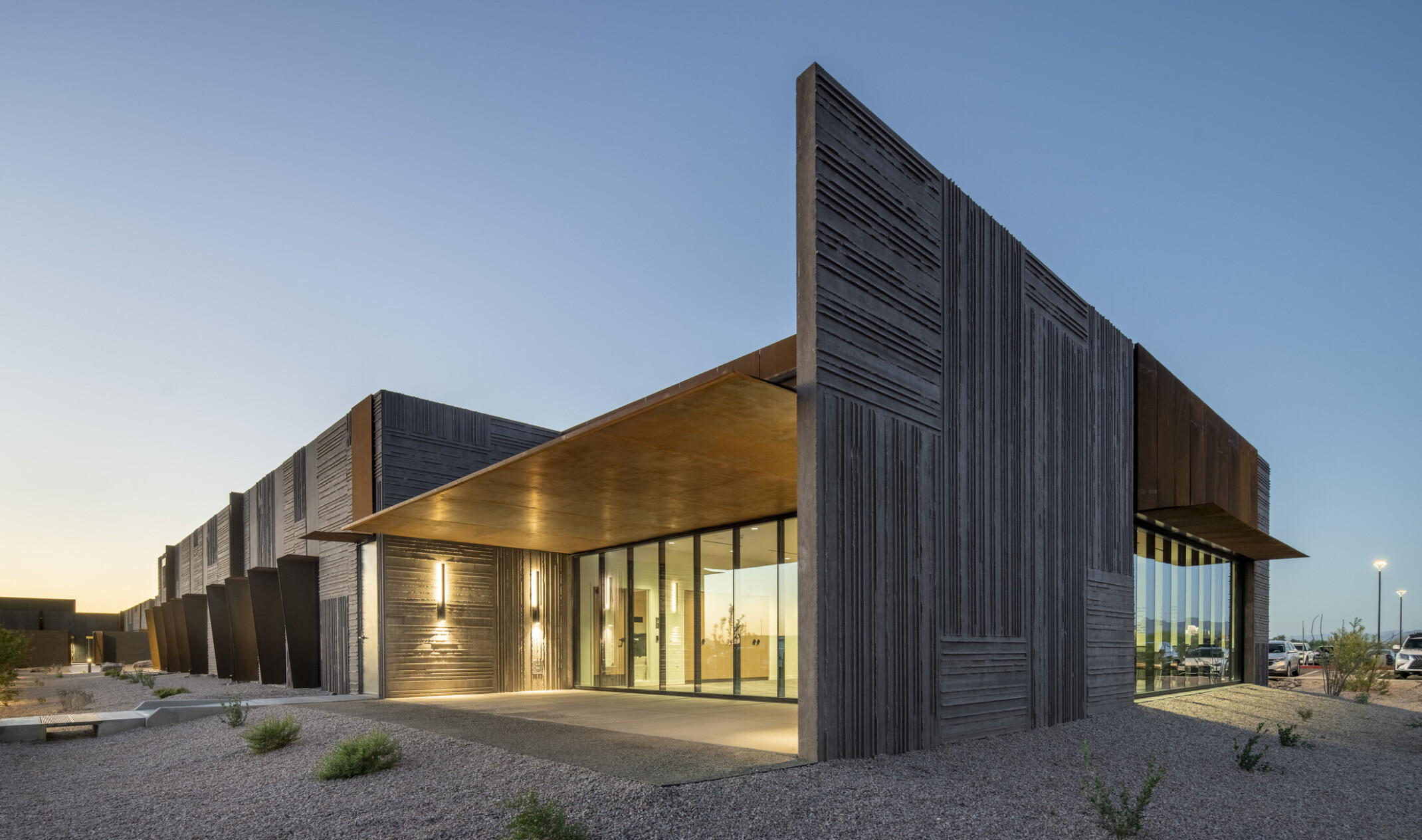
Modern building exterior at dusk with illuminated walkway leading to a glass entrance framed by a rust-colored steel structure; facade features dark perforated metal panels with geometric patterns; desert landscaping with rocks and shrubs surrounds the path under a clear evening sky

Salt River Pima-Maricopa Indian Community Journey to Recovery Residential Treatment Campus

Healing Rooted in Community and Place

Client

Salt River Pima-Maricopa Indian Community

Project Location

Scottsdale, AZ

Area

48,000 SF

Project Type

Outpatient, rehabilitation
The Salt River Pima‑Maricopa Indian Community’s new facility for its “Journey to Recovery” program reflects a deeply rooted cultural commitment to communal healing, connection to the land, and respect for individual dignity. DLR Group’s design celebrates shared gathering while integrating principles tied to Pima‑Maricopa cultural history and their relationship with the natural environment.

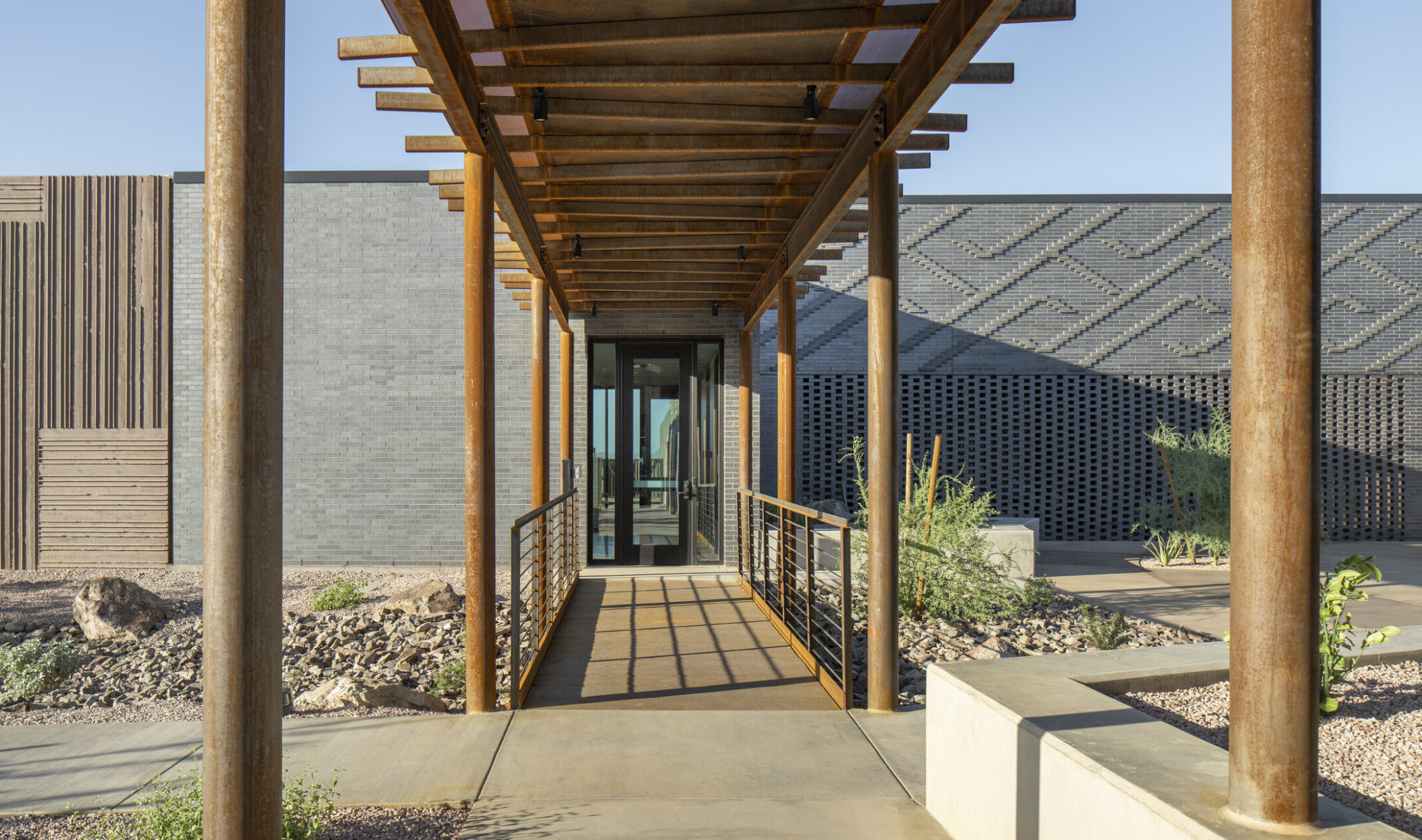
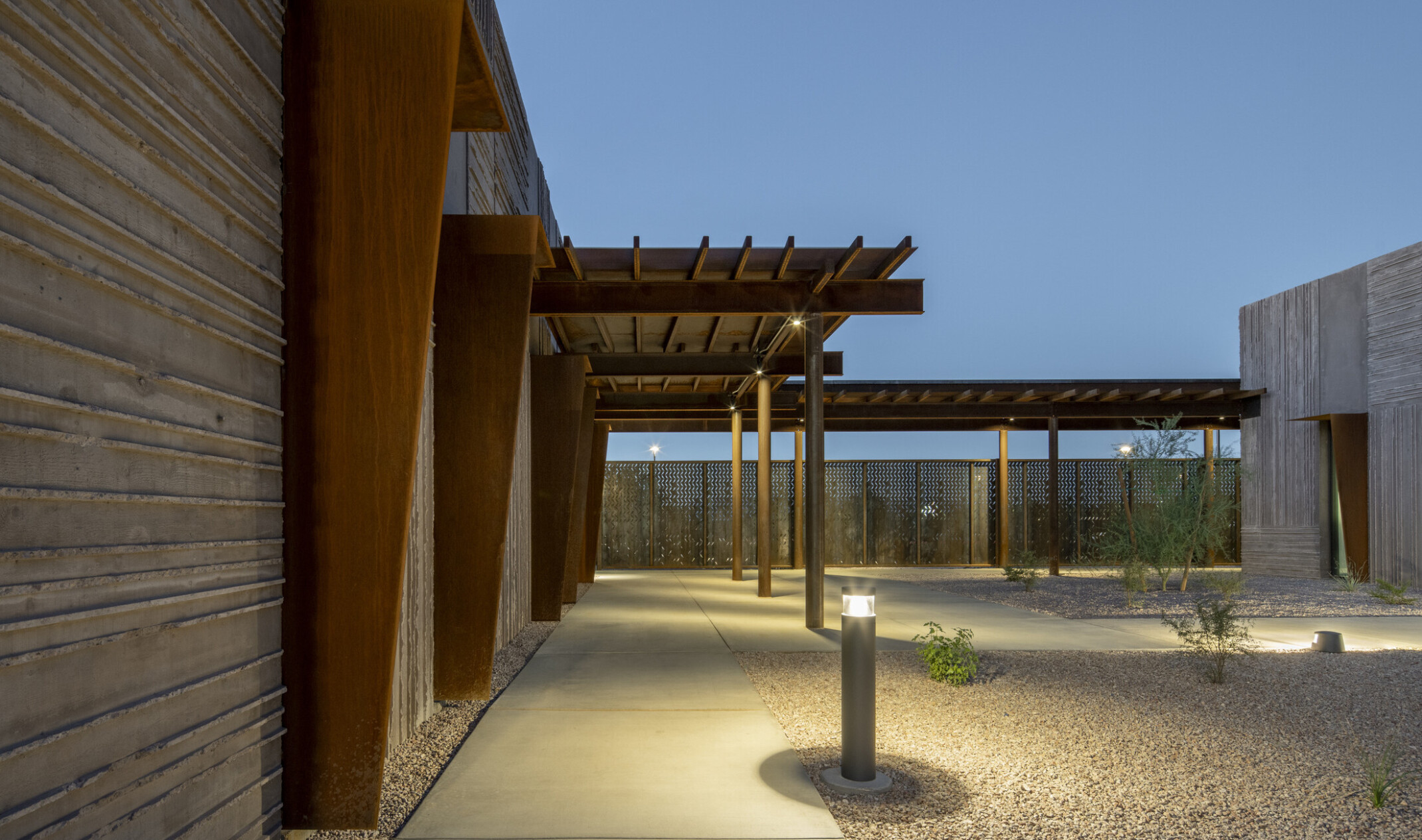
The form and organization of the facility create a series of gradual transitions from exterior to interior through shading structures, native landscaping, and micro‑climates that offer comfort across the hot, arid climate. The facility’s design positions communal spaces at the heart of the campus in higher‑volume structures, with more intimate residential and program spaces arranged around them to foster safety, privacy, and a sense of belonging. Exterior and interior materials draw from local precedent to blend with the surrounding land and mountains, grounding the facility as an authentic community place. By thoughtfully weaving program, site, landscape, and cultural values, the design cultivates conditions that support healing at every stage of a resident’s recovery journey.

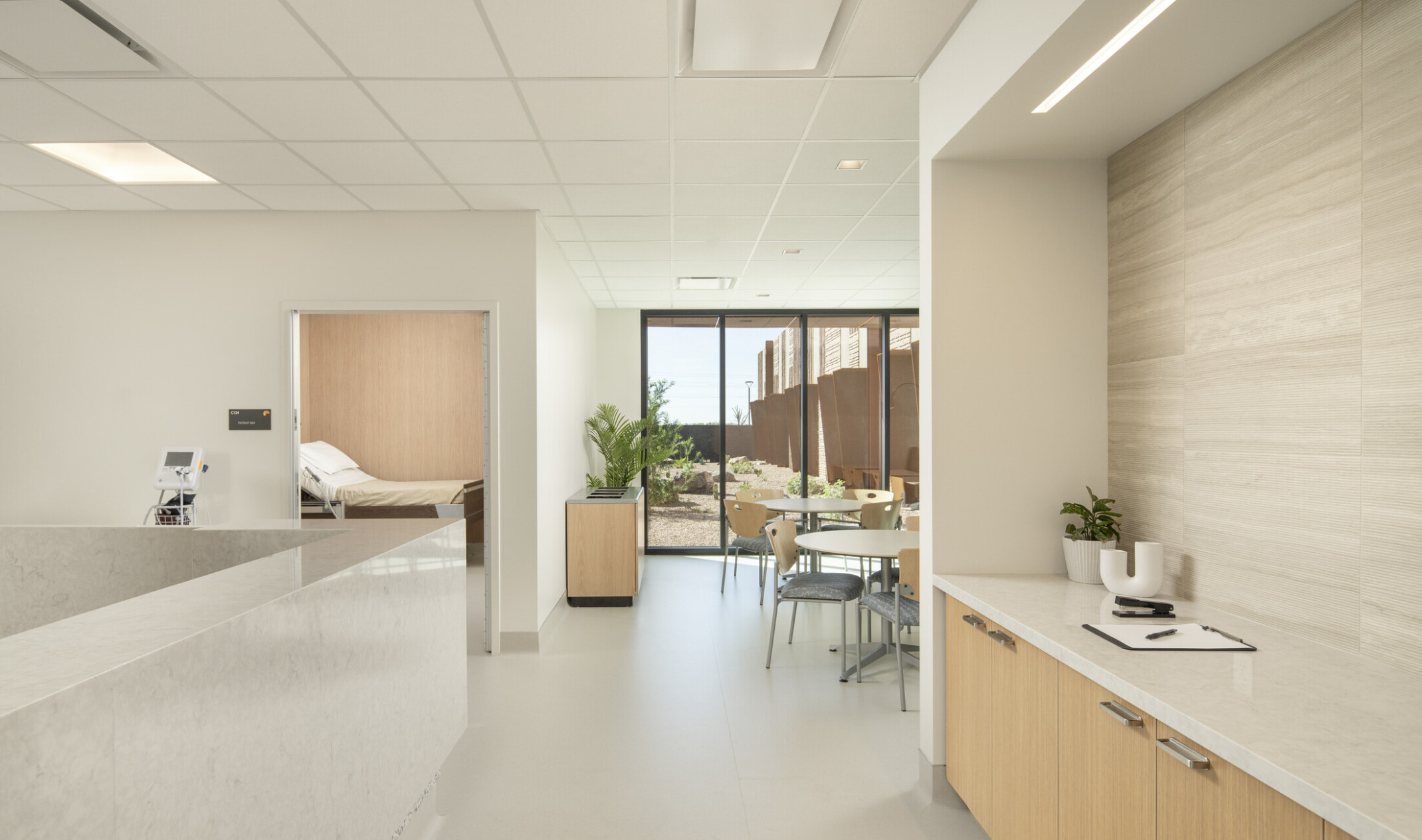
The 44,800 SF addiction recovery facility is a new, ground‑up development consolidated on the northern half of the site to preserve land in alignment with community‑held values. The program is organized as a series of modular, pavilion‑like components arranged around a secure central courtyard that embodies the cultural importance of communal gathering. Resident‑focused spaces include a 48‑bed residential unit, shared commons, intake and detox services, daycare, and associated support functions. The building orientation follows an east‑west axis to reduce heat gain, and strategically placed openings support daylighting while minimizing thermal load. Simplified massing, shading structures, and native landscapes help regulate temperature and create usable outdoor spaces for reflection, connection, and staff interaction. The design incorporates sustainable strategies that reinforce harmony with nature while providing residents with privacy, dignity, and encouragement to remain engaged in their treatment. DLR Group provided architecture, interiors, mechanical, electrical, and plumbing engineering, audiovisual and IT, FFE, and construction administration services.

Building with Intent

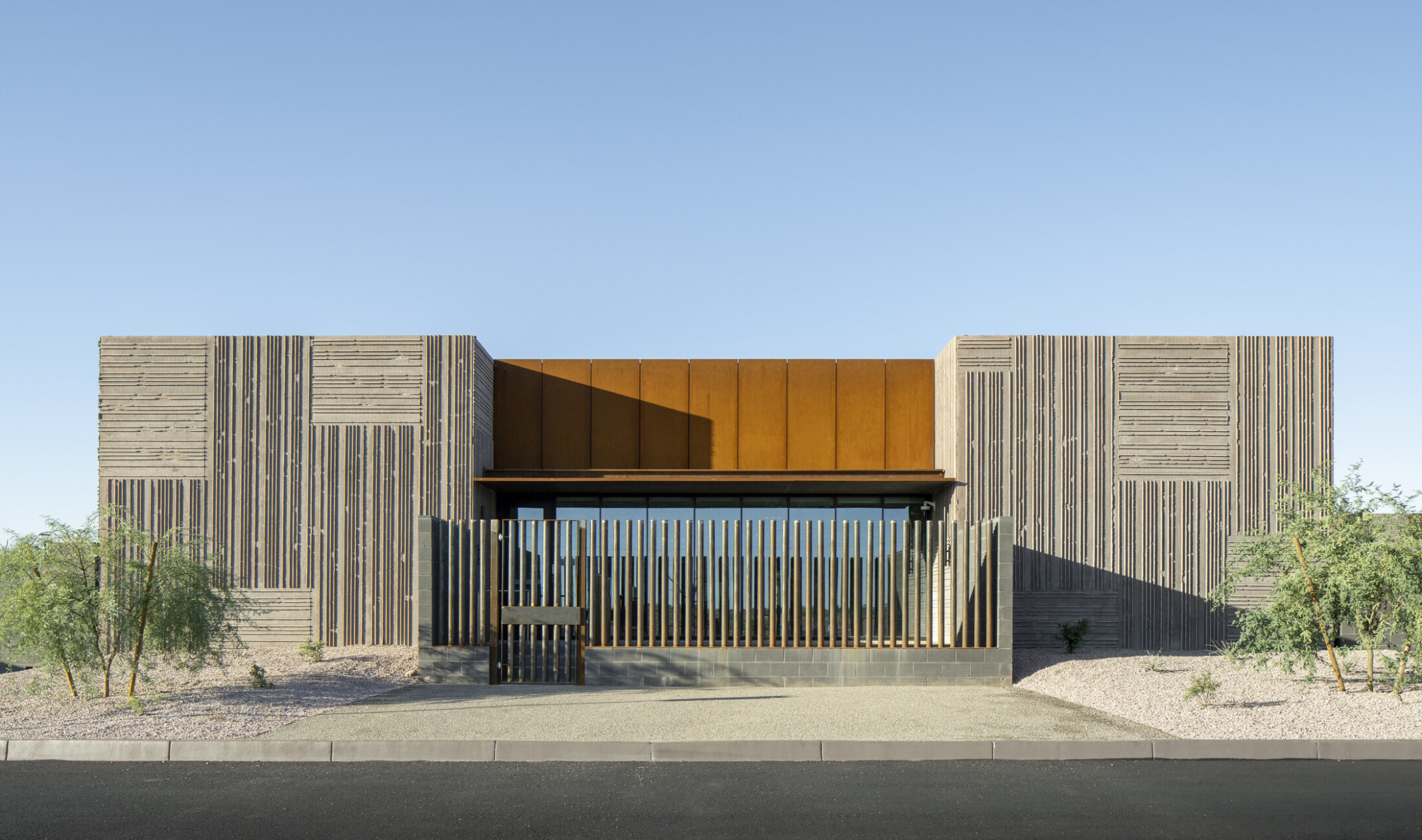
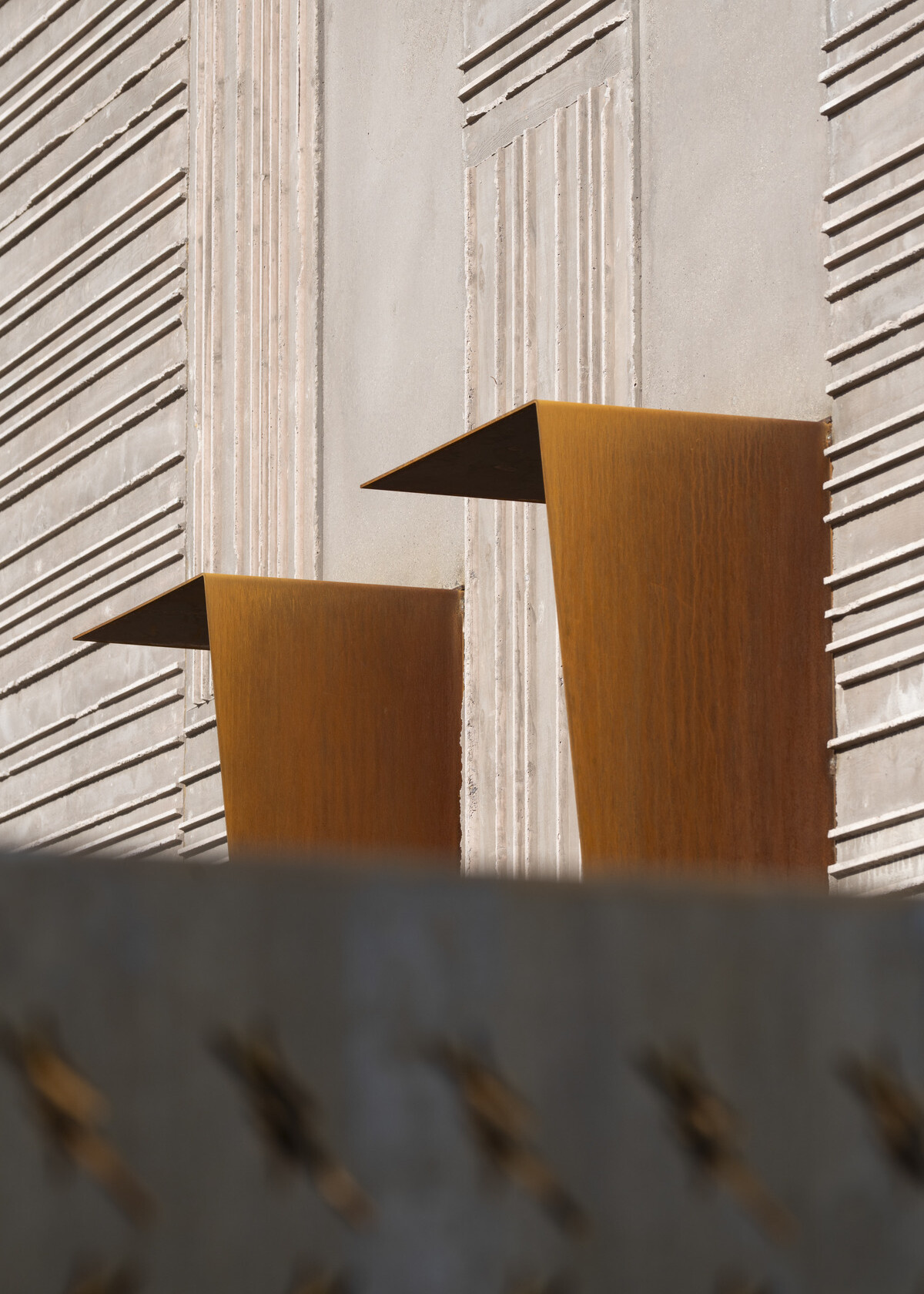
DLR Group’s design celebrates communal gathering and aligns the facility with the cultural values and history of the Pima‑Maricopa Community. The recovery center tells its story through climate‑responsive material shifts that guide residents from arrival to interior spaces. In response to the hot, arid climate, the building is oriented east–west, the massing is simplified, and openings are carefully sized and located to balance daylight and solar exposure. Shading structures and native landscaping create gradual transitions and micro‑climates that offer comfort and usable thresholds for residents and staff. Inside, natural materials inspired by local precedent blend seamlessly with the surrounding land and mountains, grounding the building in its desert context. Together, these strategies create a continuous, calming path that supports each step of the healing process and reinforces the Community’s connection to place.
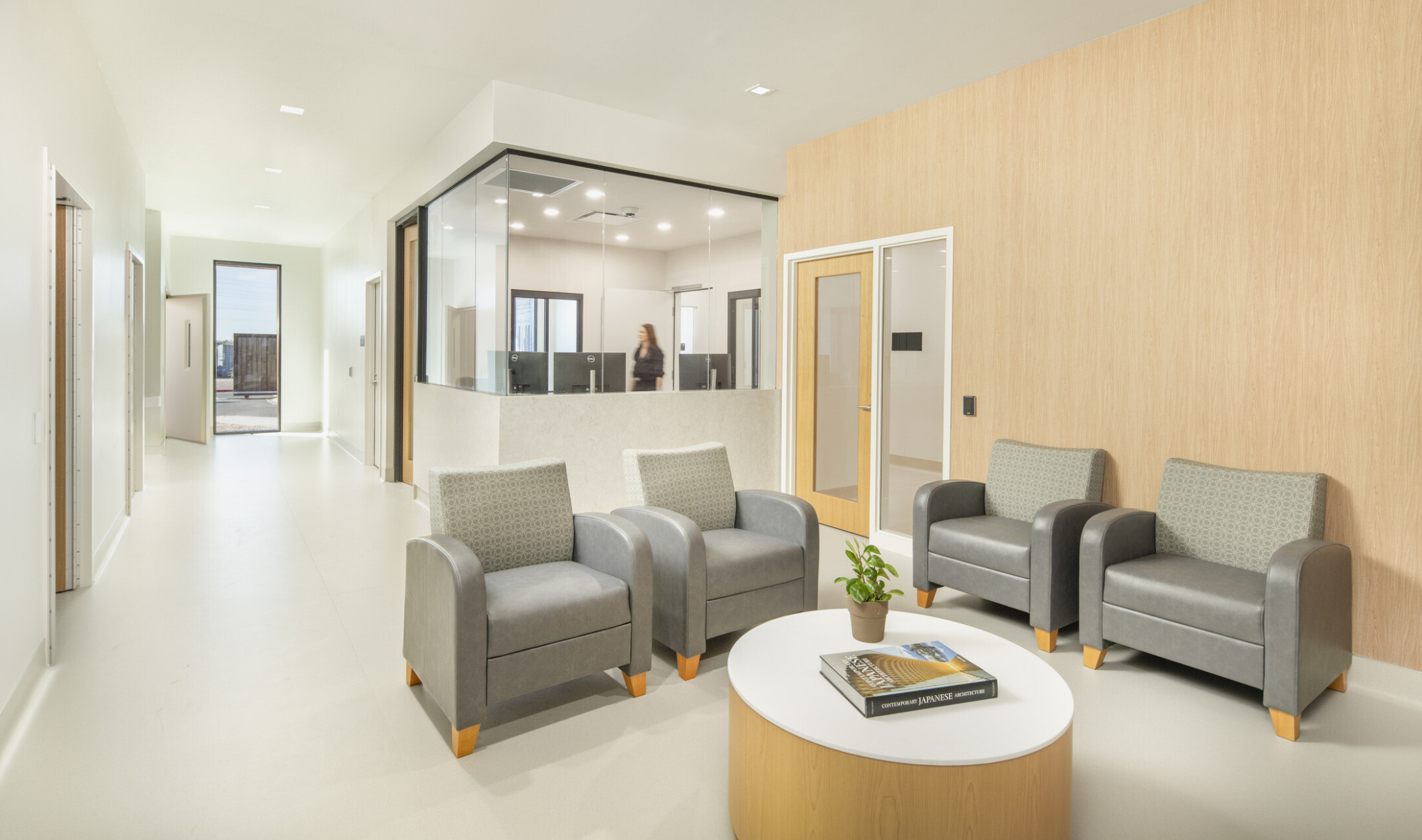
A bright lobby area with four upholstered chairs arranged around a round table, adjacent to a glass-walled office space and a hallway extending toward an exterior doorway.

Grounded Connections (Community)

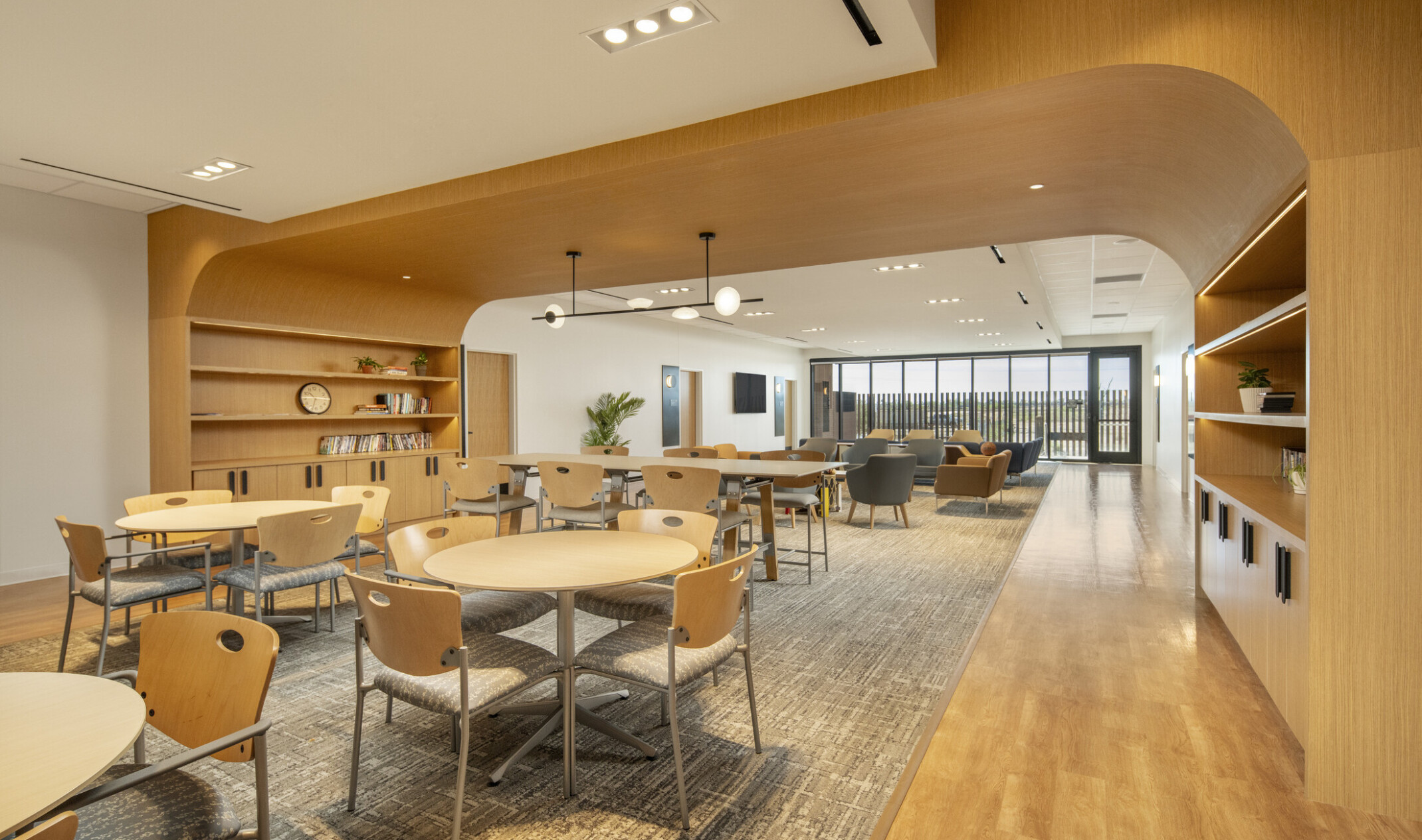
The treatment center is composed of modular, pavilion‑like volumes arranged around a primary centralized, secure courtyard, creating an intentional sequence of smaller, human‑scaled elements. As residents move from one volume to the next, linked transitional spaces establish a continuous flow and a clear sense of grounding. Centrally located communal spaces are expressed with higher building volumes, while more intimate residential and program spaces surround them to promote privacy, dignity, and comfort. This organization reflects the strength of the Pima Maricopa Community, with individual parts working together as a cohesive whole, and reinforces the cultural importance of communal gathering as a foundation for healing.
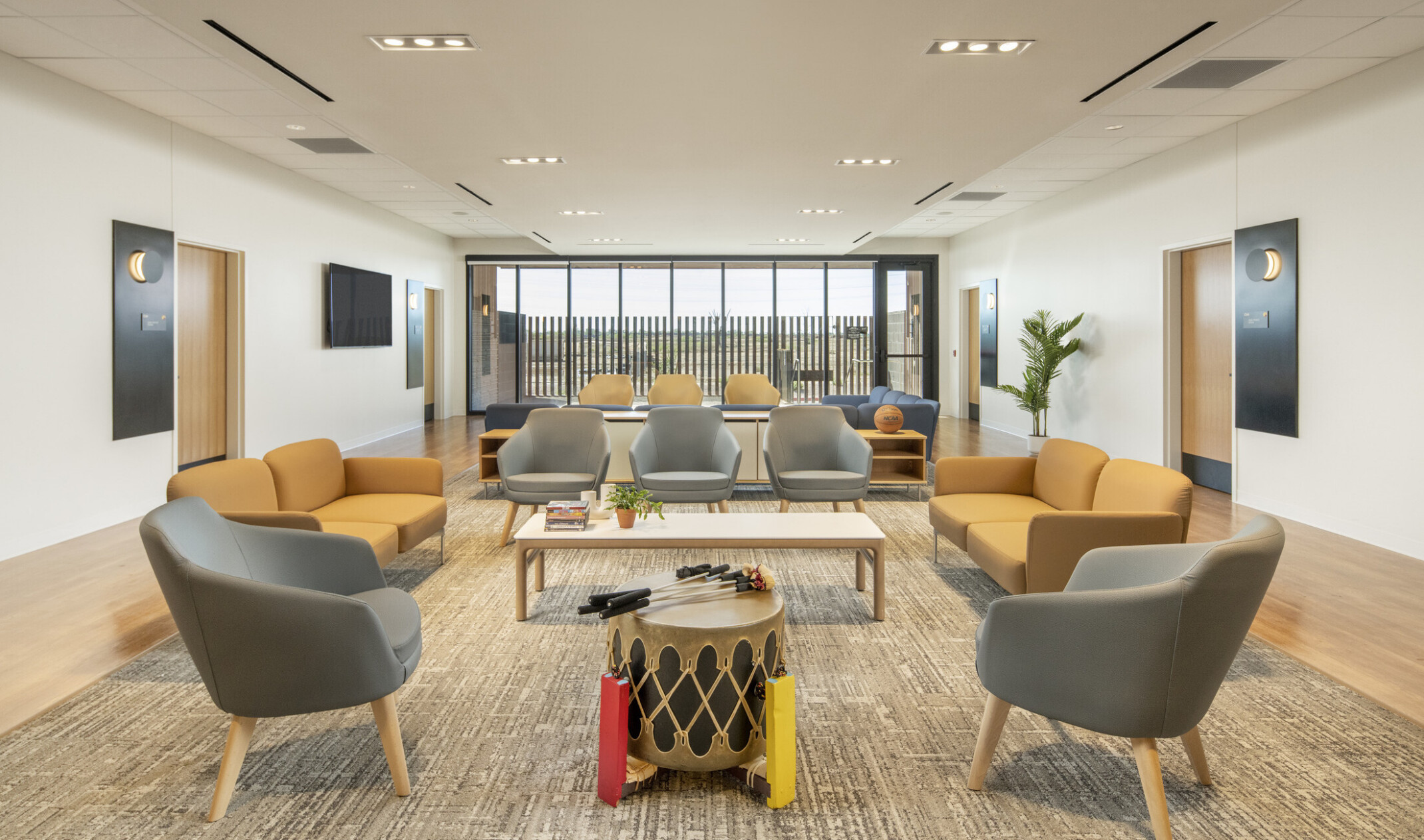
A spacious lounge with gray and yellow seating arranged around low tables, a drum in the center, wood flooring, and large windows at the far end letting in natural light.

Restorative Nature

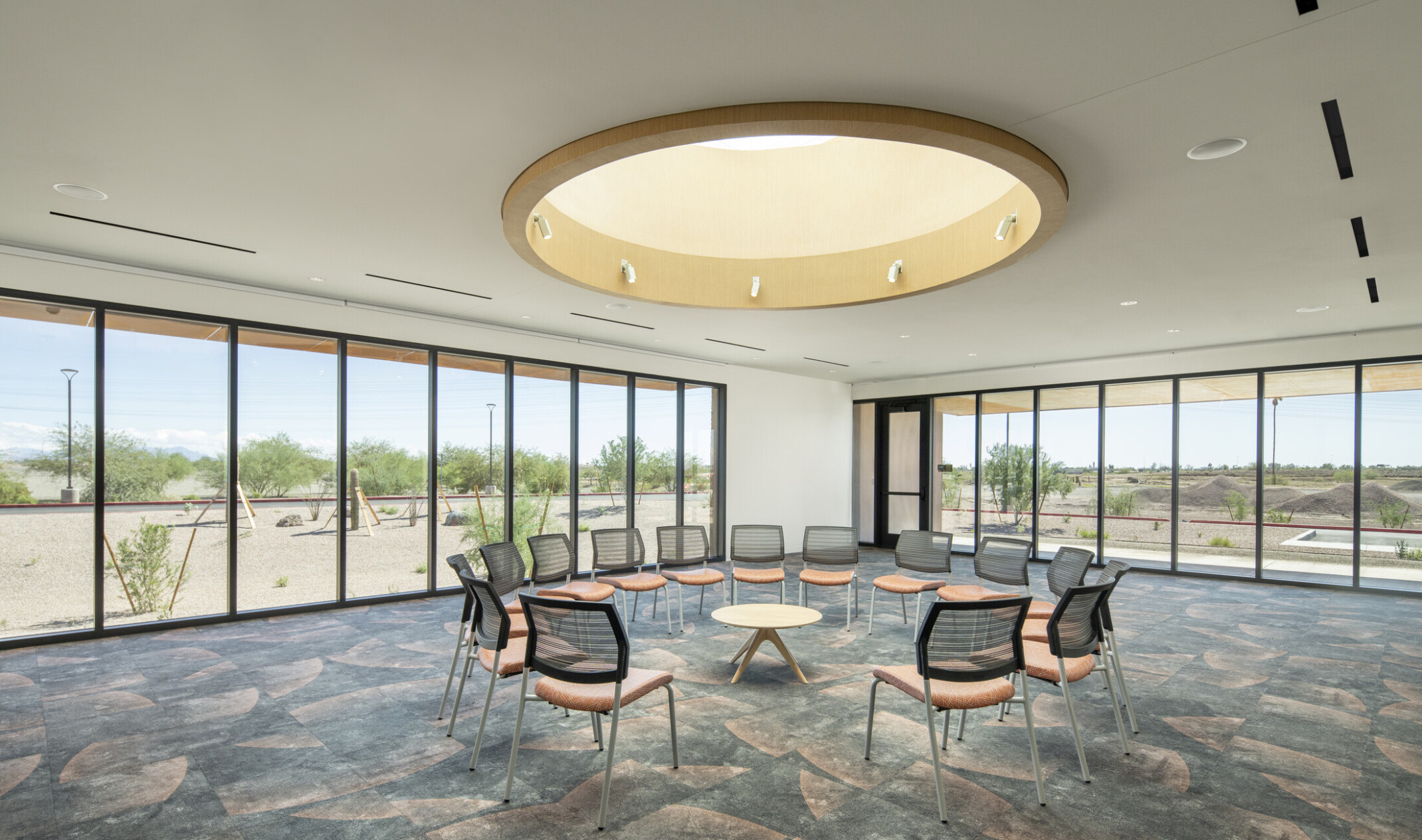
The project is shaped by climate‑responsive design and a restrained material palette that supports healing and connection to the land. Shading structures, simplified forms, and native plantings create gradual transitions between exterior and interior spaces, forming cooler, usable outdoor rooms for reflection and community interaction. The low, horizontal massing is oriented for passive cooling and balanced daylight, while natural materiality inside and out draws from local precedent to blend with the surrounding landscape. By weaving program, site, landscape, nature, and community, the design establishes symbiotic relationships that encourage residents to remain engaged in treatment. Building and site elements operate sustainably and in harmony with the desert environment, preserving land and extending opportunities for both communal gathering and private contemplation.

Contact Us

Contact Us

  • This field is for validation purposes and should be left unchanged.

;