What Today’s Renters Expect from Sustainable Design


Nathan Casteel
AIA, LEED AP BD+C
Mixed-Use Leader
Nathan is a mixed-use leader for the firm with over 20 years of experience in a wide range of project types.
Email 312-382-9980Today’s emerging renters aren’t just looking for affordable rent and a convenient commute. They are looking for spaces that allow their values to persist. More than ever, renters’ housing decisions are shaped by the environmental impact of daily living. Sustainability is not displacing core drivers like location and cost, but it is increasingly influencing how those priorities are evaluated and ultimately chosen.
As climate concerns become personal and increasingly urgent, the challenge is no longer about adding green amenities. It is about designing housing that actively supports sustainable lifestyles, paired with strong performance outcomes. From a designer’s perspective, sustainability has become a strategic design consideration that influences leasing pace, operational efficiency, and long-term asset value.
Renters Are Redefining Priorities
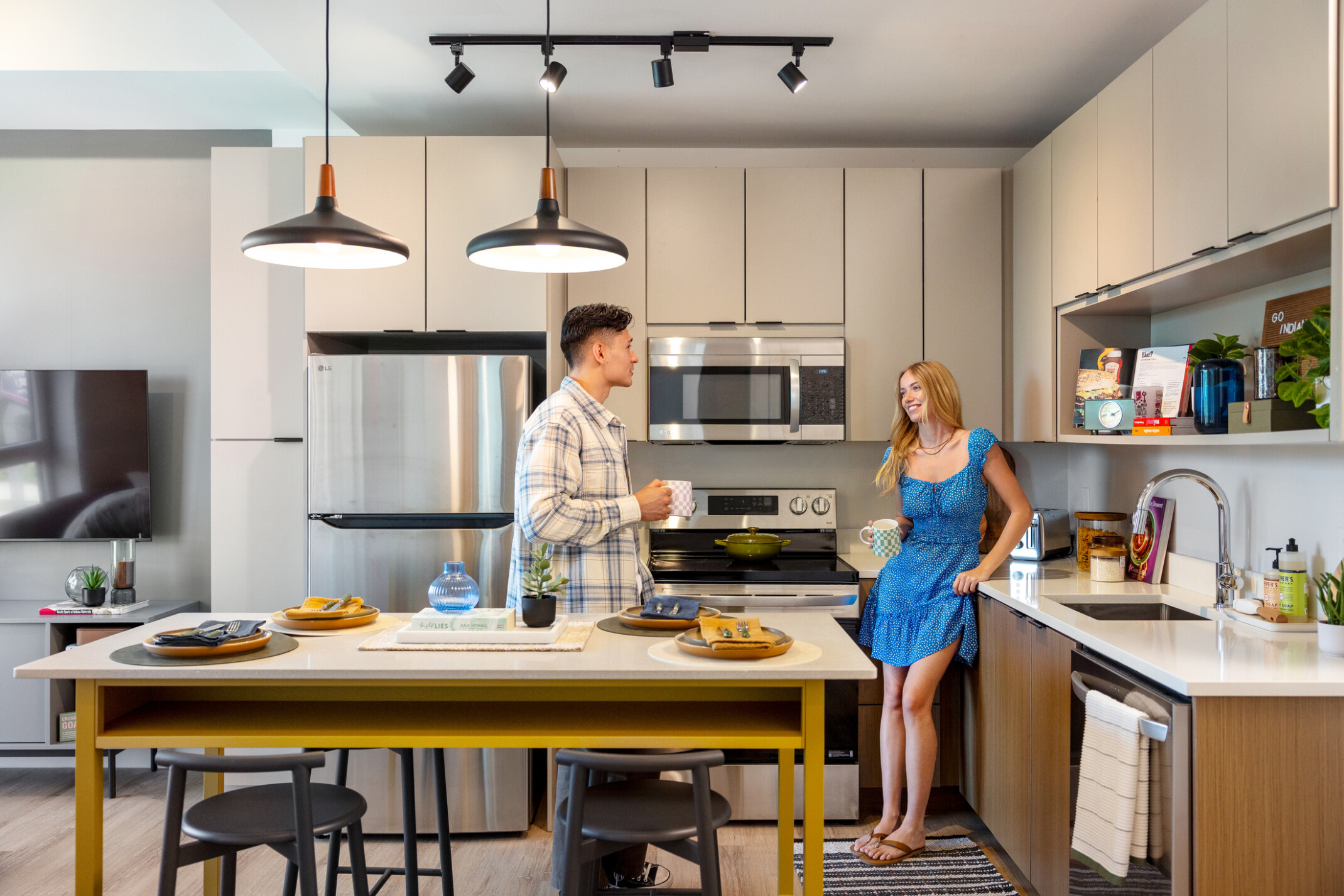
Call it green, sustainable, efficient, or resilient…the language may differ, but the signal is unmistakable. Sustainability has emerged as a defining influence in housing choice, especially for Millennials and Gen Z. As homeownership becomes increasingly difficult to attain, more renters are committing to longer-term renting and seeking homes that align with their values, support responsible living, and feel worthy of calling home. According to a 2024 survey by the National Multifamily Housing Council, more than 70% of renters aged 18-34 are more likely to choose a property that demonstrated a strong commitment to sustainability. Nearly 60% report a willingness to pay slightly more for features that reduce energy or water use. For the student and post-graduate renters, this extends beyond saving on utility bills. It reflects a desire to live in alignment with personal values. For developers, this shift reframes sustainability from a marketable add-on to a core strategy, where long-term performance, operational savings, and resident experience are increasingly intertwined.
Intentional Design Drives Efficiency
Designing for resiliency starts long before the first shovel hits the ground. Energy-efficient systems are no longer optional. They are assumed. Strategic design choices made early in the process lead to lasting reductions in environmental impact and long-term operations.
Strategic solar orientation, for example, can dramatically reduce cooling demand by minimizing heat gain while maximizing natural daylight. High-performance facades with advanced glazing and shading systems further boosts energy efficiency, reducing HVAC loads and ongoing maintenance costs. These measures can translate into lower utility expenses and improved resident comfort.
Water conservation strategies offer similar long-term savings. Low-flow fixtures, graywater recycling, and native landscaping reduce water costs and maintenance needs while supporting sustainability goals. Even site selection plays a role. Locating buildings near transit, daily services, and neighborhood destinations reduces car dependence and encourages walking, biking, and other forms of micro-mobility, supporting sustainable living without relying on additional building systems.
Waste management during construction and operation is another area where smart design delivers savings. Prefabricated and modular systems reduce material waste and labor costs. Centralized recycling and composting programs support residents’ behavior, enhancing the building’s reputation and appeal.
Materials Matter
The materials used in construction play a significant role in a building’s carbon footprint. Traditional materials like concrete and steel are highly carbon-intensive, prompting growing interest in low-carbon alternatives.
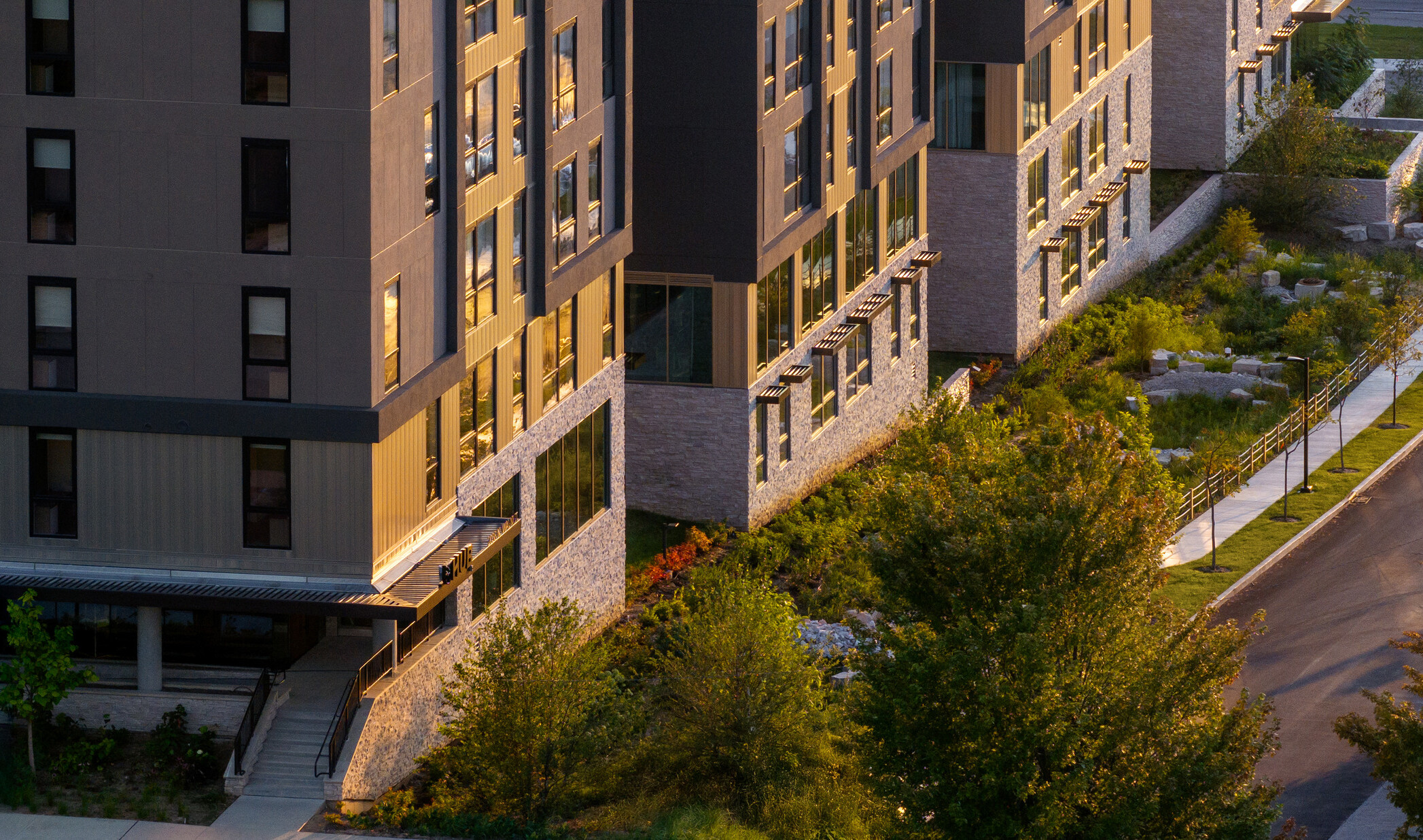
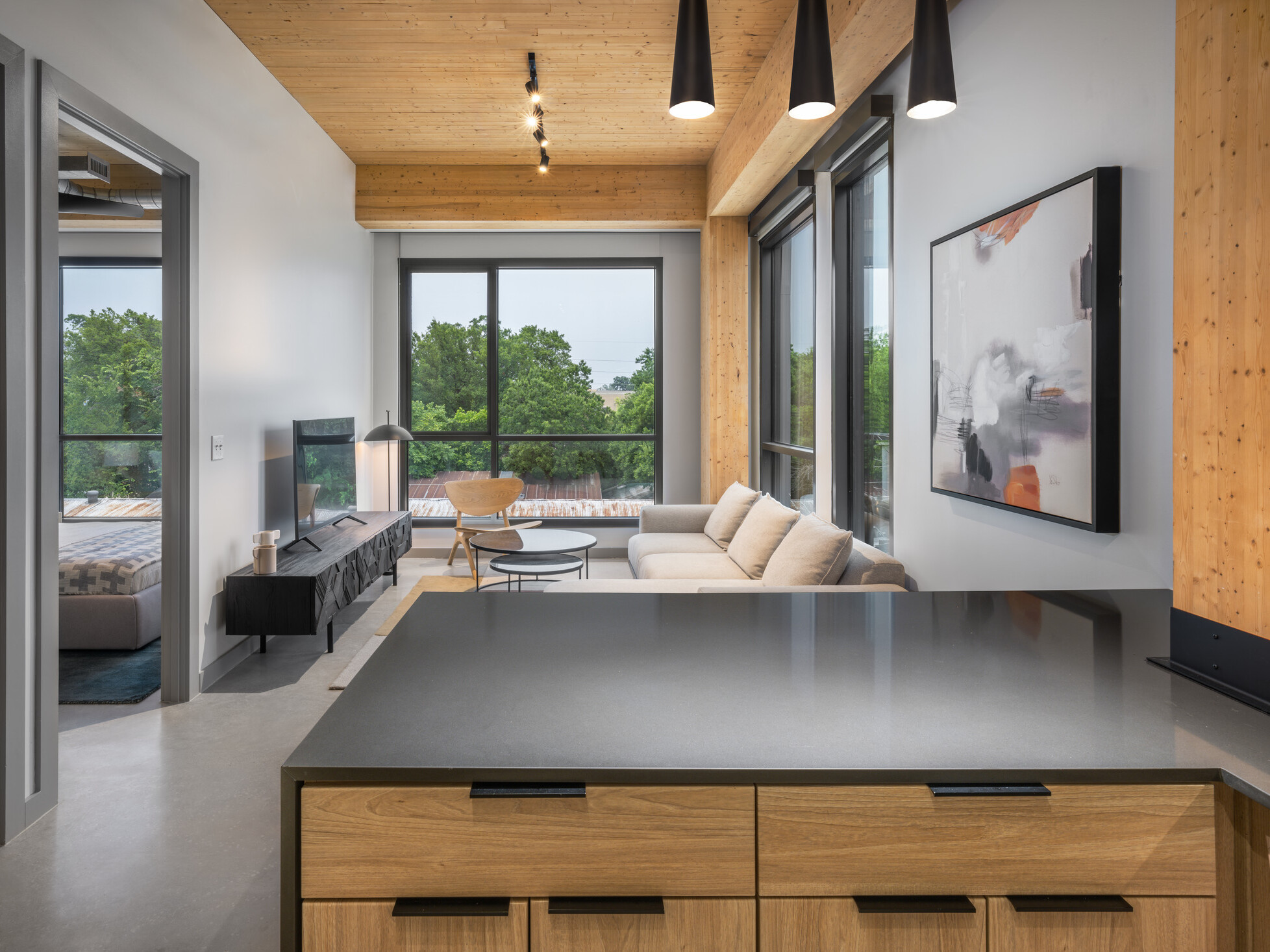
Mass timber is one such option gaining traction across multifamily and student housing projects. At 9th and High, the tallest timber student housing development in the U.S., the structural system offers a renewable alternative to conventional construction, with embodied carbon reductions of 20-30% or more, depending on scale. Beyond carbon performance, mass timber supports prefabrication strategies that improve quality control and accelerate construction schedules.
Design teams are also increasingly specifying low-carbon finishes, including recycled materials, non-toxic paints and sealants, and reclaimed wood. These choices contribute to healthier indoor environments.
Resilient design looks beyond aesthetics to consider the entire lifecycle of materials. How they are sourced, maintained, adapted, and ultimately reused. Buildings conceived as flexible systems are better positioned to evolve with changing resident needs, extending useful life and reducing the need for costly renovations. Durable materials with proven lifespans, when paired with flexible components, help ensure that spaces age gracefully rather than becoming obsolete.
Amenities That Support Sustainable Living
While sustainability is often framed as a technical challenge focused on insulation, building envelopes, and renewable systems, for today’s renters it is also about daily participation. Many want to live in environments where sustainable choices are built into everyday routines, allowing them to contribute consistently rather than occasionally. As a result, green living extends well beyond the shell and systems of a building.
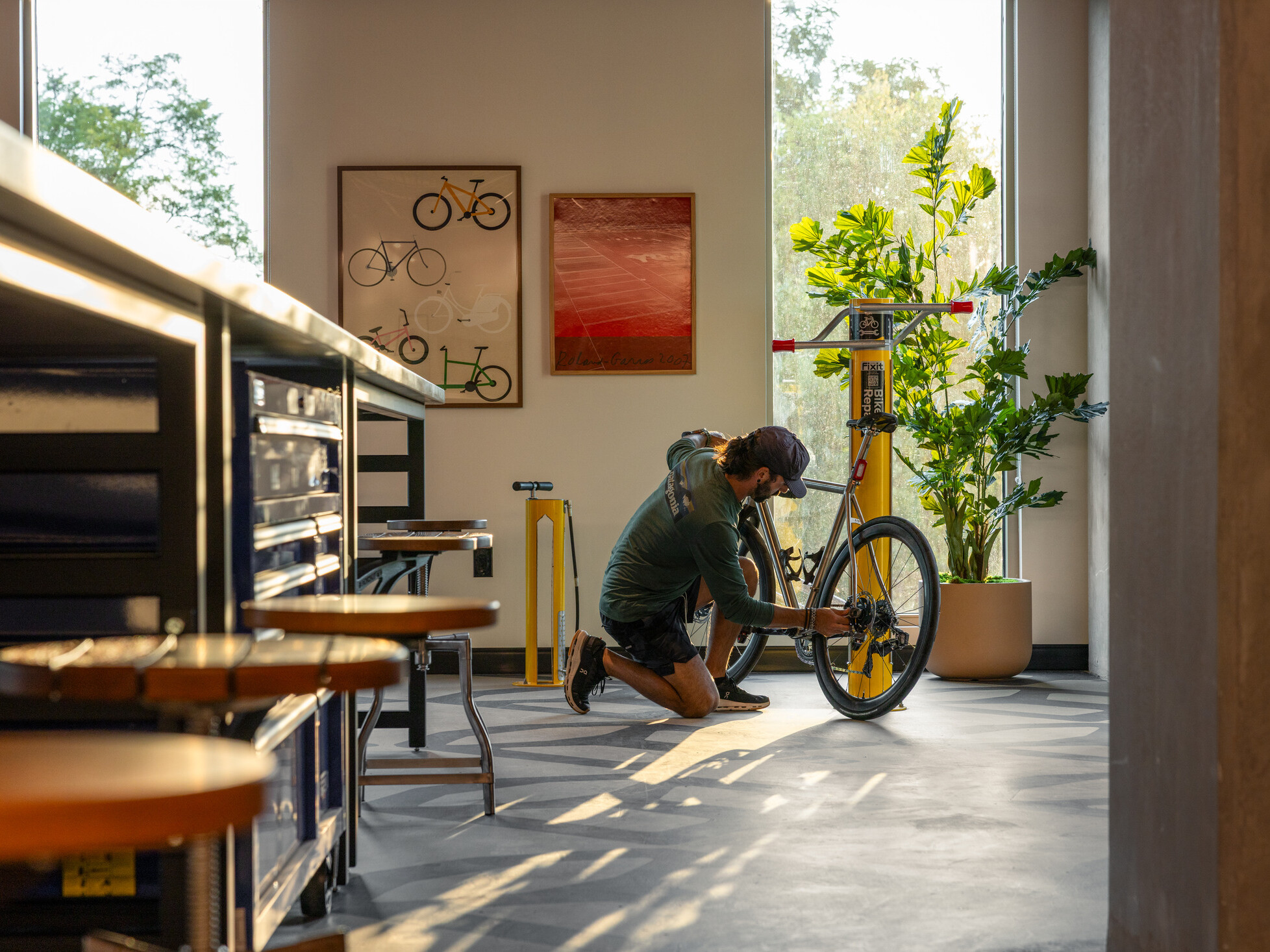
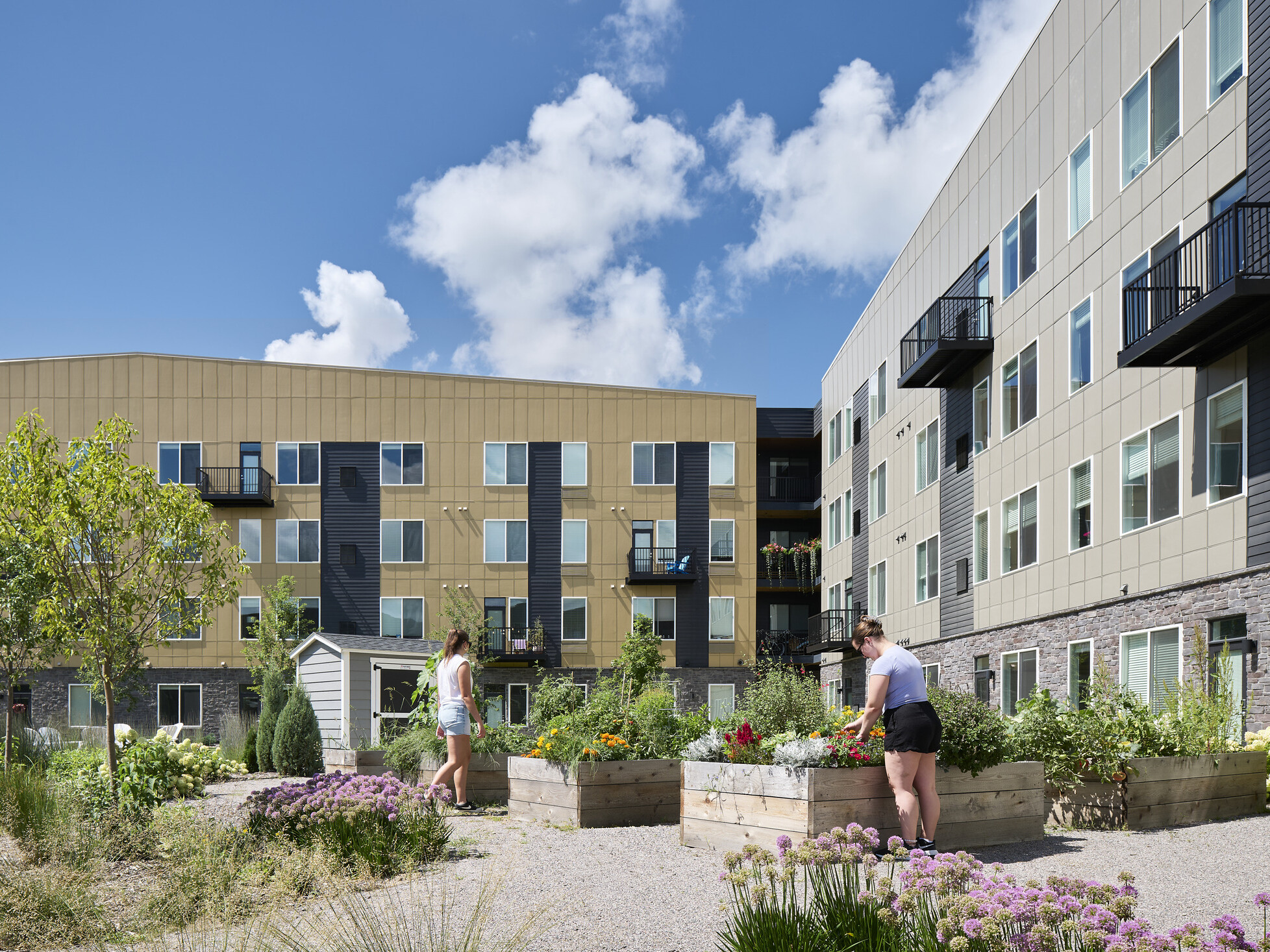
Amenities that support sustainable lifestyles are in high demand. Secure biking facilities and connected routes appeal strongly to younger renters. On-site composting and community gardens provide hands-on ways to reduce waste and engage with food systems. Shared resources such as tool libraries, gear closets for items such as camping equipment or vacuums, and co-working spaces reduce consumption and build a sense of community.
At The Ellie, a market-rate apartment building in Eden Prairie, Minnesota, sustainability is integrated into daily life through green roofs, electric vehicle charging stations, permeable paving, and a community garden. These features support stormwater management and energy efficiency while also enhancing the resident experience. The garden, in particular, has become a beloved amenity, reinforcing the connection between design, wellbeing, and everyday sustainability.
Ultimately, when the built environment aligns with residents’ values, sustainability shifts from a checklist into a lived experience, one that strengthens community, supports wellbeing, and contributes to long-term impact.
Designers play an important role as design partner and advocate, helping project teams translate market demand into built solutions that perform. Sustainably designed environments are not only better for people, places, and planet. They also support long-term value by improving operational predictability, strengthening market appeal, and future-proofing investments.
Sustainability is no longer an upgrade. It’s an expectation. When it is embedded through intentional design, it becomes a practical and achievable strategy that benefits residents, community, and the bottom line.
From vision to outcomes, sustainability starts with shared priorities. Discover how VALUES helps project stakeholders make climate-smart choices together.
Ideas
Recommended Reads