From Classroom to Career: A Practical STEM Pipeline
Michael Huffstetler
LEED AP, F.SAME
Federal Programs Leader
We will be exhibiting at this year's SAME Federal Small Business Conference to connect AEC professionals with opportunities.
Email 402-609-5888New results from the National Assessment for Educational Progress (NAEP) show continued declines in progress for U.S. students. Other indicators show notable decreased literacy in reading and math among 2024 12th graders. With long-term data pointing to a weakening STEM talent pool, the signal is clear: the pipeline needs attention now.
This is a human challenge that responds to human solutions.
Here’s what works according to the U.S. National Science Foundation: mentorship should start early in K–8 and scale through hands-on technical education in high school. From there, it should extend into experiential career-based internships and business-to-business mentoring. Together, these touchpoints create a practical STEM pipeline. Here’s what that process looks like on the ground.
Building STEM Talent
A strong STEM workforce doesn’t happen by chance. It’s built step by step. The pipeline starts early in K–8 with curiosity and confidence, grows through hands on learning in high school, and continues through pre college programs, internships, and real-world mentoring. When students learn from working professionals and apply skills to real missions, they naturally move from interest to readiness, building the talent needed to support complex projects and public service.
An Early Spark in Real-World Spaces
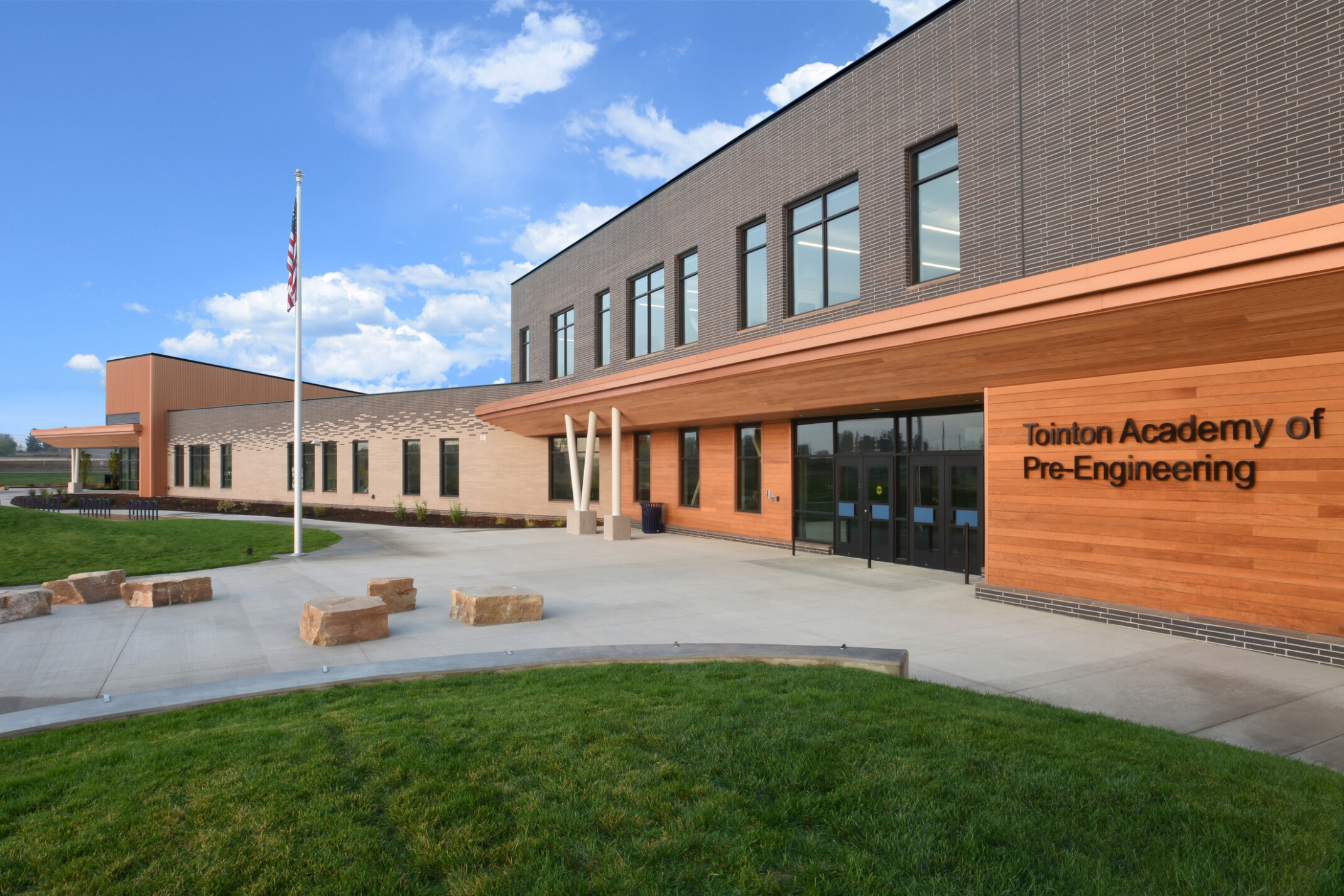
Career and technical education and pre-engineering environments bring the outside world into the classroom and boost confidence and curiosity. Tointon Academy of Pre-Engineering shows how hands-on labs translate to measurable outcomes and student wellbeing. As foundational skills slip in this age-group, CTE centers matter even more.
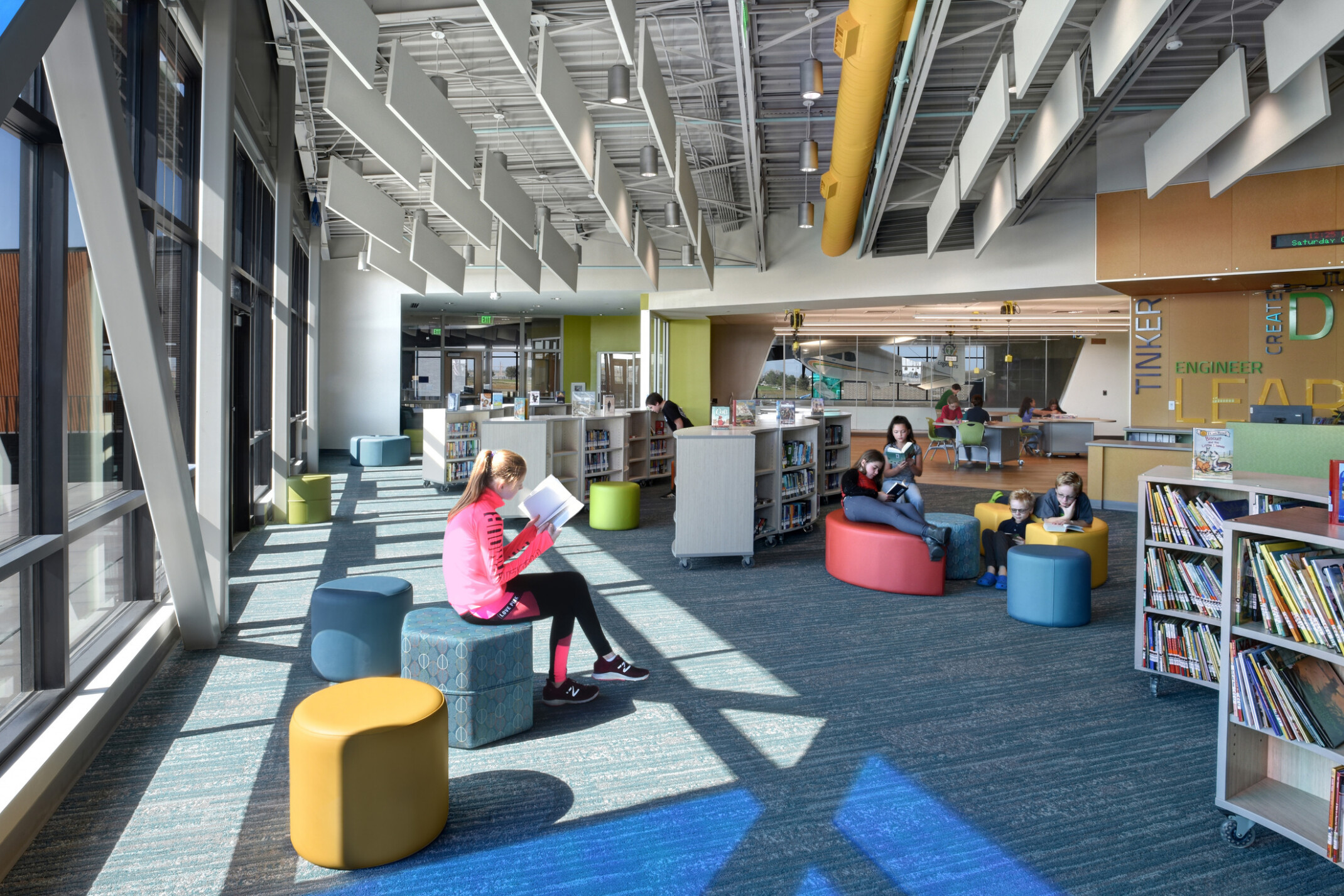
Tointon Academy of Pre-Engineering in Greely, CO.
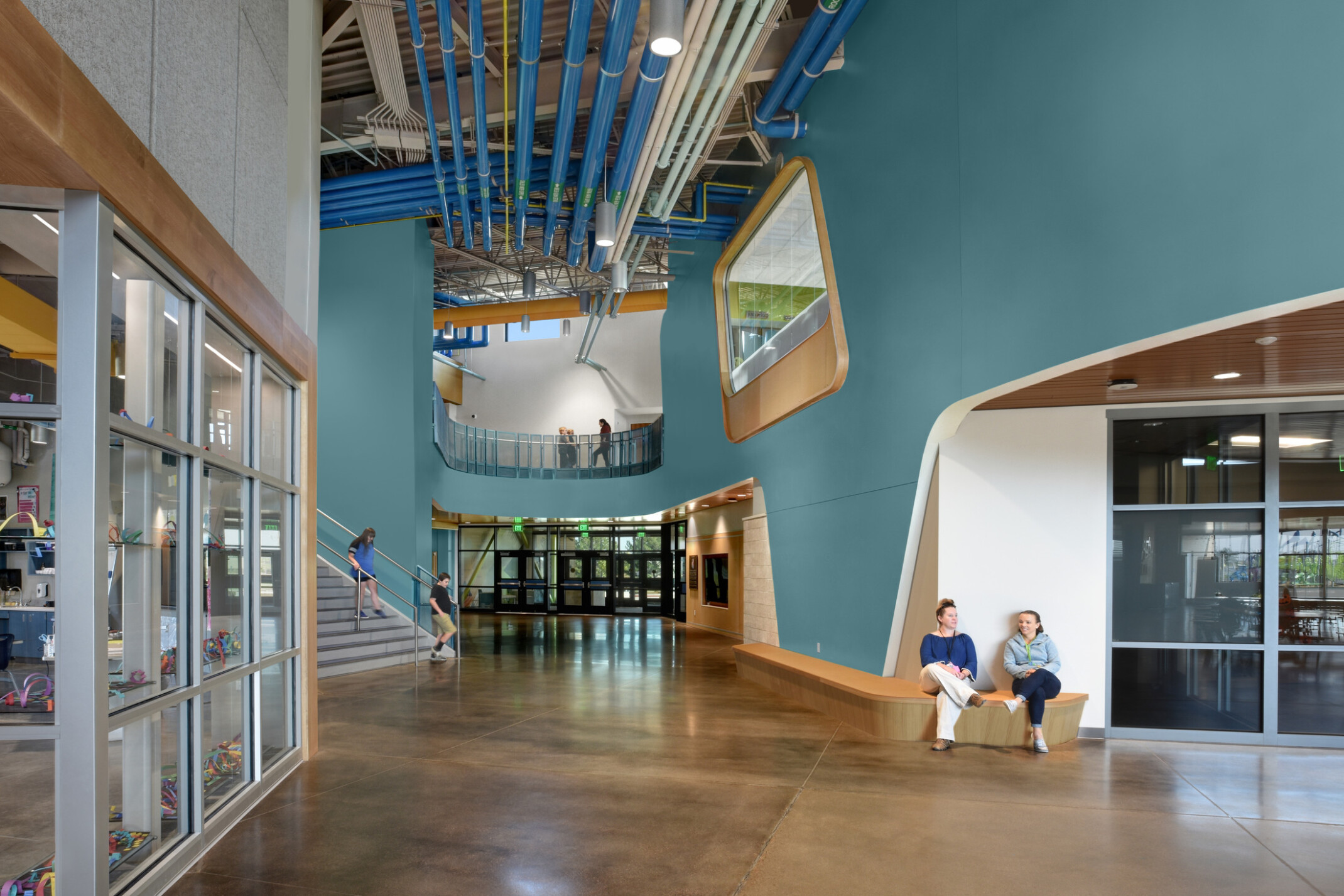
Tointon Academy of Pre-Engineering in Greely, CO.
Learning Environments to Invite Exploration
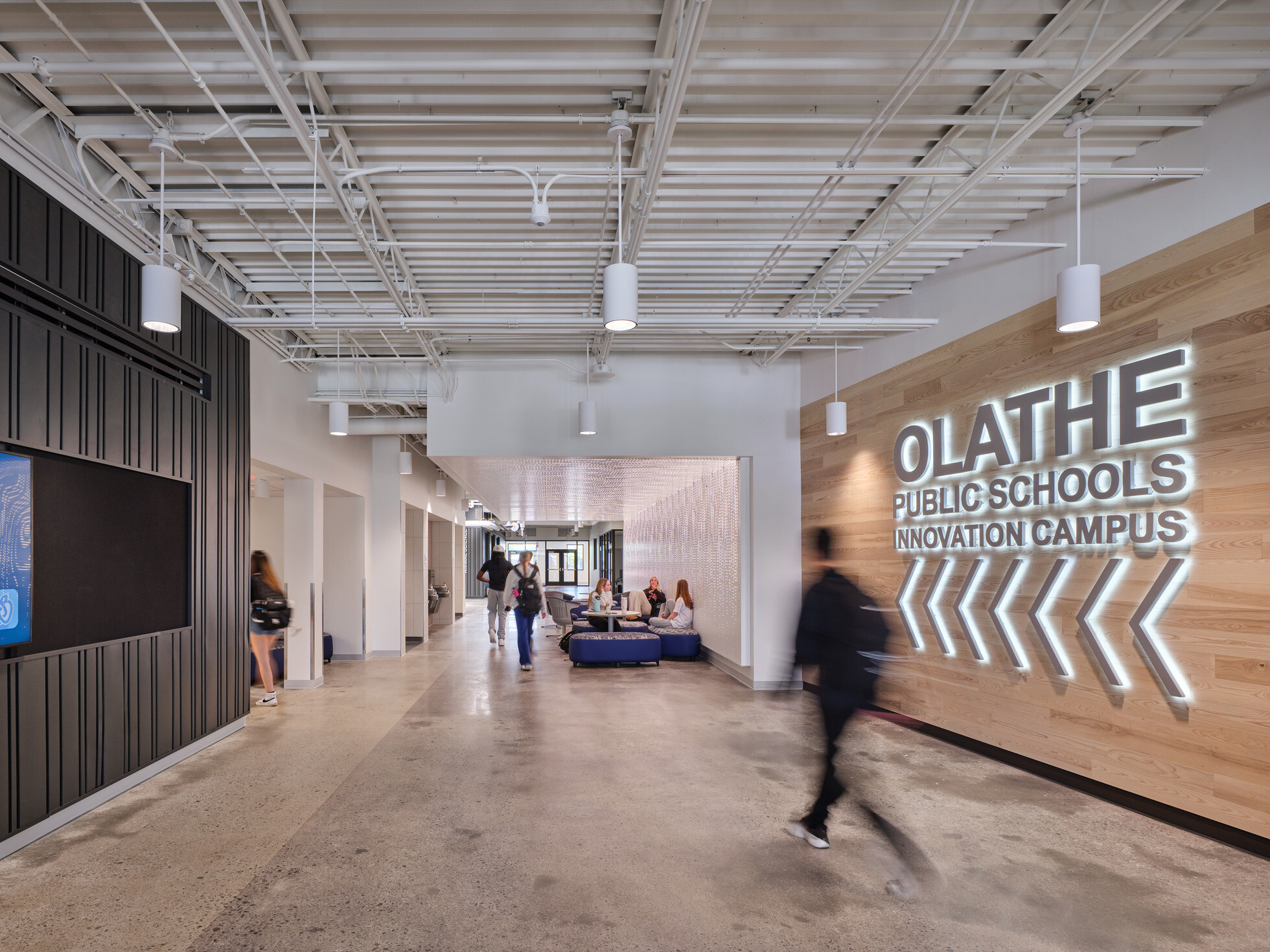
When spaces feel like workplaces, they feel both novel and purposeful. As a result, students stay more engaged and leave more work-ready. Through adaptive reuse, DLR Group transformed a former call center into the Olathe Public Schools Innovation Campus, where learners rotate through flexible labs, a commercial kitchen, and public-facing venues like a student-run restaurant and coffee shop. The district’s Operations Service Center doubles as a living lab, providing an incentive for industry partners along the I-35 corridor to use the campus for job fairs and interviews.
That same experiential learning ethos scales in Michigan. At Kalamazoo’s new 162,000-SF Career Connect Campus, the building itself teaches: mechanical and IT systems are intentionally exposed, server racks are visible from the commons, and a hybrid steel and mass-timber structure supports programs in high-demand fields with industry-recognized credentials.
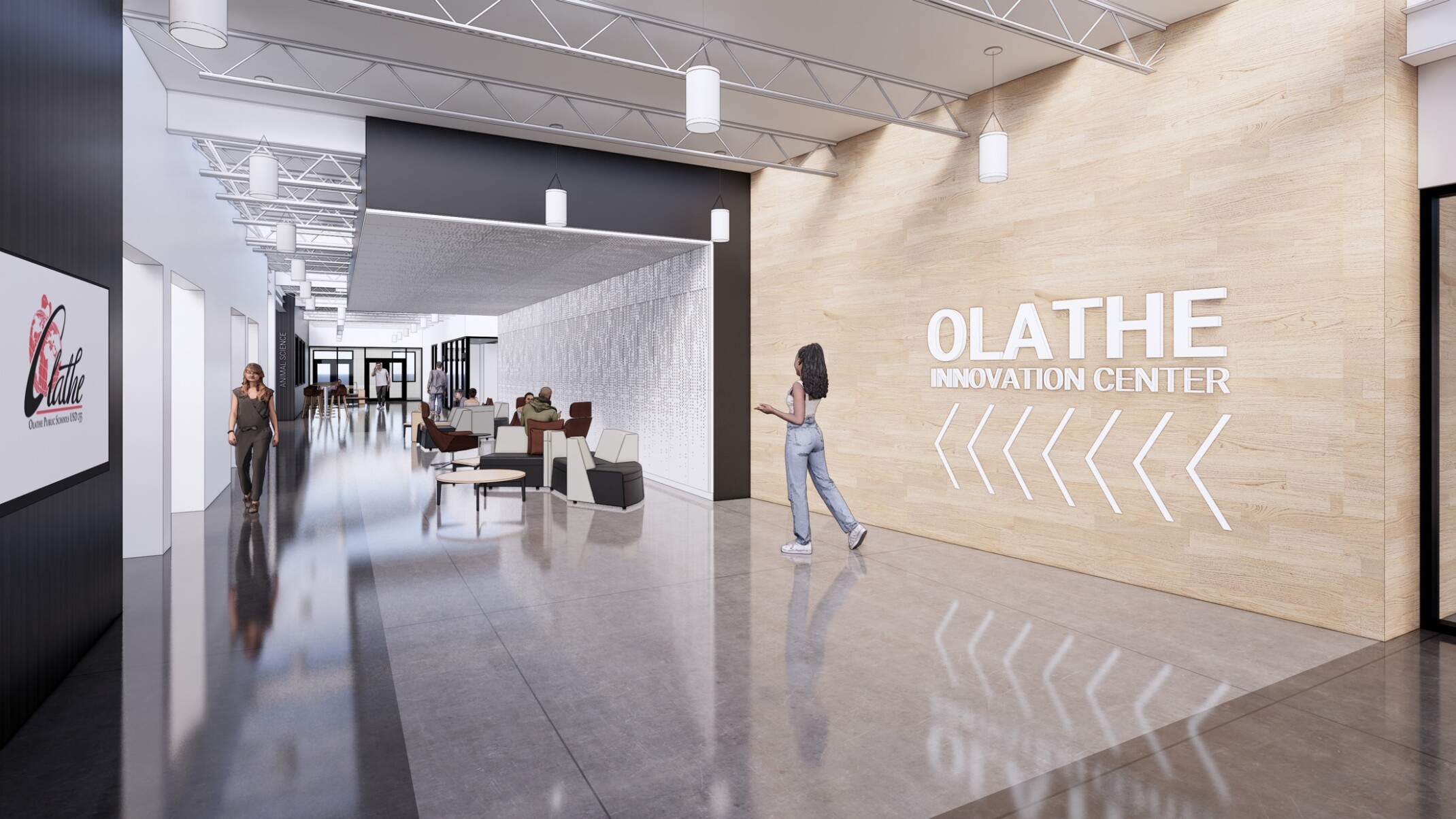
Olathe Public School Innovation Campus in Olathe, KS.
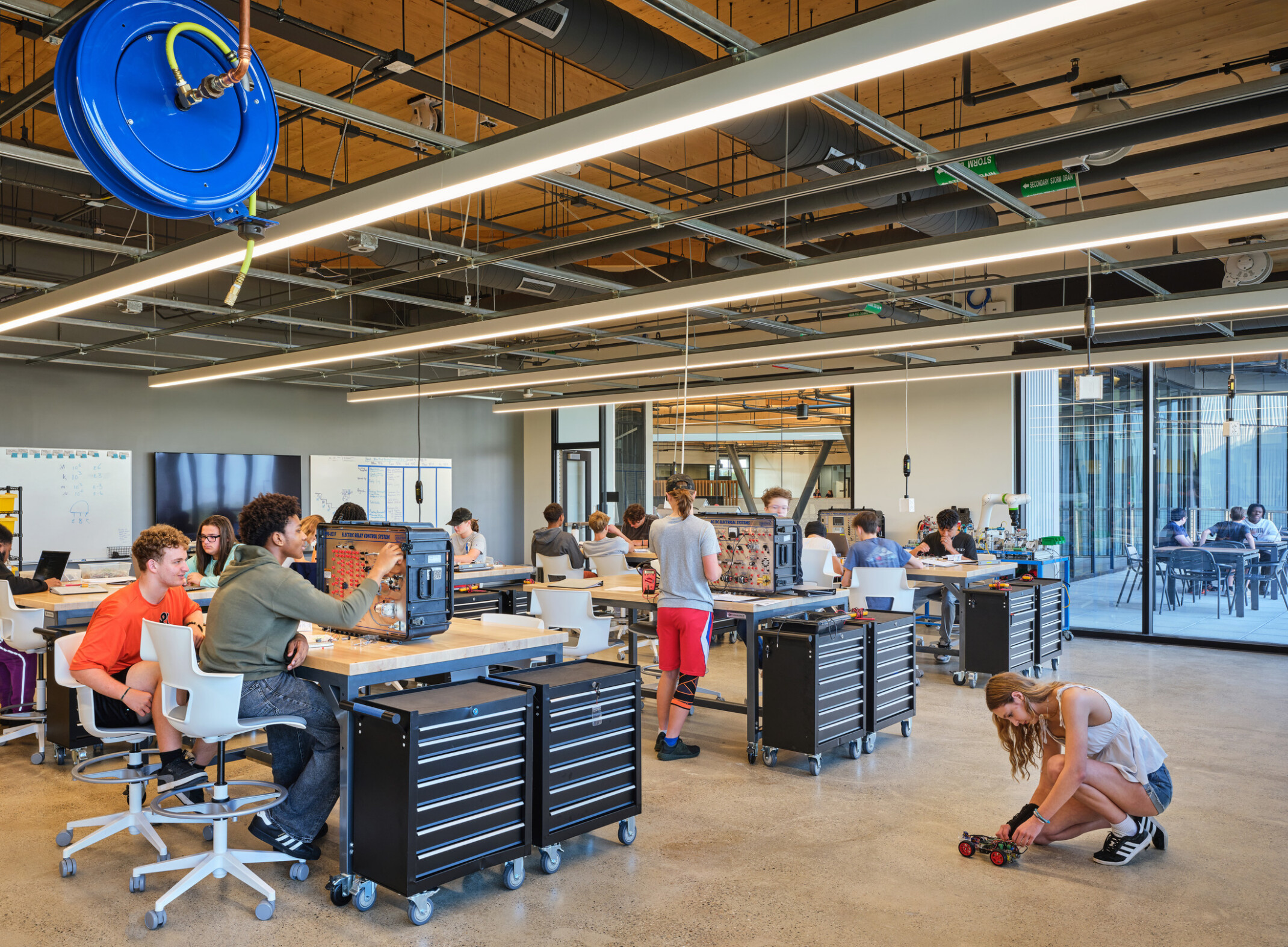
Kalamazoo RESA Career Connect Campus in Kalamazoo, MI.
Hands-on missions at SAME camps
Professional associations like the Society of American Military Engineers and its funding arm, the SAME Foundation, enable early practical exposure to STEM careers – not just through scholarship offerings but through unique hands-on experiences for high schoolers. Across the 2025 summer camp season, as the current SAME President, I joined five SAME Engineering & Construction Camps in person in Vicksburg, Mississippi, Colorado Springs Colorado, Jacksonville, Florida, Camp Lejeune, North Carolina, and Port Hueneme, California. I rotated with student teams through concrete beam construction and testing, drone builds and flying, surveying, and team builds alongside military service engineers and AEC mentors. I met with scholarship recipients from multiple Posts, sat in evening debriefs that tied hands-on work to military engineering missions, and watched student confidence grow across the week.
The pattern I noticed at last year’s STEM camps was consistent: when students get real tools, clear problems, and mentors who stick with them, those quiet first-day participants become project leaders, asking about internships and the next step into AEC careers. With many Posts providing scholarships to campers, access has widened, and we find alumni often return as camp mentors.
Research backs it up. Sustained summer STEM programs raise the odds of persistence and degree completion for underrepresented students. As only 30% of the high school class of 2024 met all four ACT College Readiness Benchmarks, this mentorship approach aligns with the need for more structured, experiential-focused programs.
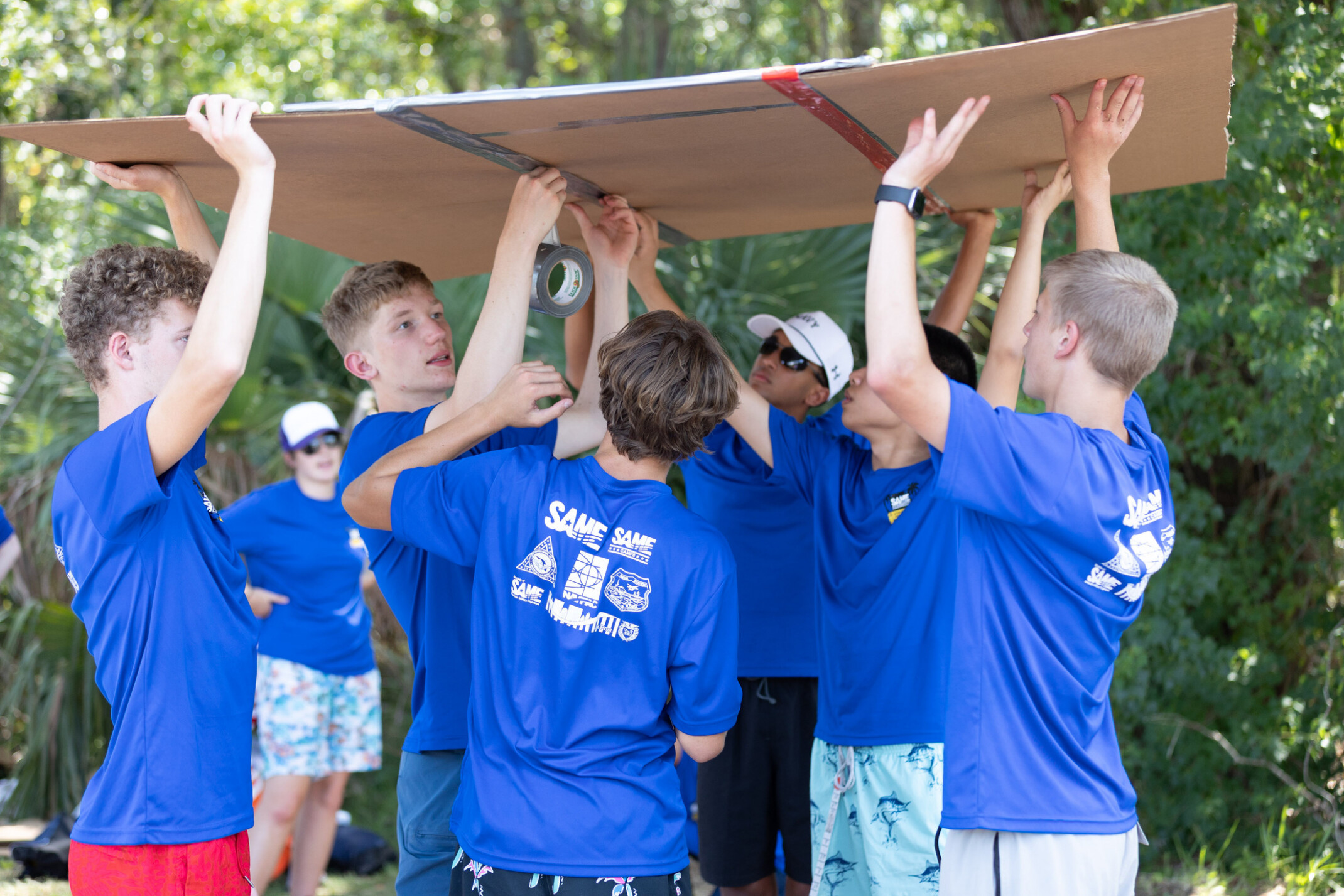
NAVFAC Southeast Helps Inspire Future Innovators at SAME’s STEM/Engineering & Construction Camp at NavalAS Jacksonville. Photo by Yan Kennon.
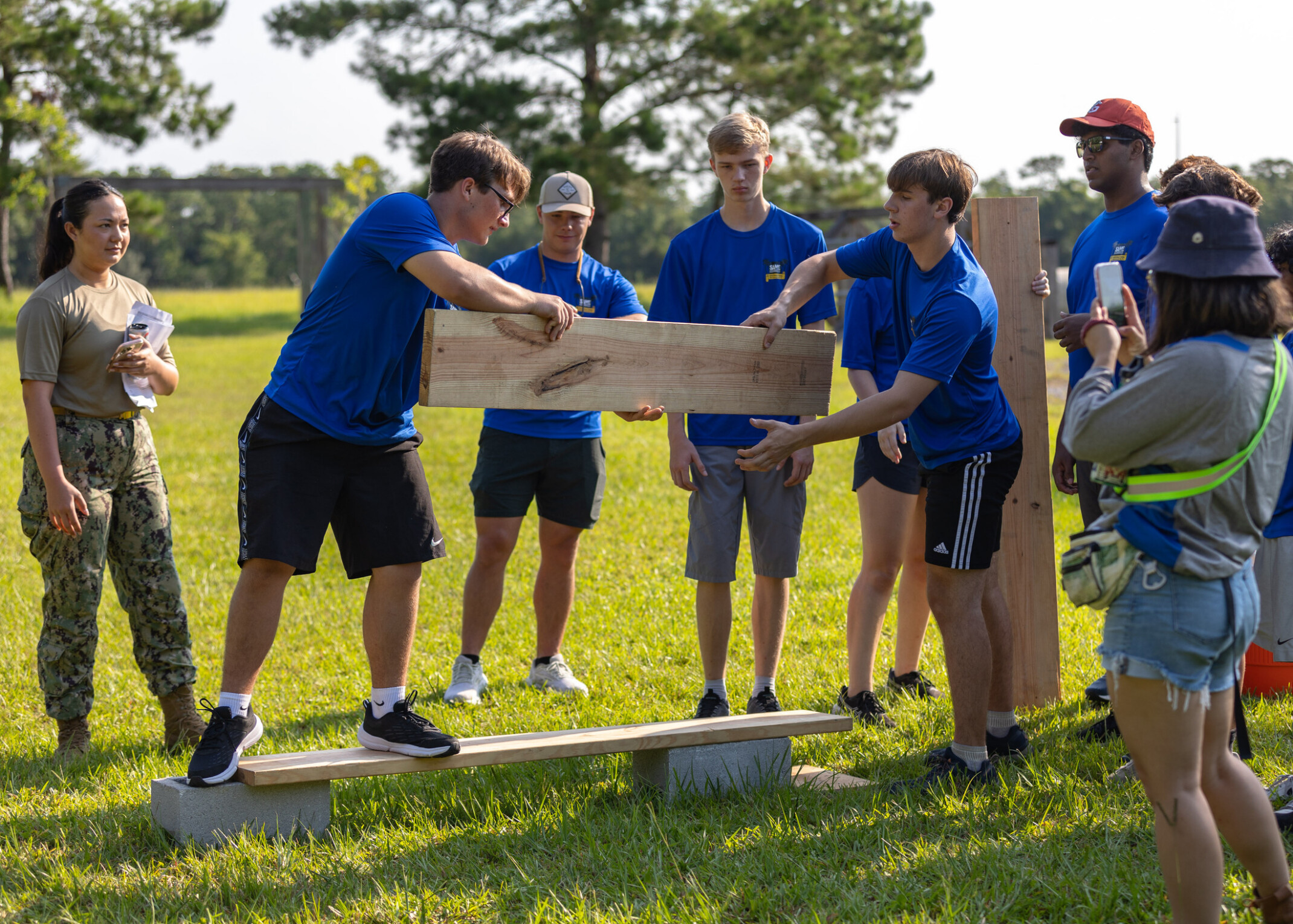
Photo by Kathryn Clark.
Internships and Recruiting
DLR Group’s Emerging Professional Experience is a 12-week program for high school to post-graduate interns (primarily college students and recent grads) involving real project work, a dedicated mentor, and weekly classes. Each season, 100+ emerging professionals engage across 10 disciplines and learn from experts in the AEC industry. 98% report EPX gives them the resources to succeed. About 6 percent convert to full-time roles at DLR Group, while many others continue in AEC careers across the industry.
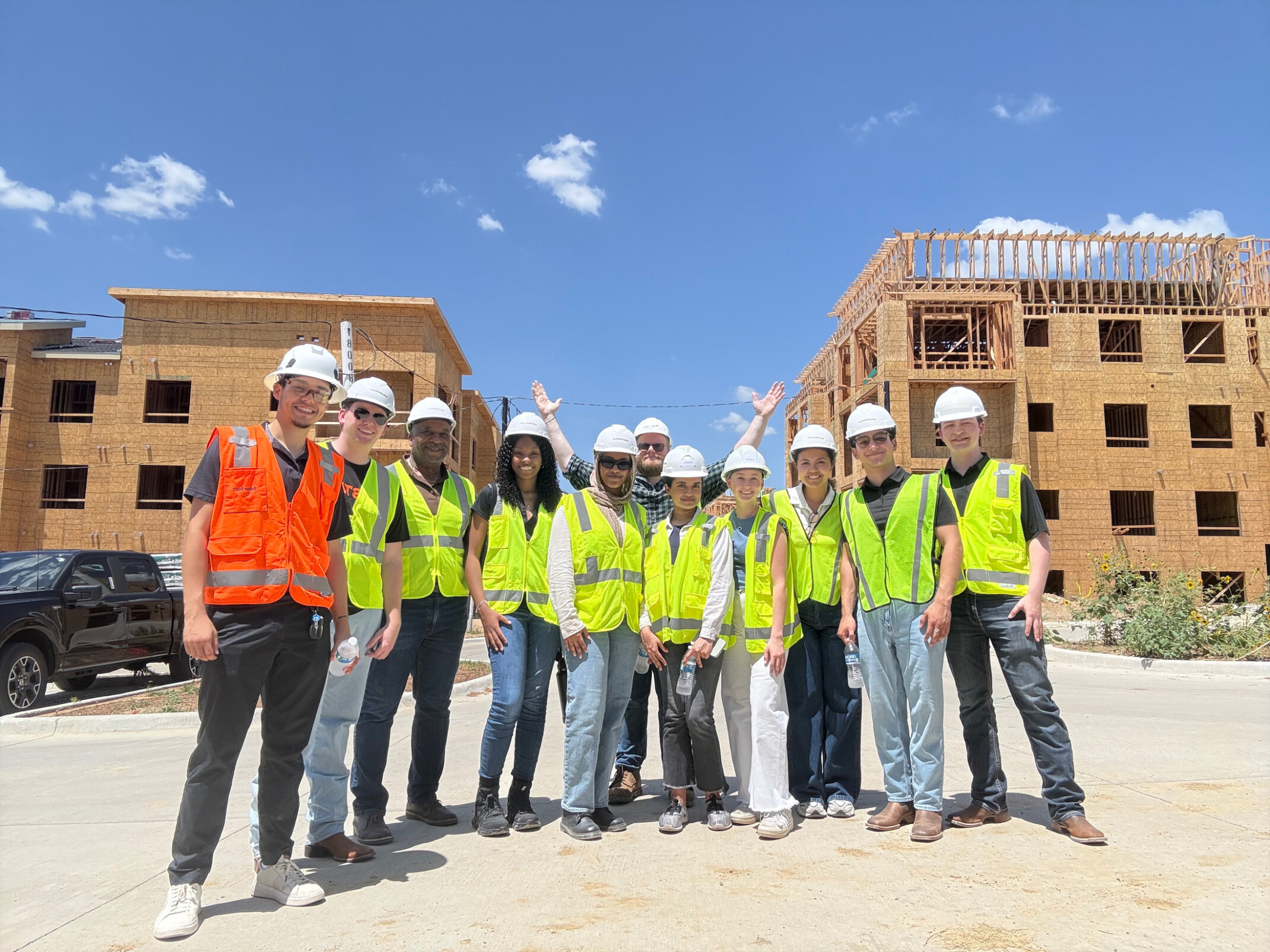
Business-to-Business SBA Mentor-Protégé
Mentorship continues at the firm level, both internally and externally. At DLR Group, we provide extensive informal and formal mentoring opportunities for young professionals, but we also assist sister AEC firms with growth. Through SBA Mentor-Protégé partnerships with studio2G Architects and Atriax PLLC, DLR Group shares expertise and opens doors. Day to day, that means joint pursuit planning, access to technical and training resources, and teaming that helps protégés compete for larger, more complex projects.
The statistics are in, and the stakes are real. STEM jobs are projected to grow faster than non-STEM and carry higher median wages, so building talent from classrooms to companies strengthens the industrial base for both private and public projects.
The Insight
U.S. performance data signals a talent problem, and waiting is not a strategy. A practical solution is a continuous pipeline that starts with engaging K–8 spaces and activities, provides high-schoolers with mission-driven experiences, then moves into internships, early-career coaching, and B2B mentoring. SAME camps show the impact of hands-on learning with practicing engineers. CTE-like environments and college-age internships convert interest into skills. SBA Mentor-Protégé partnerships scale capacity so small businesses can compete, and agencies and private clients see stronger industry teams.
This is how a resilient AEC workforce is built. It’s intentional. It shows up early, and it stays with people as they grow. The result is a larger pool of designers and engineers ready to deliver for local communities and government missions.
See more of our Federal work and impacts of mentorship here.
The appearance of U.S. Department of Defense visual information does not imply or constitute DoW endorsement.

Ideas
Recommended Reads