Designing for Career Readiness in the Age of AI
Are campuses designed to prepare students for the transition to AI-enabled workplaces? Institutions are rapidly expanding AI curricula and building innovation hubs, uncovering a critical need for design solutions that foster student and faculty experimentation, collaboration, and ethical engagement with emerging technologies.
Artificial intelligence is reshaping academics and workplace faster than many institutions can follow, yet the conversation around AI in higher education has largely focused on curriculum. An urgent question centers on the physical space: how can the design of campus environments better support AI preparedness?
Evolution of Campus
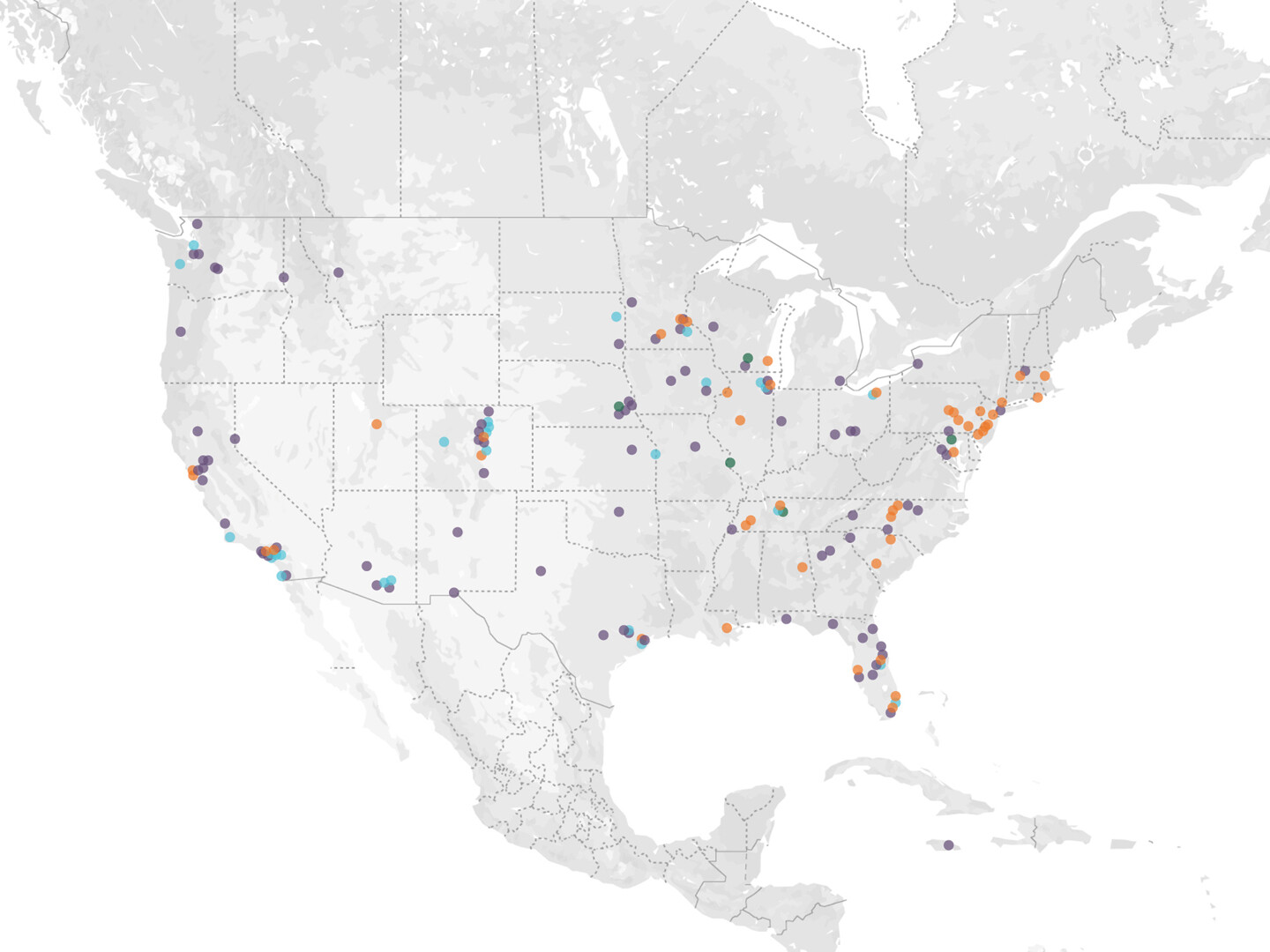
DLR Group’s Evolution of Campus initiative represents an ongoing longitudinal study into the future of higher education – anchored by more than 400 interviews across 240 institutions. To translate this massive foundation into immediate, real-world utility, our interdisciplinary team of designers and researchers annually launch unique phases of inquiry. By pairing our cumulative data with targeted topics informed by fresh literature reviews, advisory panels, and peer-institution workshops, we have synthesized macro-trends into immediate, actionable design recommendations that address the urgent challenges facing faculty, students, and campus leadership today.
Recent Objectives & Initial Findings
In our sixth round, we have uncovered that students aren’t simply transitioning from school to work after graduation – they are moving across sectors of exposure and fluency. A student from an AI-prohibited university landing in an AI-enabled workplace faces a double shock: suddenly everything is permitted, but with no scaffolding to guide them. Our research identifies a spectrum of AI infusion on campuses across two axes: freedom to use AI (high to low) and structure/support around that use (low to high).
Research in Practice
While campuses vary significantly in regulatory burden, clinical risk, workforce alignment, and resource constraints, our insights found three key themes – flexible connectivity, psychological safety, and human-centered physical spaces. From this understanding, we outlined three design approaches we are exploring through active on-the-boards projects – these strategies can empower institutions of all types to create alignment between their facilities and AI-enabled program requirements.
Infrastructure That Keeps Pace
Digital technology is evolving faster than buildings, and IT leaders should be at the design table. Our research points to clear best practices for high value, long-term investments in capital projects such as leveraging flexible workstations, mobile experiment stations, and overhead infrastructure that maximize device connectivity.
Specialized power requirements, including high-voltage outlets for advanced hardware, are no longer niche wants, but baseline expectations. The concept of dedicated “sandboxes” is central to the design of Colorado State University’s new facility where committed physical spaces provide students the tools to test digital programs in the real world.
Campuses that cement fixed infrastructure today will likely be obsolete before the next capital cycle.
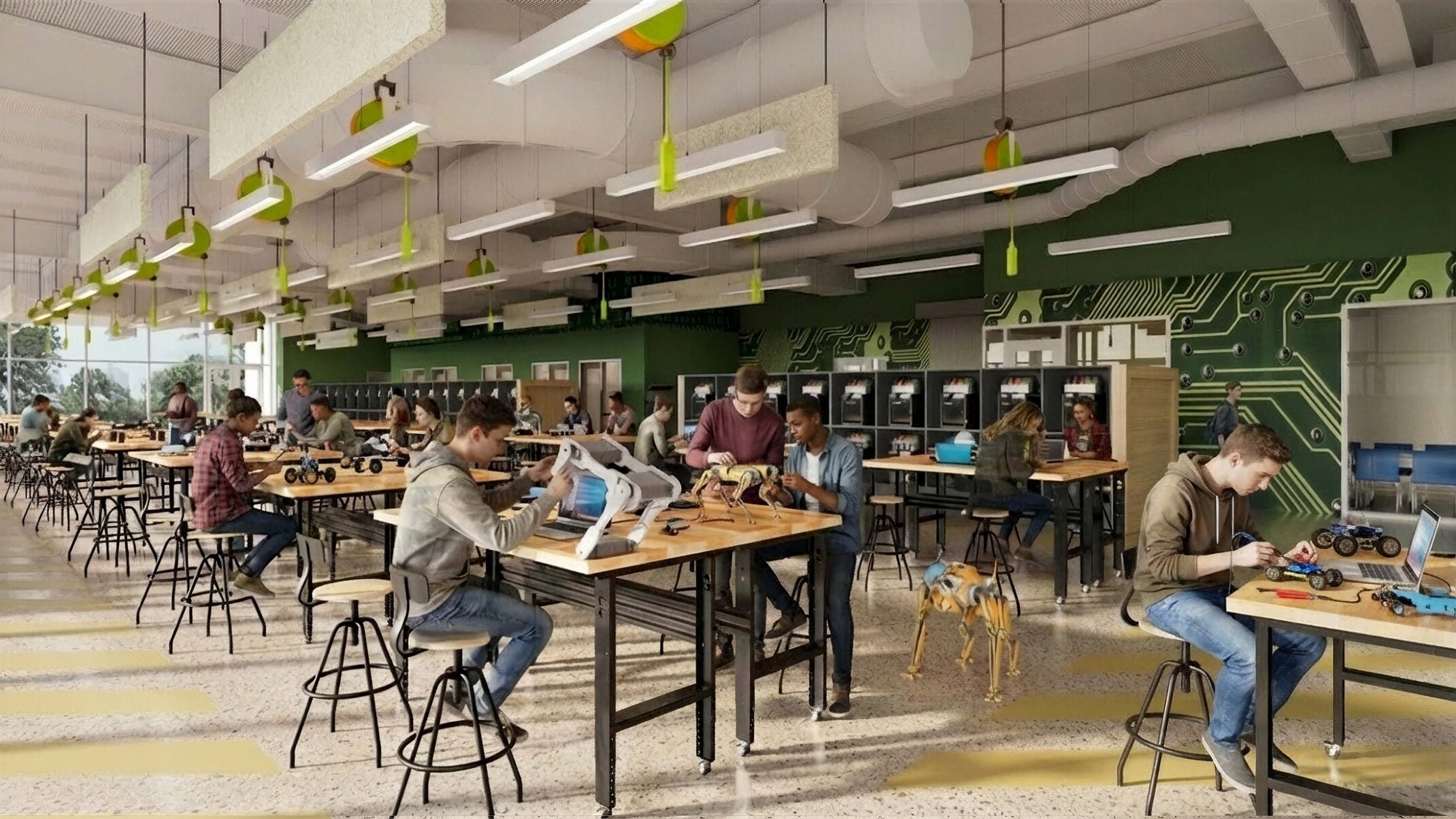
Colorado State University Don and Susie Law Engineering Future Technologies Building in Fort Collins, CO.
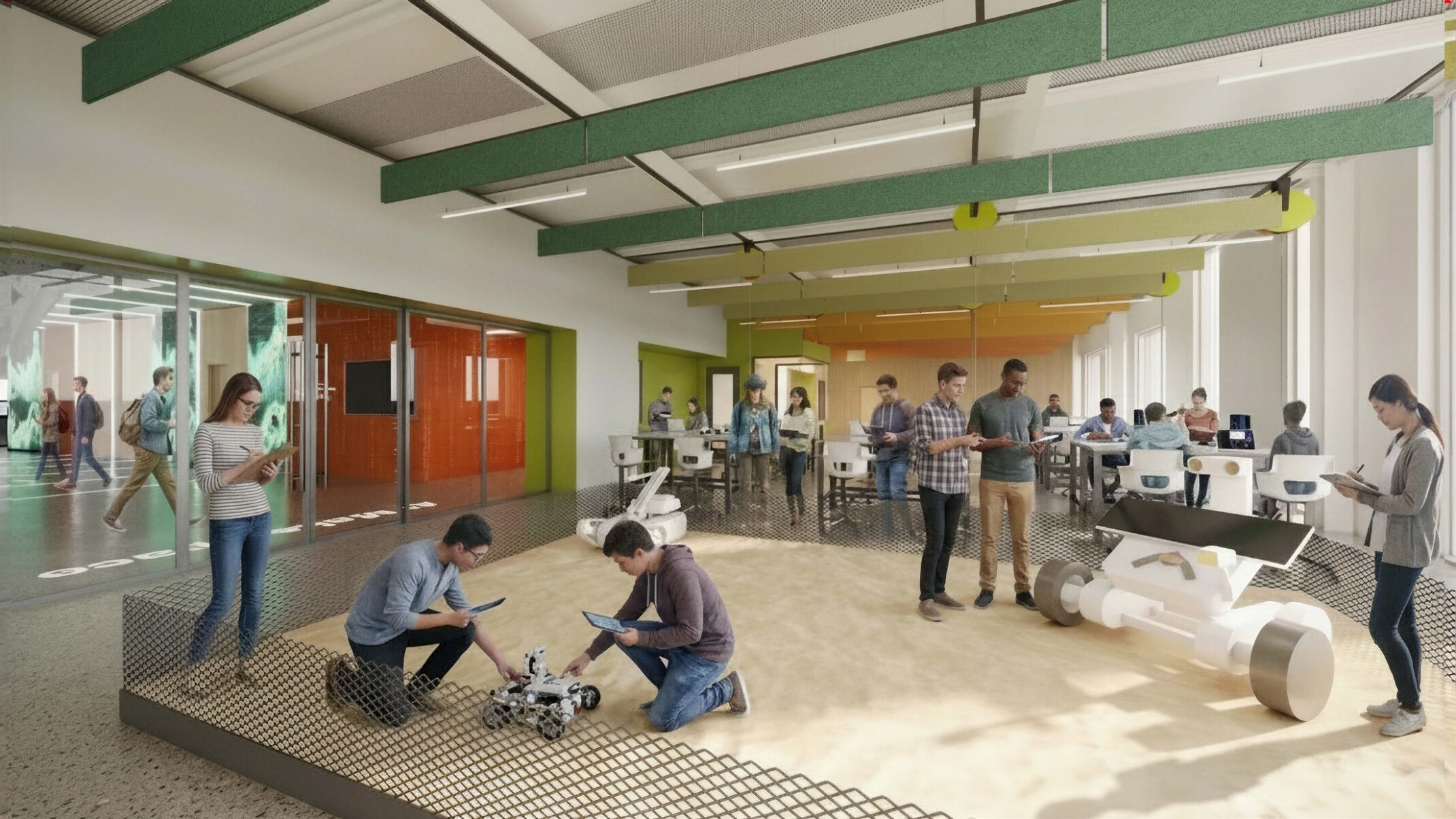
Colorado State University Don and Susie Law Engineering Future Technologies Building in Fort Collins, CO.
Normalizing Curiosity for Psychological Safety
When students are uncertain whether the institution permits or penalizes using AI, they disengage rather than experiment. The campus environment can support student success by making AI exploration visible and encouraged, for example, students requiring digital accessibility resources are achieving greater academic success using handheld tools in the classroom.
Designing for transparency, with spaces ranging from open and collaborative to private and focused, can help students choose the level of exposure that matches their comfort. This can also mean centering neurodiversity in seating and spatial variety, activating libraries and student commons as AI-centric environments. This can help to normalize curiosity instead of policing it.
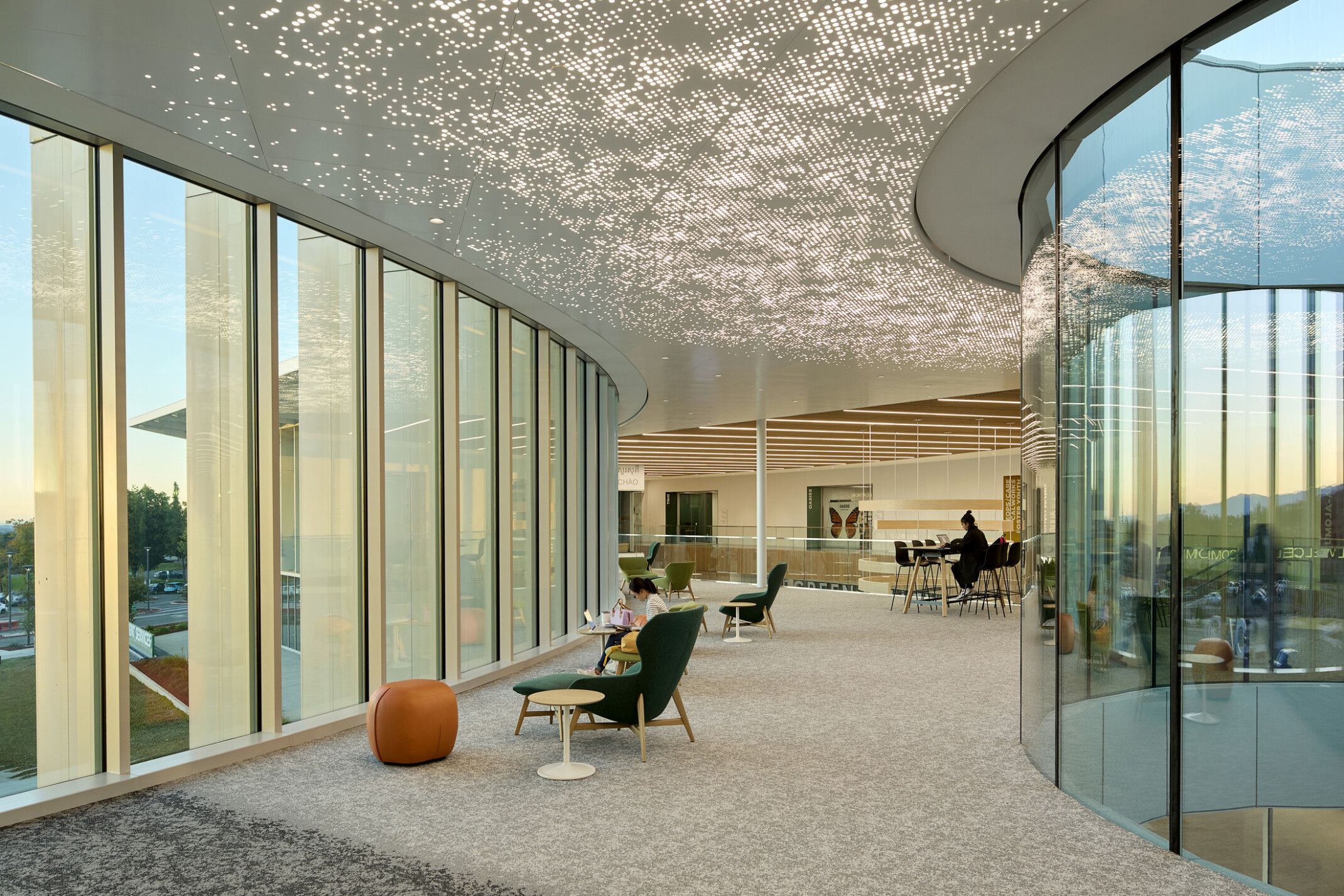
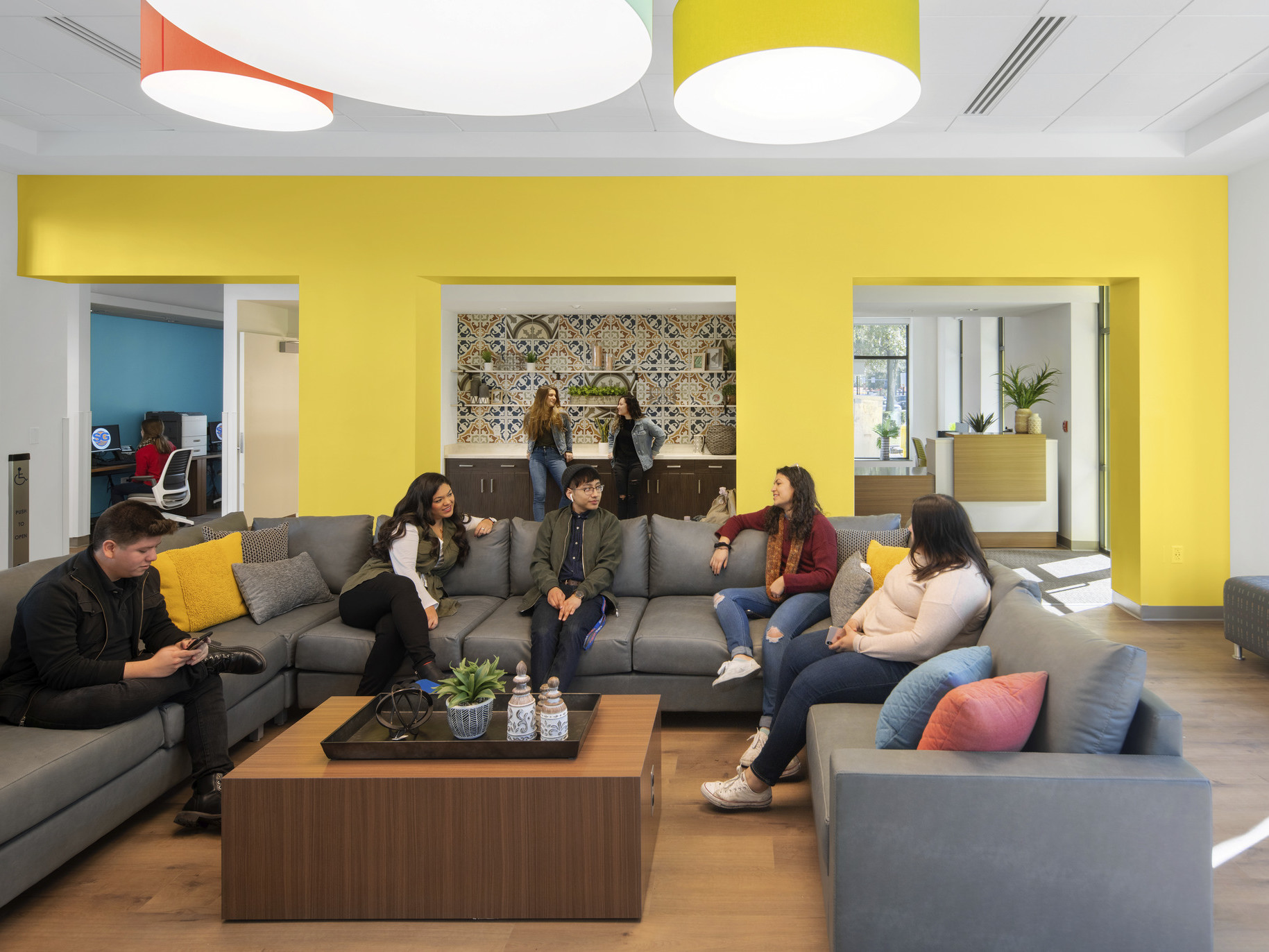
Evergreen Valley College Student Services Complex in San Jose, CA.
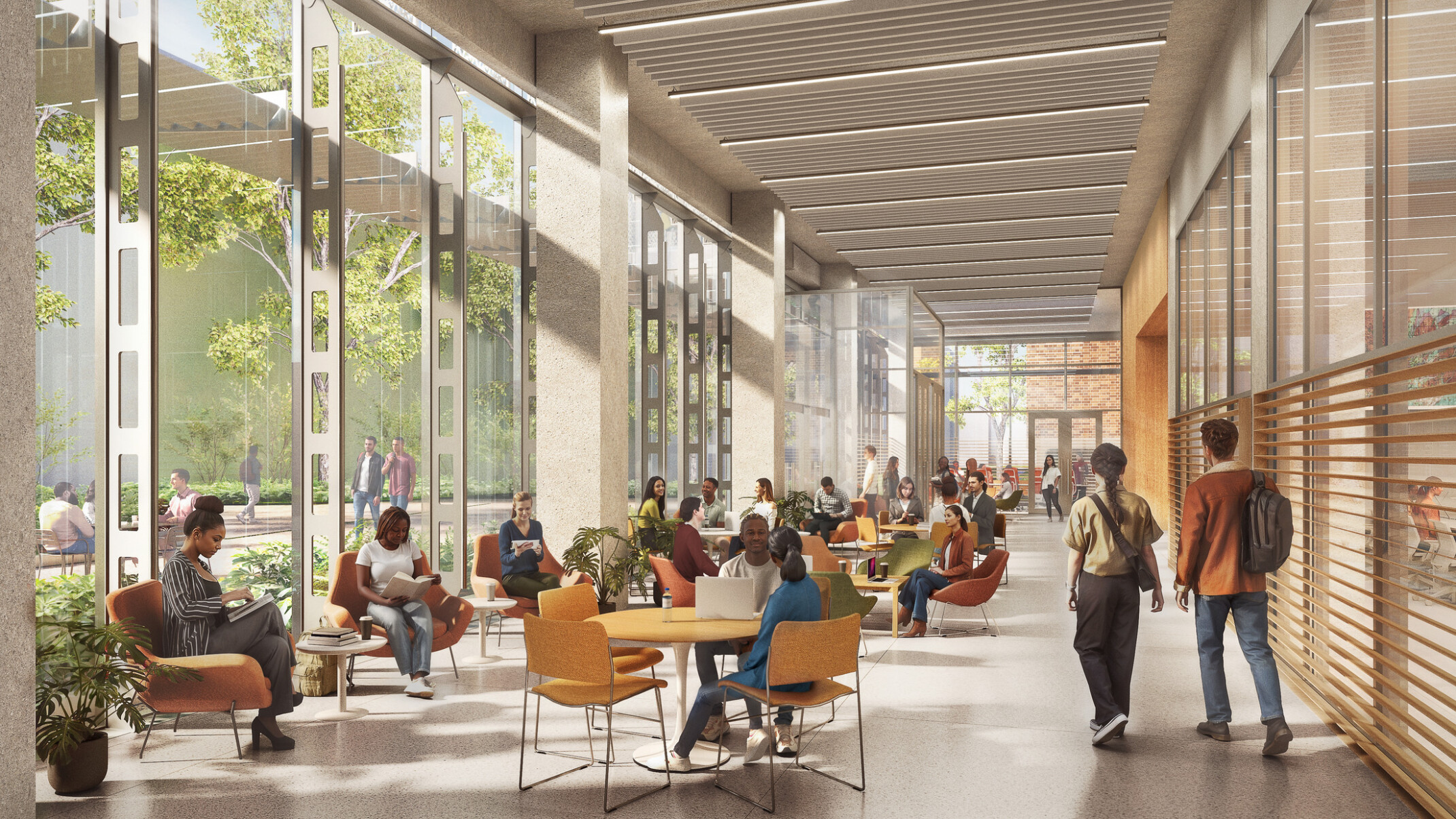
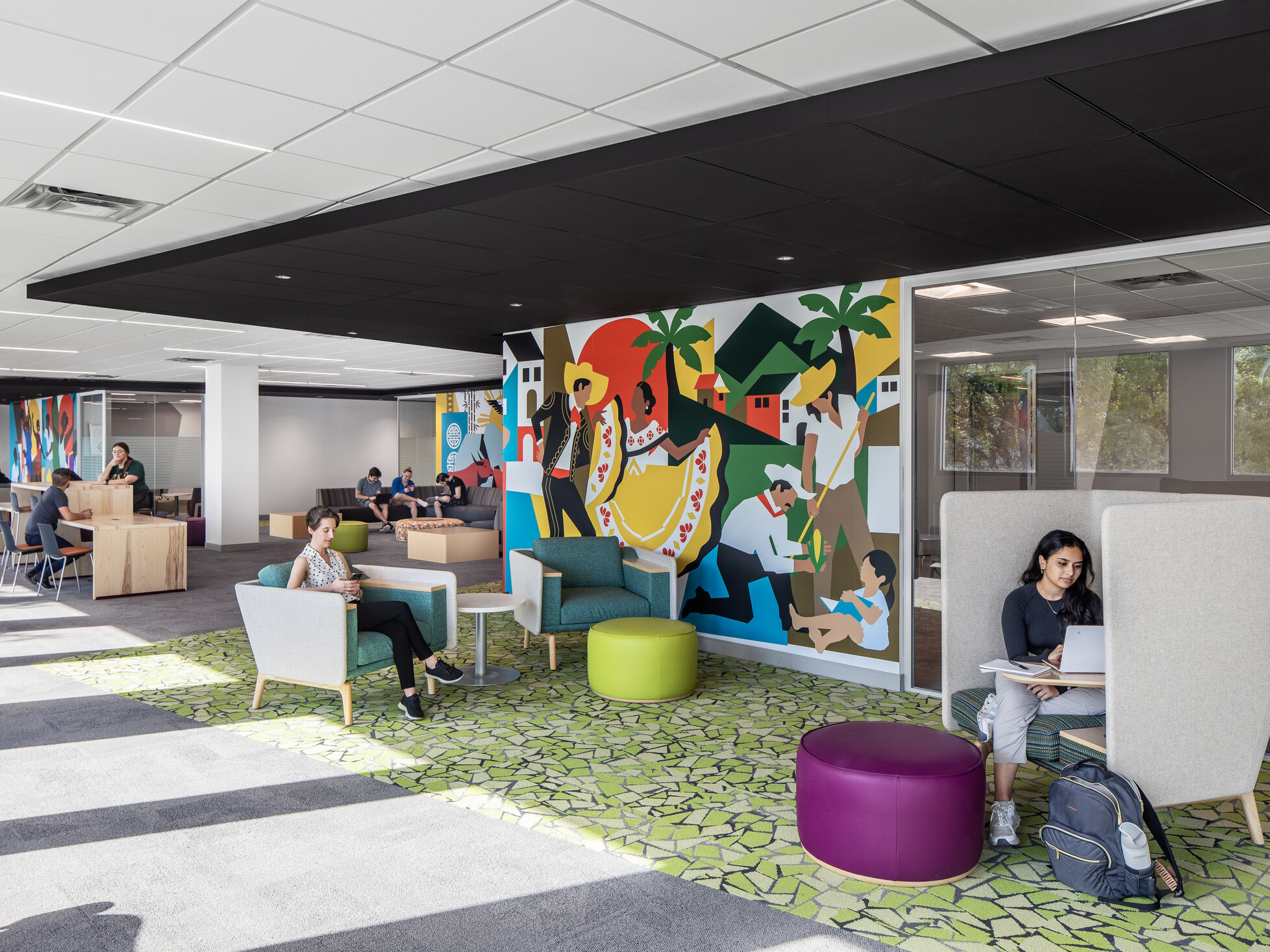
Vanderbilt University Stevenson Center 6 in Nashville, TN.
High-Tech Needs High-Touch
As learning becomes more digital and asynchronous, the physical campus takes on a new role: building human skills. mentorship, collaboration, communication, and relationship-building require proximity, presence, and practice.
Our research calls for collaboration hubs built around smaller pods for discussion, soft spaces for presentation rehearsal, and “black box” environments that give students control over sensory inputs, as they move between digital and physical modes of working.
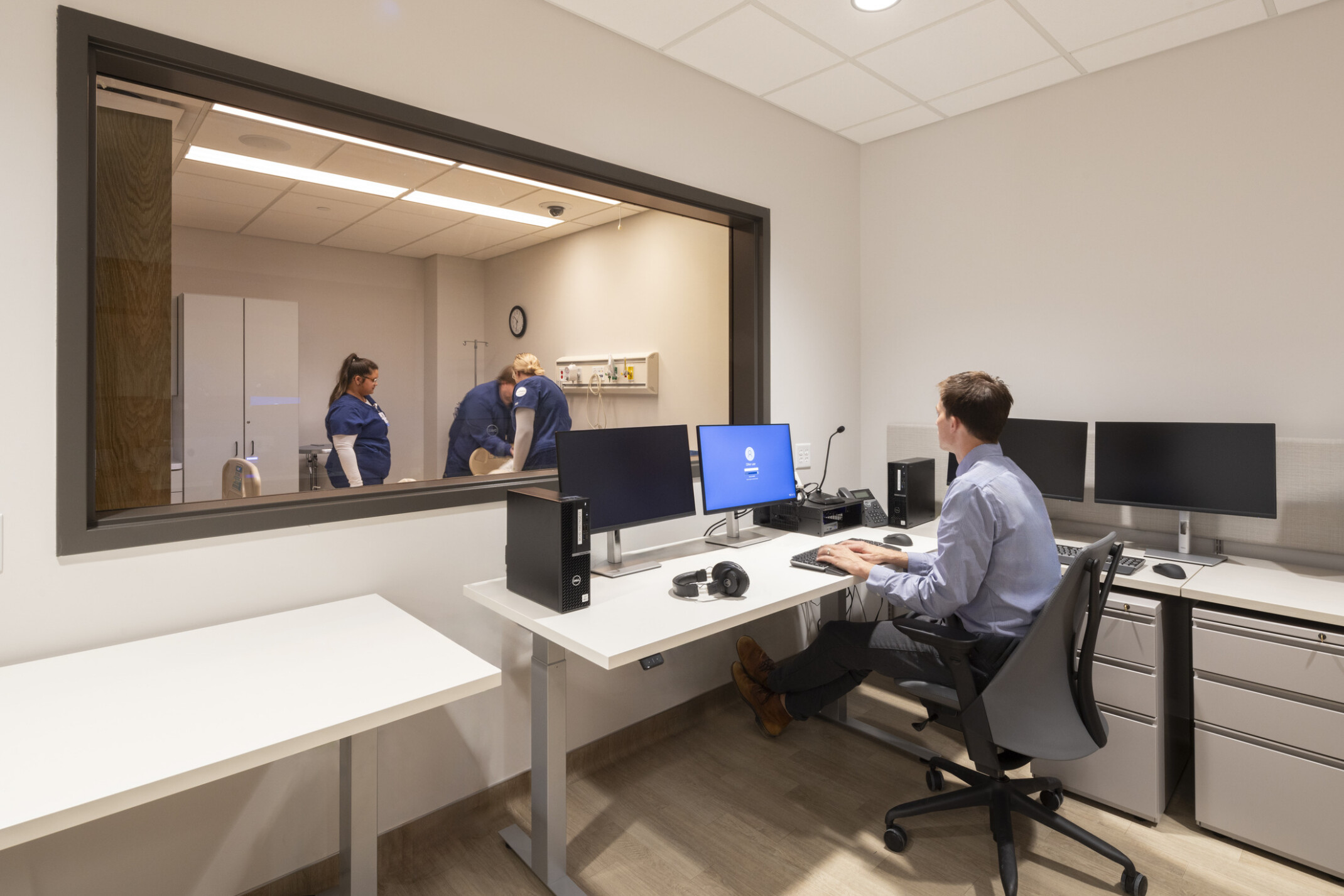
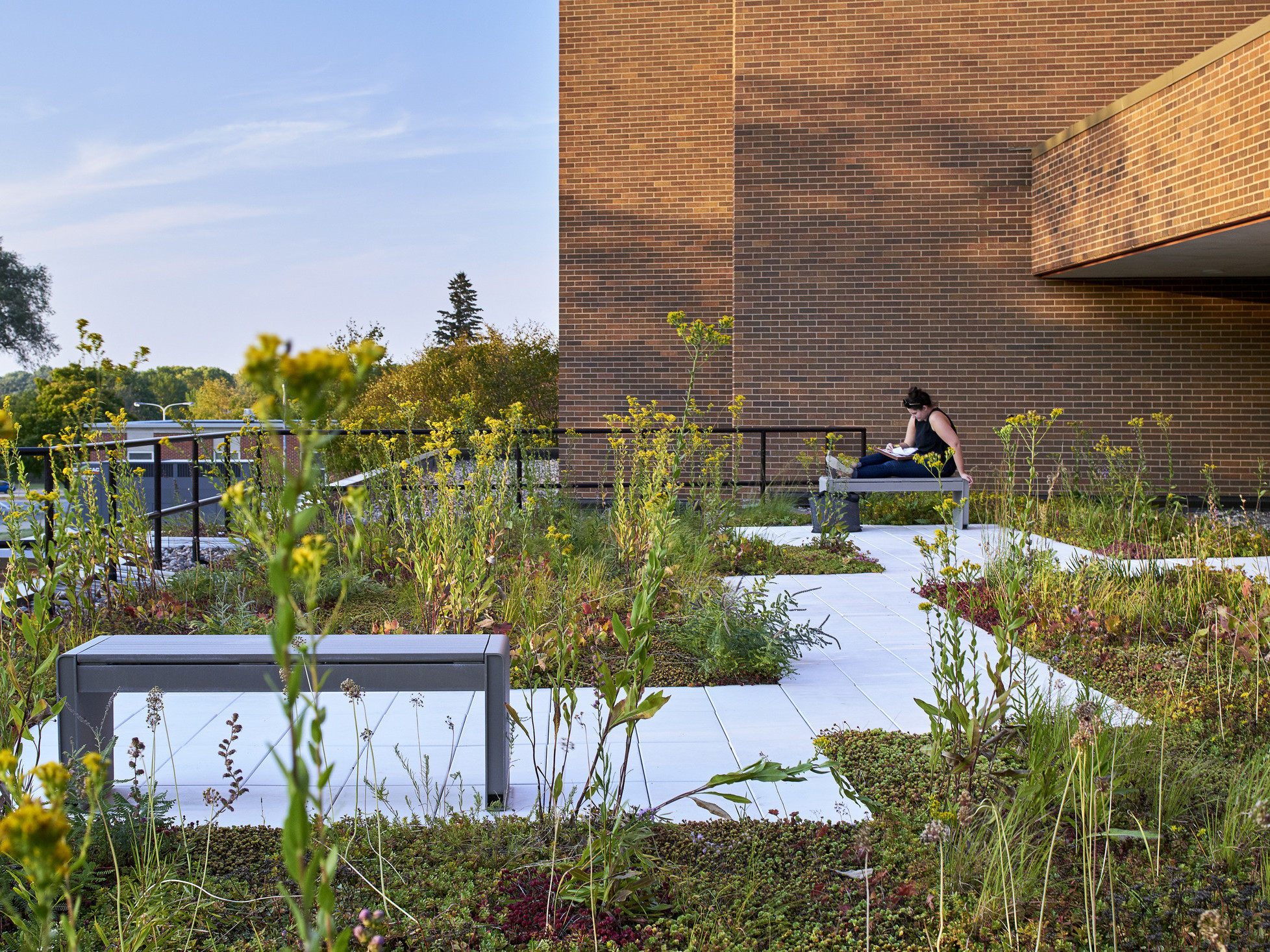
Bryan College of Health Sciences – Nursing College at Mary Lanning MOB in Lincoln, NE.
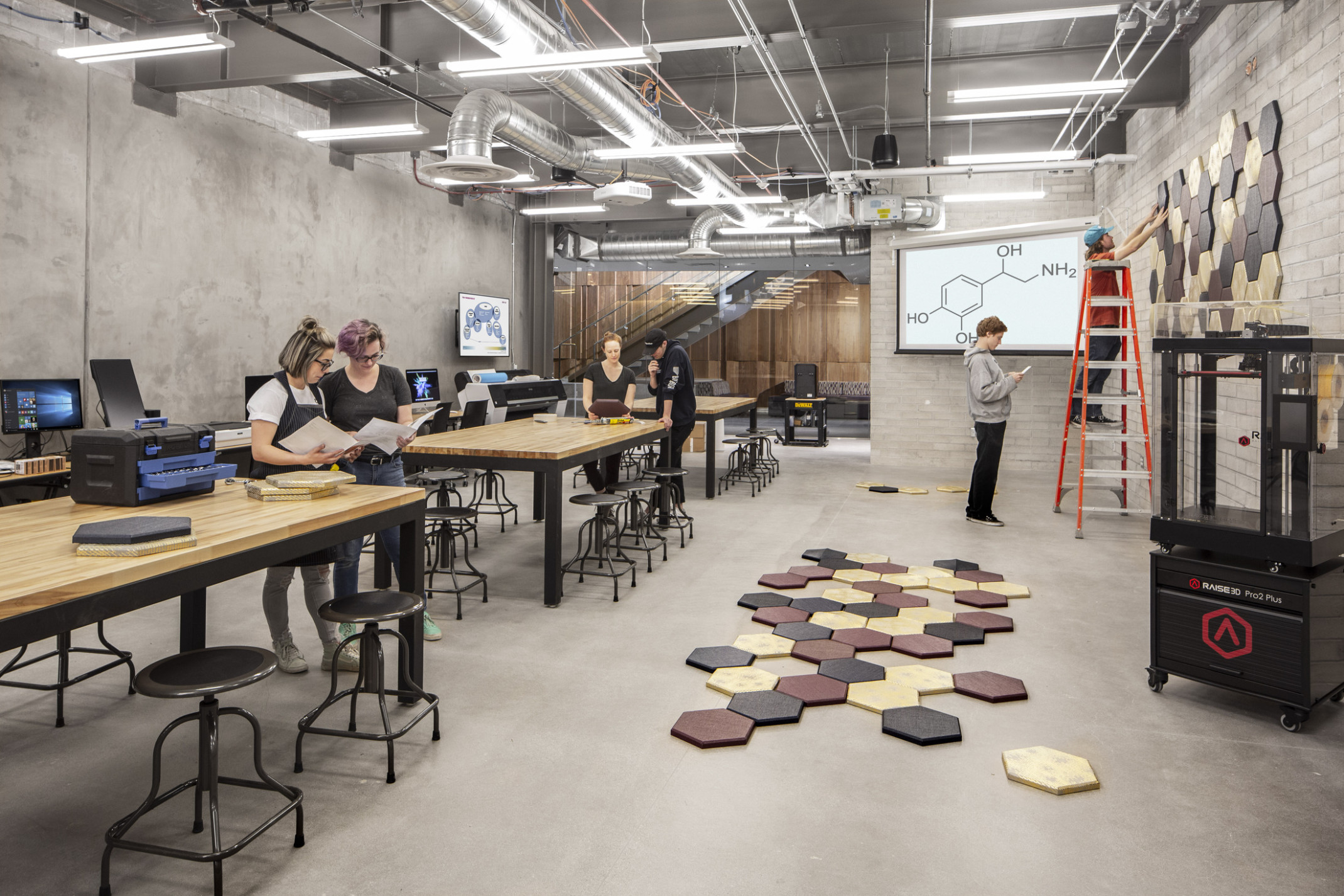
The Opportunity for Institutions
Three actions stand out for campus leaders ready to lean in:
- Invite IT to the table early. Technology upgrades bundled with physical improvements deliver far greater return than either approach alone.
- Many campuses have identified extra capacity and available spaces within the post-COVID era of hybrid learning and workspace models. Specifically target extra space (lobbies, corridors, libraries) that see consistent foot traffic and providing flexible workstations to these areas creates visible, low-cost AI environments without major capital.
- Learn from peers. Regional roundtables bring together institutions navigating the same challenges, creating shared frameworks and partnerships that no single campus can generate alone.
What does this look like in practice? At Colorado State University, a 125,000-SF facility purpose-built for AI integrates startup garages and AI makerspaces into a single environment, designed for experimentation and industry connection. With the University of Washington’s iSchool, we recently explored high floor-to-floor flexibility and the potential to renovate existing facilities to provide dedicated industry partnership labs.
On the Horizon
“The planning and design of higher education campuses depend on our ability to listen deeply to campus users throughout the co-creation process for environments which support students’ critical thinking, promote interdisciplinary discourse and enable adaption to new technologies,” says DLR Group Senior Principal and Global Higher Education Leader Stu Rothenberger, AIA, LEED AP. “Our research provides a roadmap for institutions to align academic experiences with workforce expectations and deliver long-term value for students and communities.”
The physical campus is not competing with AI. It’s the place where students learn to work alongside it, and with each other. Designing for that reality is not a future priority, rather it is the work in front of us now.