The Paradox of Automation: The Rise of AI Demands a Highly Tactile Campus


Benjamin Strain
AIA, LEED AP
Higher Education Design Leader
Benjamin is a higher education design leader, with over 15 years of architectural experience.
Email 720-257-5622Higher education campuses cannot afford underperforming facilities wrought with legacy pedagogical models. Instead, we must intentionally reimagine campus as a tactile, psychologically safe, and radically adaptable catalyst for those unique human capabilities – critical judgement, ethical discernment, and collective problem-solving – that algorithm-driven tools cannot replicate.
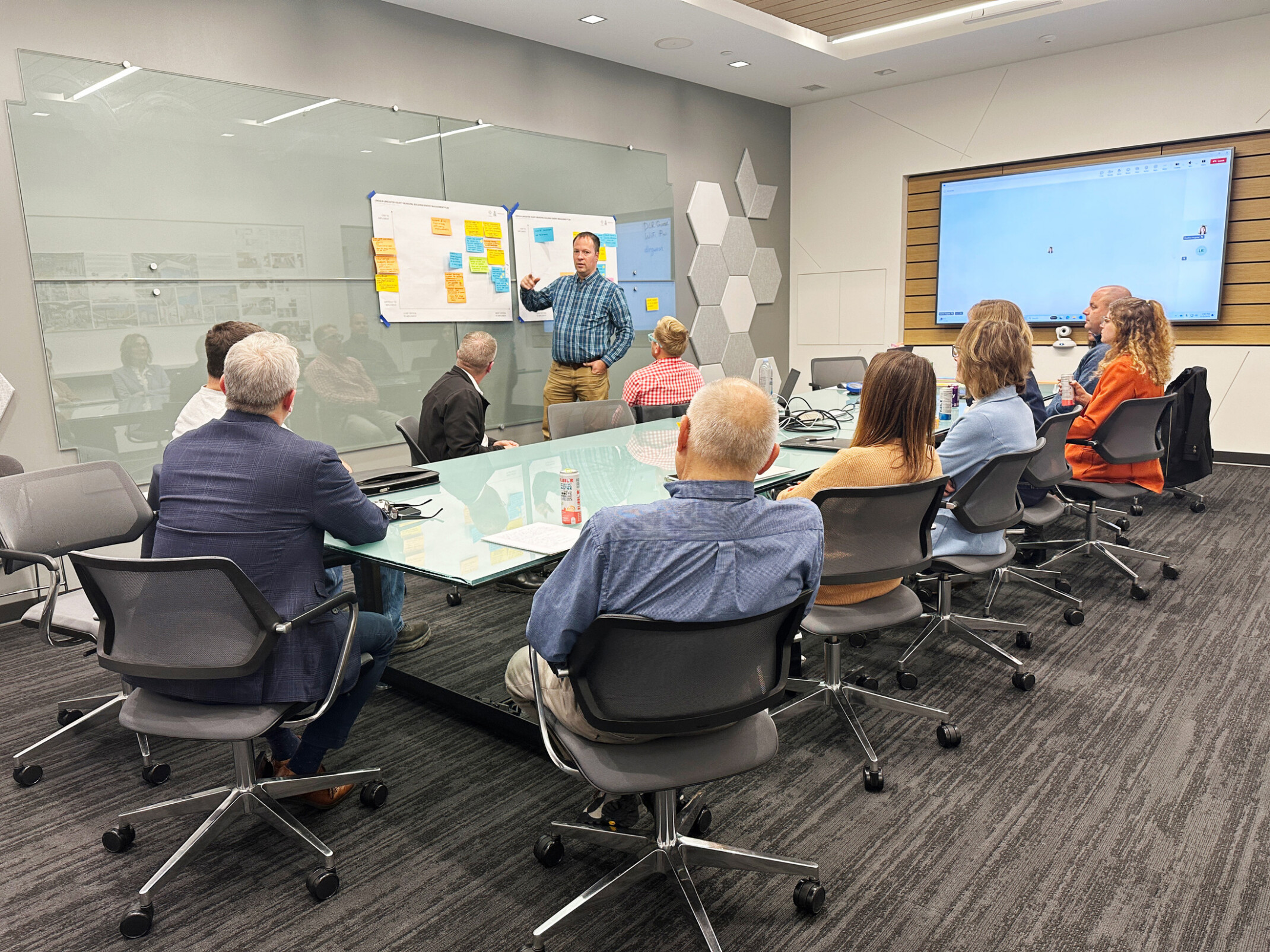
DLR Group’s Evolution of Campus 6.0 – built upon deep-dive qualitative research with 25 current students, 10 recent graduates navigating AI-centric corporate roles, 25 enterprise hiring managers, and 10 higher education faculty members – reveals a striking countertrend. We call it the “Paradox of Automation.”
To compete in an era where technical platforms can obsolesce in months, college and university leaders and campus architects must shift their focus from building specialized technology containers to engineering responsive spatial ecosystems.
1. Breaking the Surveillance Silo: Aligning the Academic and Professional Environments
One of the most troubling findings within the EOC 6.0 data is the profound culture shock experienced by recent graduates transitioning from college into the workforce.
Our student and new-graduate cohorts revealed that out of fear of institutional plagiarism policies and ambiguous surveillance metrices, many students systematically avoid using campus Wi-Fi, libraries, or open computer labs when experimenting with generative AI. They retreat to the isolation of off-campus apartments and private dorm rooms, treating their technical exploration as an illicit activity.
Yet, upon graduation, these exact same students enter enterprise environments where hiring managers expect them to seamlessly integrate automated workflows into their first day of work. The very behaviors that were stigmatized in the academy are demanded in the professions.
Design Strategy: The “Professional Mirror” Studio
To bridge this gap, institutions must dismantle the traditional, proctored computer lab typology – which inherently carries within it an architecture of surveillance and passive compliance.
These spaces should instead borrow their architectural DNA from modern agile corporate environments: open, non-hierarchical floor plans; unassigned dual-monitor hot-desking stations; and visible, perimeter-lined digital dashboards.
By designing environments where code refinement, prompt engineering, and model training are performed out in the open, the physical space shifts the institutional paradigm from punitive monitoring to transparent, collaborative optimization.
Further, these studios must not be sequestered within the computer science quadrant. To prevent non-technical students from opting out of technical fluency, these environments should be strategically placed as high-visibility, transparent pavilions at the convergence points of humanities, arts, and business facilities.
2. Designing for Psychological Safety: The Architecture of the “Safe-to-Learn” Zone
The primary barriers to institutional AI adoption are fundamentally cultural, not technological. EOC 6.0 data indicates that when campus policies regarding AI usage are ambiguous or inconsistent across departments, students default to radical risk aversion. Ambiguity breeds disengagement.
If students do not feel psychologically safe to fail, iterate, and openly critique the outputs of generative tools, they cannot develop the ethical boundaries and critical skepticism required to use AI responsibly. And design plays an increasingly important role in cultivating this psychological safety.
Design Strategy: Sensory Variance and the Visible Iteration Zone
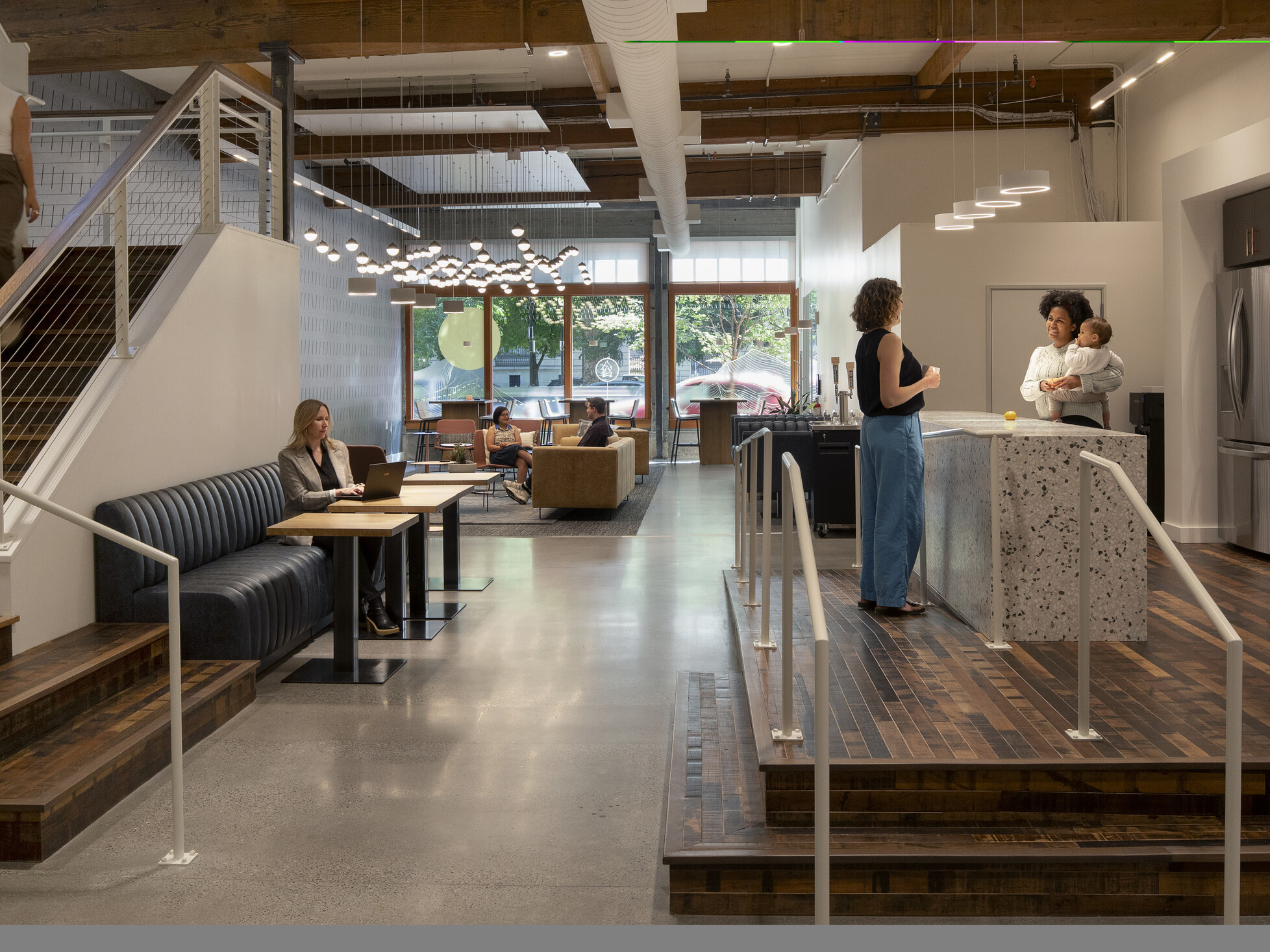
To draw students out of spatial isolation, the campus must provide an integrated gradient of spaces that accommodate the psychological vulnerability of learning disruptive technology.
- Visible Iteration Zones: Active, semi-public commons equipped with acoustic glass partitions and mobile touchscreens allow small groups of students to display their prompt chains and iterative failures to their peers and faculty in a low-stakes environment, visually normalizing the messy process of trial-and-error.
- Sensory Variance Typologies: The design must support seamless transition from highly active collaboration zones to deeply quiet, acoustically dampened micro-enclosures. Neurodiverse students and those with varying levels of technical comfort require spaces where they can pivot from intense, peer-driven brainstorming to solitary, deep-focus analytical writing and prompting, without the distracting sensory overload of an open hall.
Varied Design Zones
Campus Environments tailored to differing levels of privacy and interactivity support the full spectrum of AI exploration.
3. Radical Agility Over Tech Obsolescence: Infrastructure Over Interface
The lifecycle of higher education capital projects is measured in decades, yet the lifecycle of artificial intelligence models is measured in weeks. Any campus space designed around a specific hardware configuration, a single software paradigm, or a static instructional layout will be structurally obsolete before the building’s ribbon-cutting ceremony.
The EOC 6.0 research delivers a clear directive for institutional planners: prioritize programmatic elasticity over static specialization. Do not build an “AI Lab” that locks a campus into today’s technology; instead, build a highly adaptive infrastructure backbone capable of evolving alongside tomorrow’s computing shifts.
Design Strategy: The Zero-Commitment Sandbox
Designs must be engineered between the critical infrastructure and technology systems:
- Raised Access Flooring & Track-Busway Power: By routing all data and electrical lines through accessible modular flooring and utilizing overhead plug-in track systems, students and faculty can reconfigure the physical layout of a room within minutes – shifting from a centralized lecture setup to independent project areas.
- Demountable Wall Systems: Replacing fixed drywall partitions with high-performance, demountable acoustic glass and solid wall systems allows facilities teams to completely resize and re-program entire zones between semesters without requiring costly structural demolition. This demands careful planning for component storage within or conveniently near these spaces.
- Over-indexed Environmental Systems: Instead of spending capital budgets on bespoke hardware interfaces that students will replace with their own devices, institutions should invest heavily in the invisible infrastructure backbone – high-density Wi-Fi arrays, scalable data-conduit pathways to accommodate edge-computing notes, and localized, over-indexed HVAC cooling allowances capable of handling the high thermal loads of advanced processing hardware.
4. The Crucible of Durable Skills: Design as a Catalyst for Human Capital
Perhaps the most definitive consensus across our EOC 6.0 interviews came from corporate hiring managers. When asked what competencies they look for in graduates entering an AI-saturated workforce, their answers consistently bypassed technical syntax and instead focused heavily on durable skills: adaptive problem-solving, team-based communication, cross-disciplinary synthesis, and a deeply ingrained growth mindset.
As AI streamlines the transactional execution of work – such as writing initial code, generating copy, or sorting massive datasets – it frees up immense cognitive bandwidth. The premium shifts entirely to what humans do with that freed bandwidth. The physical campus must therefore become an intentional incubator for these relational, high-touch human capabilities.
Design Strategy: The Cross-Disciplinary Critique and Rehearsal Arena
To optimize the development of durable skills, the campus must move away from spaces designed for passive content consumption and invest heavily in spaces configured for active, human negotiation:
- Hybrid Critique and Interaction Studios: These environments are designed specifically for the cross-examination of AI-generated work, combining digital projection surfaces with large, physical pin-up surfaces and prototyping tables. Here, students from engineering, ethics, and design can gather to pressure-test AI models against real-world constraints, forcing students to defend their methodologies, critique automated assumptions, and collaborate across disciplines.
- Presentation Stages and Rehearsal Pods: To prepare students for the relationship-driven realities of the modern workplace, institutions should consider highly adjustable, soft-surfaced spaces where students can record presentations, analyze the playback, and identify strategies to improve their interpersonal communication skills. Equipped with variable lighting and modular furniture, these environments act as rehearsal spaces where students practice the art of persuasion, high-touch client advisory roles, and complex team dynamics.
Finding the Balance
To build a truly empowering ecosystem, curriculum must be supported by intentional culture and campus environments. The lack of strength in any area destabilizes the whole.
The New Higher Education Campus
Curriculum, culture, and campus design cannot operate as isolated administrative silos: they represent a single, interconnected ecosystem.
The higher education institutions that will thrive over the next decade will not be those that attempt to out-compute the cloud by purchasing the most expensive, specialized technology today. They will instead be the institutions that recognize that as digital workflows become more automated, the physical environment must become more human.
By leveraging the insights of EOC 6.0, forward-thinking campuses can partner with design leaders to craft campuses that utilize physical space as a strategic asset. In doing so, they will transform the built environment into a powerful framework for cultivating the cognitive fluency, psychological confidence, and human-centered judgement that will define the next generation of global leadership.
Learn more about EOC 6.0

Ideas
Recommended Reads