Data Centers: How to Lower the Temperature with Local Engagement

Jonathan Mesik
PE
National Mission Critical Leader
Jonathan leads integrated teams to design and deliver mission critical facilities in which operations is essential to be maintained for clients throughout the country.
Email 312-780-1041A packed town hall. A rezoning vote pushed back once again. A county board fielding hundreds of emails from residents who learned about a 300-acre data center campus only after the site plans were filed. This is how many data center projects are surfacing in communities right now, and it’s not going well.
Developers eager to break ground are discovering the playing field has changed: Success now hinges on genuinely engaging the communities where they hope to build. The developers who succeed present themselves as community partners, not just builders. They invest early in relationships that last.
Nearly every project raises questions, and our community engagement process is designed to help developers and communities navigate even the thorniest ones. Here’s what it looks like.
Raise Awareness Early
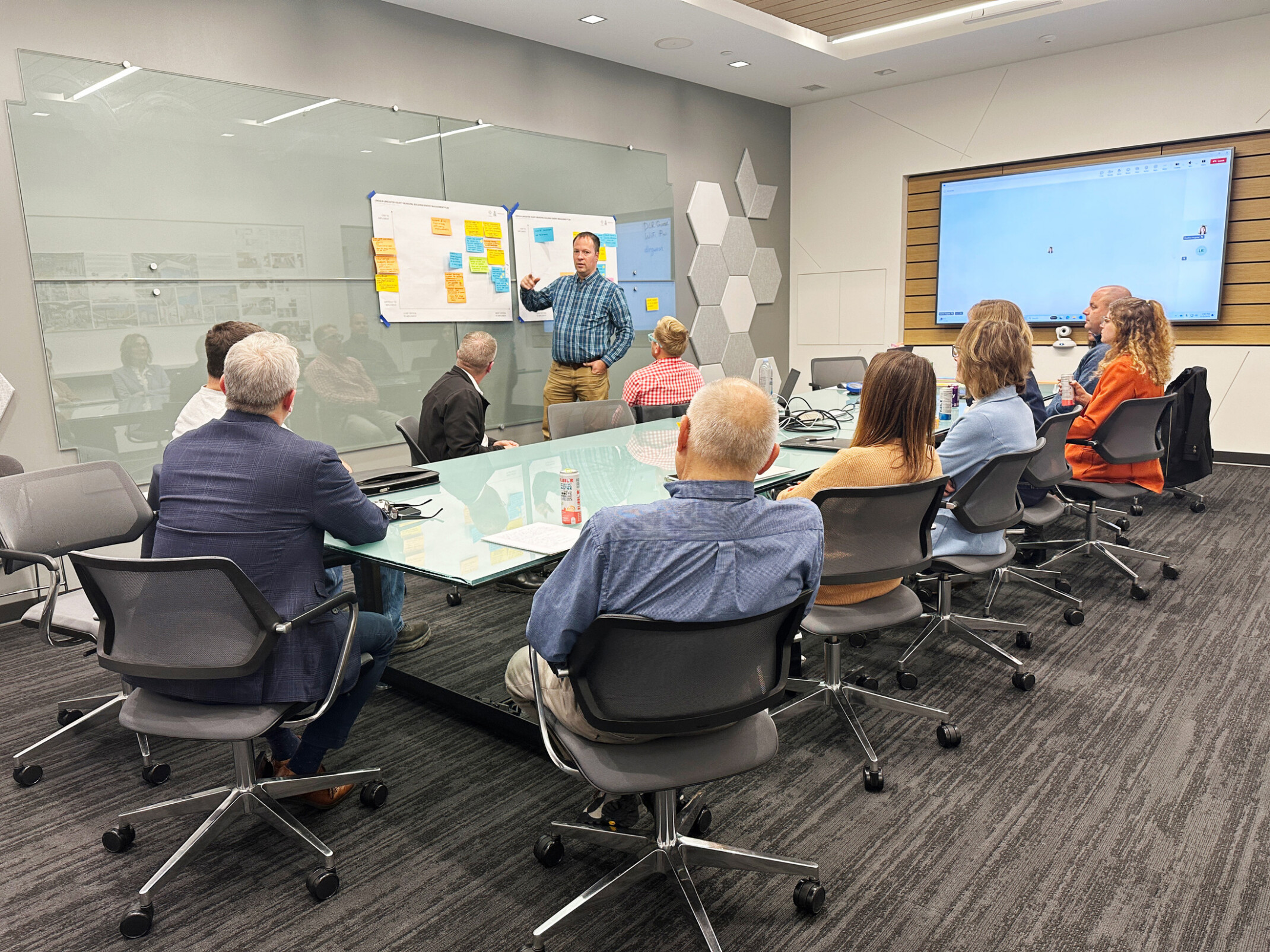
Hosting community meetings and open houses before a project is finalized allows developers to answer concerns, dispel myths, and build trust before breaking ground. Residents should know what to expect during construction, including potential disruptions, mitigation efforts, and long-term benefits. Emphasis on infrastructure improvements and economic empowerment can shift the conversation in a developer’s favor.
Keep Your References Local
In addressing objections, developers should cite local comparisons, rather than using industry averages. Water usage is often a flashpoint, for example, so it helps to show consumption alongside benchmarks the audience already knows: How much water will your closed-loop cooling system require annually, compared to the municipal pool or golf course? Planners in central Nebraska drew exactly those kinds of parallels during a community review for a data center development, and the comparison helped put things in perspective.
Engage as a Partner, Not an Outsider
Residents can tell the difference between a developer who’s checking boxes and one who’s listening. Three habits signal the difference:
- First, send project leaders and technical experts (not legal counsel) who can explain how the project works in plain language and answer residents’ questions directly.
- Second, drop the nondisclosure agreements. Most members of the public dislike the idea of closed-door meetings and secret deals, and officials worried about their jobs increasingly won’t entertain such overtures.
- Finally, arrive without a predetermined outcome. Be ready to moderate or change your views on massing, landscape buffers, or other issues if that’s what the conversation calls for.
Demonstrating Economic Benefits
In addition to jobs, data centers often generate tax revenue that can be used to support infrastructure improvements, scholarship, and workforce training. But vague promises about future benefits won’t move skeptical residents. You’ll have to get specific: Read the community’s capital improvement plan, identify the upgrades already on it, and offer to fund specific line items. Small, visible contributions can carry as much weight as large abstract ones.
Spotlight Environmental Investments & Design Upgrades
Sustainability is a top priority for residents in many communities – and such folks tend to be engaged and vocal. Investments in renewable energy, efficient cooling, and heat reuse can show your awareness of how your plan impacts the local landscape. How will your project make local life better? How will you ensure that your facility doesn’t affect local waterways and wildlife?
Data centers are often critiqued for their aesthetics and noise. Design-wise, be prepared to show how your building will fit into the community visually. Are you planning setbacks, screens, landscaping, or lighting that will make the project more palatable? When it comes to noise, treat acoustics as a design problem rather than a communications problem. Explain how you will model sound at the property line, site mechanical equipment accordingly, and share the results. Develop a proactive plan for handling noise complaints.
Getting to Yes
Viewpoints on data centers will vary by community. And trust tends to build slowly, so it may take time to win people over to your views. Remember: Every meeting counts, and each answer offers a chance to make your case.
Among developers who’ve eventually earned community support, most have brought respect and information to community meetings. Engagement won’t guarantee success, of course, but this much is certain: There’s no success without some form of engagement.
This article was written in collaboration with Principal and Global Planning Leader Yogesh Saoji, FAICP, AIA.
Explore more of our data center projects.

Ideas
Recommended Reads