Navigating Change Together: Where Workplace Strategy Begins
Abbey Cwiek-Garrett
NCIDQ, WELL AP
Senior Interior Designer
Abbey is a senior interior designer with over 20 years of experience working with diverse projects for municipalities, school districts, universities, and private clients.
Email 206-446-7882Work is changing. And workplace design strategies are testing new approaches, opening new possibilities.
Some changes are subtle, others seismic: Teams are increasingly spread across multiple locations, AI is reshaping how we approach tasks, and expectations among employers and employees alike continue to evolve.
Our most recent assessment of workplace trends suggests leaders are asking: What should our office look like now? How do we design spaces that motivate staff to stay focused and do their best work in an ever-changing world?
The answers to such questions rarely begin with a design sketch. The best solutions begin with a conversation.
The Work Before Work
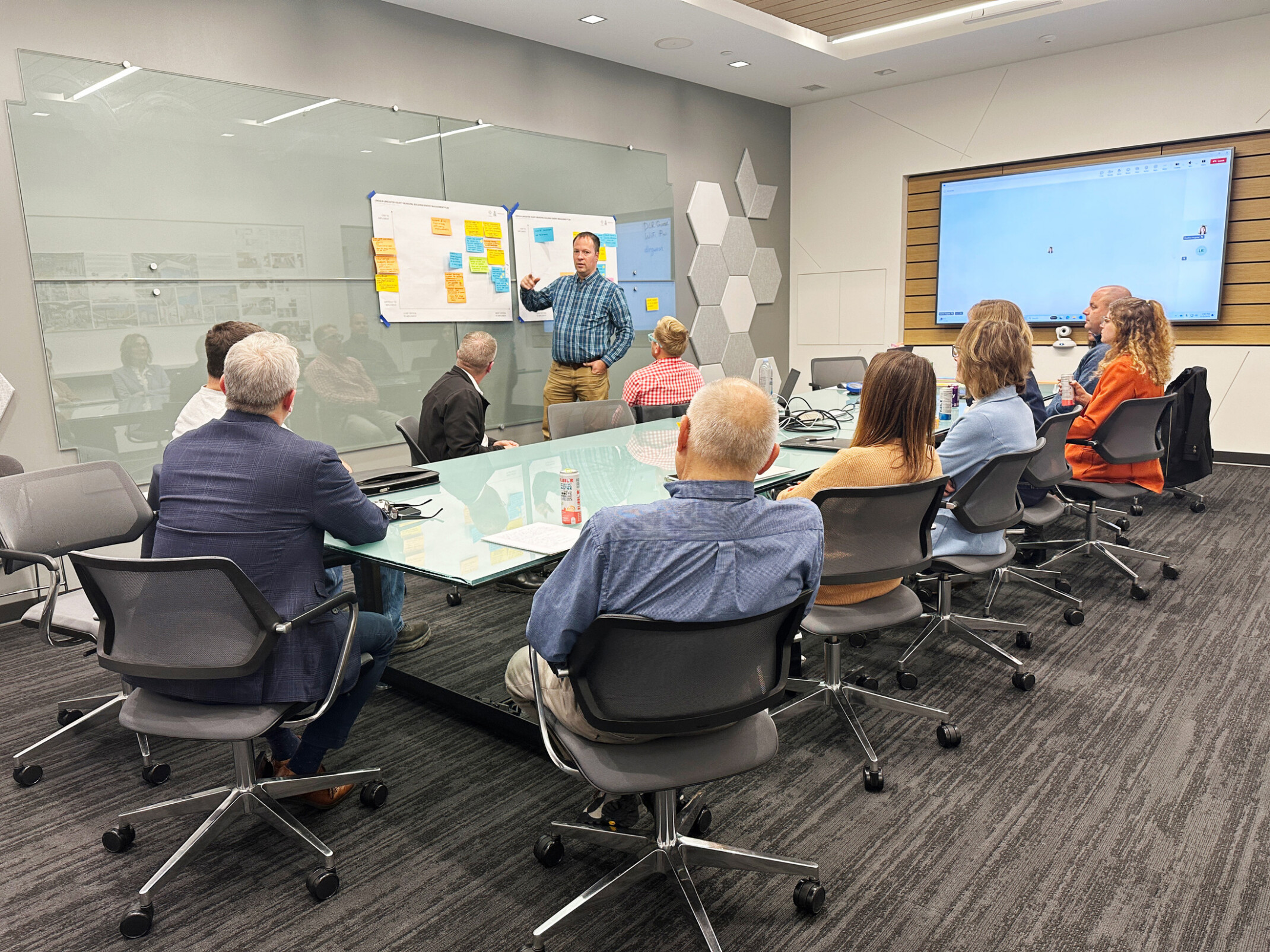
Early engagement and conversation are the foundation of successful workplace design. What kinds of work require focus? When and where do teams gather to solve problems? What does a productive day feel like?
While our design team guides the discussion and brings evidence-based research and creative exercises to the table, these conversations rarely follow a script. Our approach is iterative, and the goal is to identify both space needs that exist in the current moment and the enduring values that undergird the company’s culture.
For our client Rain, a branding firm headquartered in Portland, Oregon, trust was a key value as they embarked on a new office design, consolidating several offices into. The agency’s leaders believed their staff performed best when they had the autonomy to choose where and how they worked – whether at home or the office, gathered around a conference table or perched at a communal table.
As other employers implemented return to work mandates, Rain’s leadership took a different tack: What if we made our new office worth the commute? What if we built an attractive, branded, collaborative space that naturally drew workers? What if staff didn’t just clock in, but felt connected?
Built on Trust
In surveys and conversation, Rain’s 68 on-site employees revealed their hopes for a space that had buzz and energy, a place for creative collaboration, and a staging ground for client events.
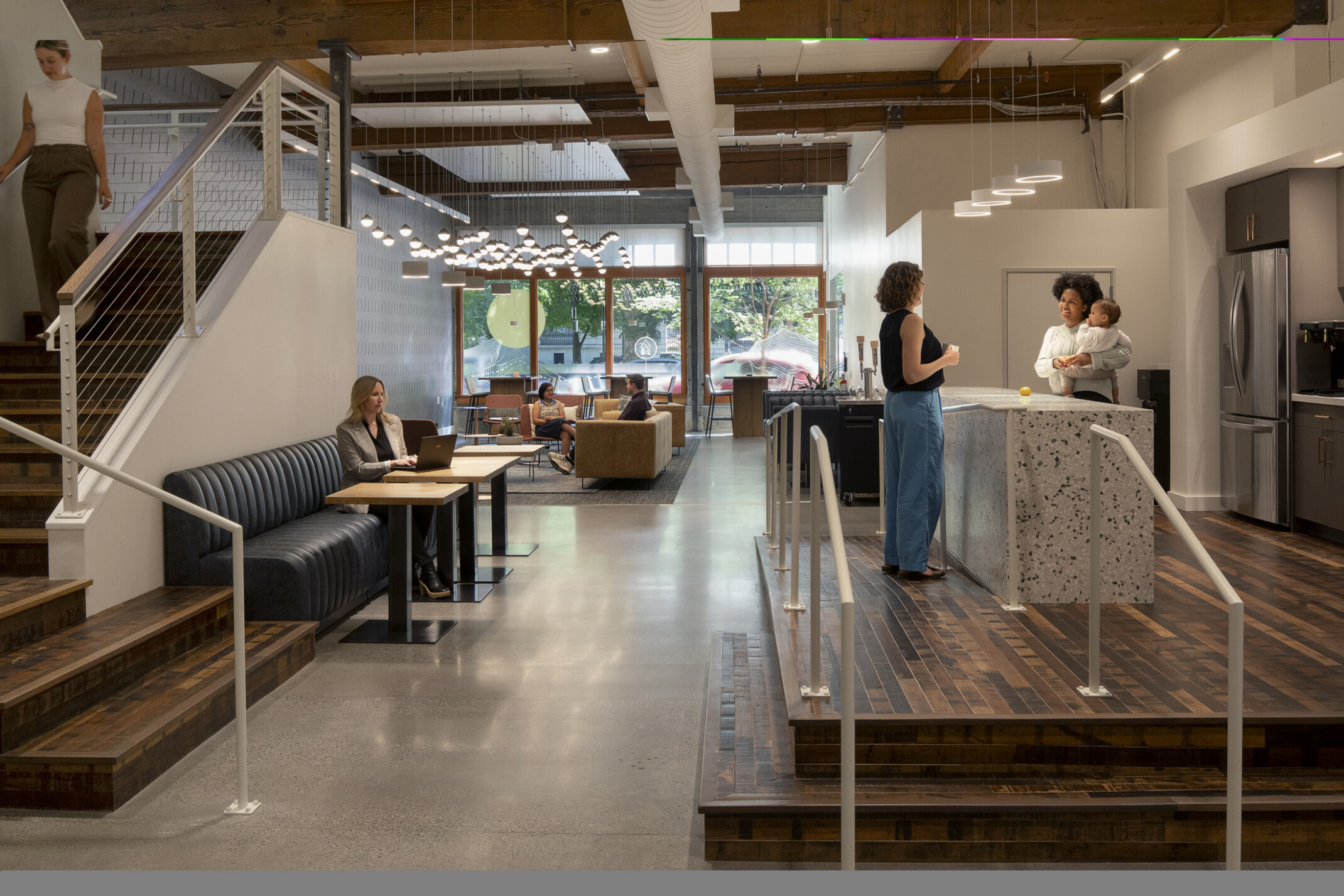
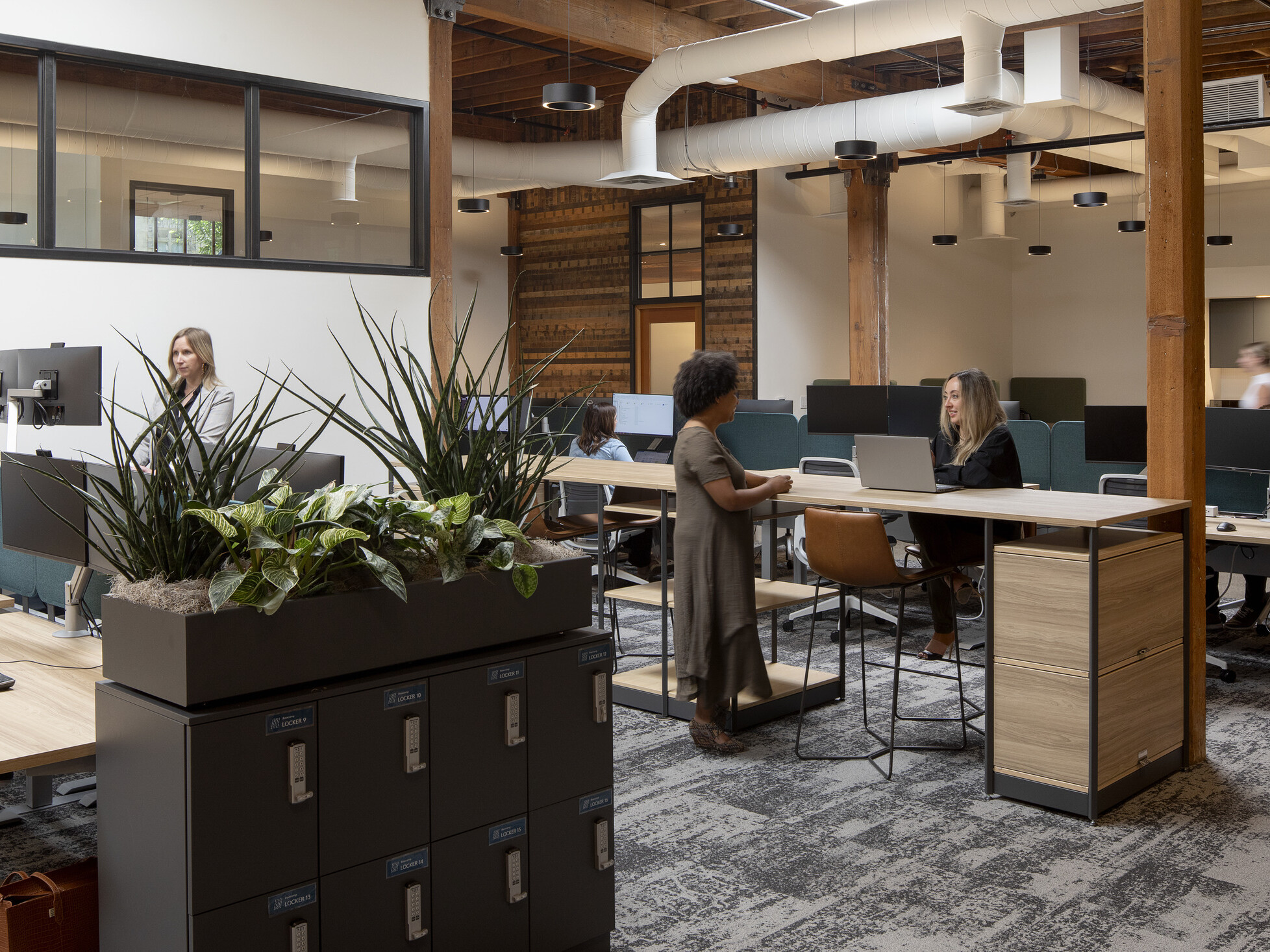
Working with the agency’s leadership team, we organized the space into four zones: a client-focused event hub, an open workspace designed for hoteling and collaboration, a private executive suite, and a dedicated studio for editing and film production.
Assigned desks have been replaced by a free address system that allows employees to roost wherever they like, in nooks, on couches, at tables or even in the kitchen. Storage is available in day-use lockers, and placement of power and data ports allow workers to plug in almost anywhere. Meeting spaces, both private and public, are plentiful.
The design communicates the trust of Rain’s leadership team. Trust that teams will choose environments that support what they’re trying to accomplish. Trust that flexibility doesn’t dilute culture but in fact strengthens it.
There’s no rigid choreography dictating how the space must be used. Instead, the environment offers choice and autonomy, reflecting the organization’s confidence in the people who occupy it.
The Workplace as a Magnet
Flexibility can make a workplace attractive. So can the details, the materials, artwork, and lighting that shape how a space feels to spend a day in.
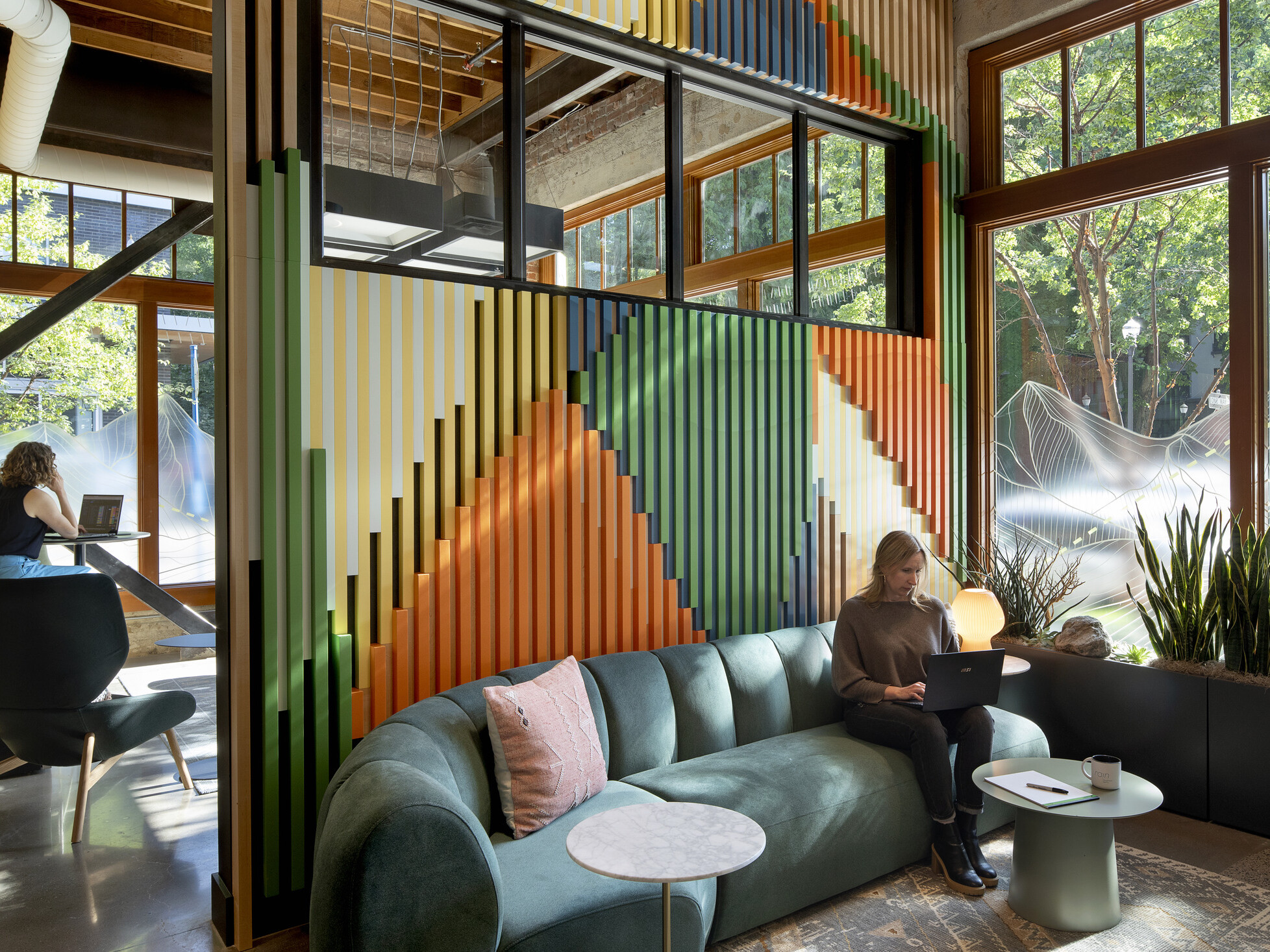
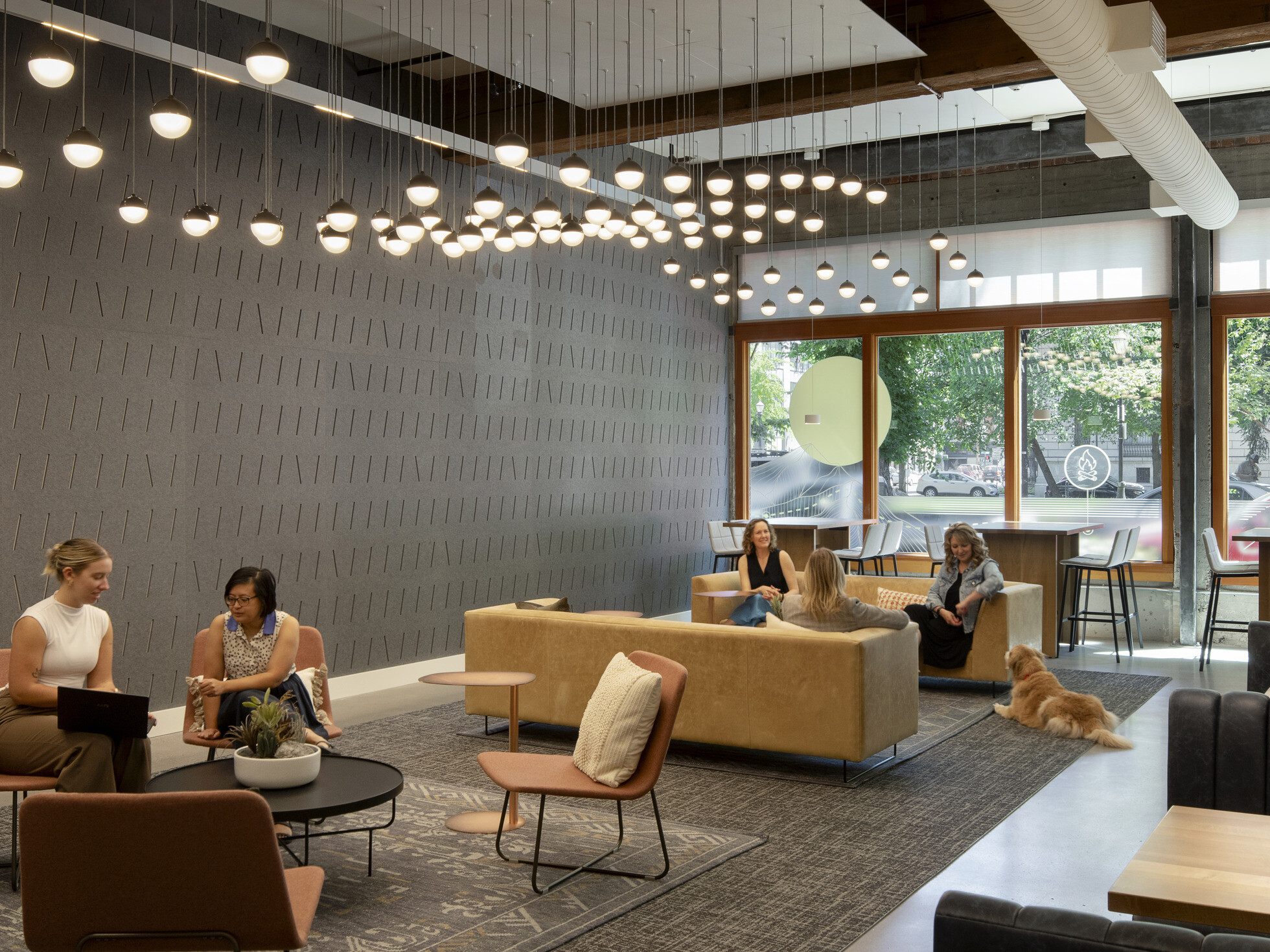
Rain’s leaders wanted a workspace that inspired employees. The firm’s location in the Pacific Northwest suggested a palette of colors that aligned with the region’s natural splendor and led our design team to create a three-dimensional motif that appears throughout the space, a nod to the region’s ever-present weather, as well as the agency’s namesake: rain. A lighting feature visible from street through the office’s tall windows also plays off this concept: Its pendant fixtures hang from the ceiling like giant drops of rain.
The reception desk is made of wood panels from a tree felled on the property of Rain’s cofounder and chairwoman, Michelle Cardinal, and wood accents introduced throughout the interior pay homage to the exposed wooden joists and beams used in the original construction of the building.
Soft seating, adjustable lighting, color, and vastly improved acoustics are among the features staff now cite as assets within the office. “Everyone loves the space,” says Heather Horton, Rain’s vice president of business operations. “They feel like when they come here, it’s their space.”
Designing for Change Without Calling It Change
Workplace transformation is often framed through the lens of change management. Processes, policies, transition plans. These are certainly important elements, but sometimes they overshadow the bigger picture.
For Rain, the conversation took a different turn. Rather than focusing on how people would adjust to a new environment without desks and fixed locations for each job function, leadership encouraged employees to focus on how the space could help them serve, impress, and engage clients. That perspective reframed the discussion in a way that felt less procedural and infinitely more human.
When decisions are anchored in purpose rather than policy, the path forward becomes clearer. The workplace stops being a reaction to change and becomes a reflection of what matters most.
Getting from Point A to Point B
Every workplace project begins with a starting point. A building that no longer fits. A culture that has evolved. A leadership team seeking clarity.
And somewhere ahead is the destination: a workplace that supports people, strengthens culture, and adapts as work continues to change.
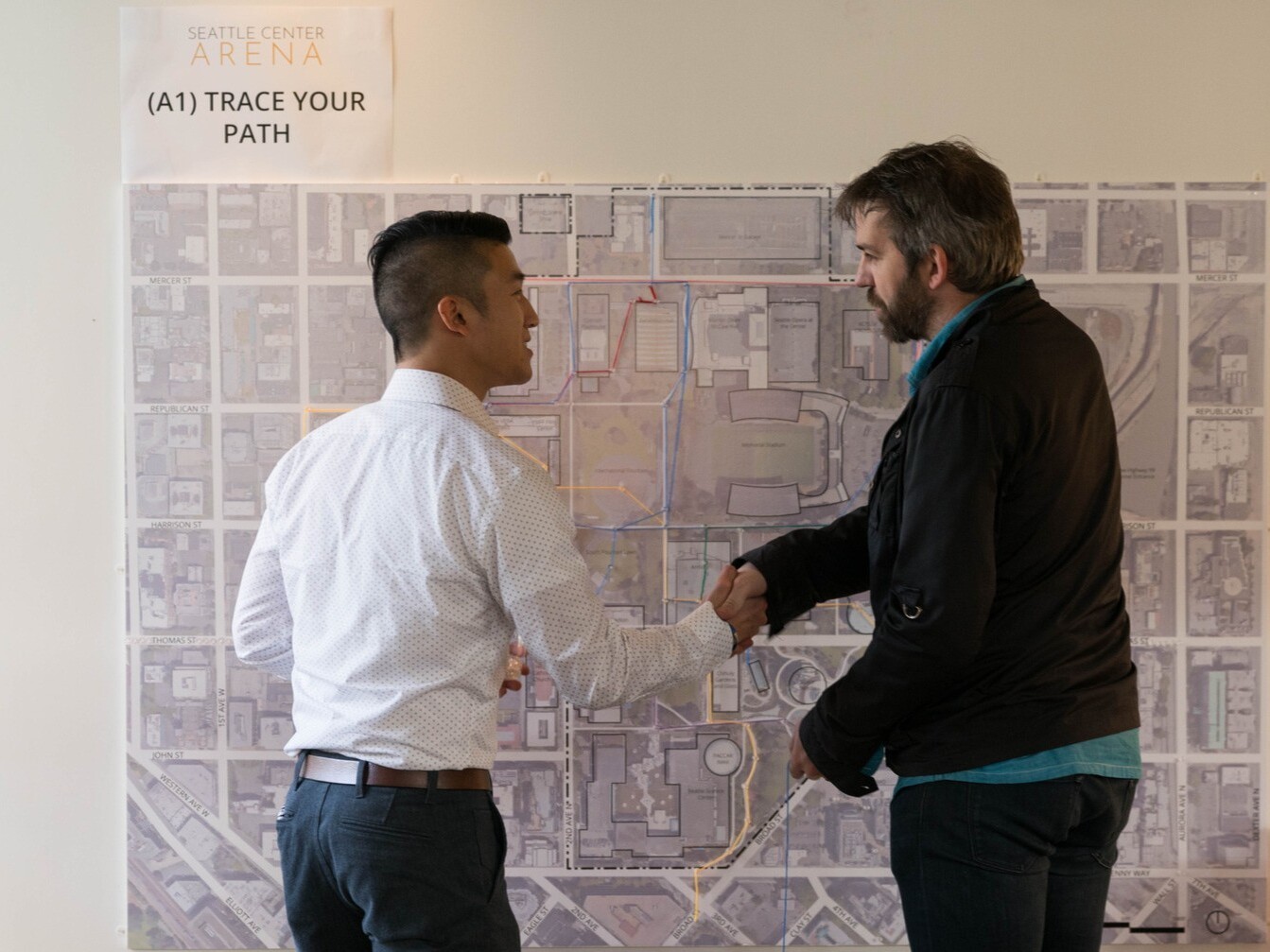
In workplace design, the engagement process is the path between them. Through conversations and exploration, clients and design teams move forward together – uncovering insights, testing possibilities, and shaping a vision for a better future.
Because the best workplace solutions rarely come from a single perspective. They emerge through partnership.
Learn more about the projects and approaches shaping the future of workplace design.
Ideas
Recommended Reads