The Future of Healthy Schools is to Reconnect with Nature

Michael C. Ralph
PhD, WELL AP
Senior Design Researcher
Michael is a senior design researcher at the firm.
Email 913-897-7811Today’s students are experiencing more stress. Research has shown that since 2020 there have been significant increases in the consequences of that stress: higher rates of anxiety, depression, and other mental health challenges. What can schools do to support students in managing their social and emotional needs while continuing to learn? Students need schools that help them tap into the joys of learning while also finding the moments of calm needed to protect their wellbeing.
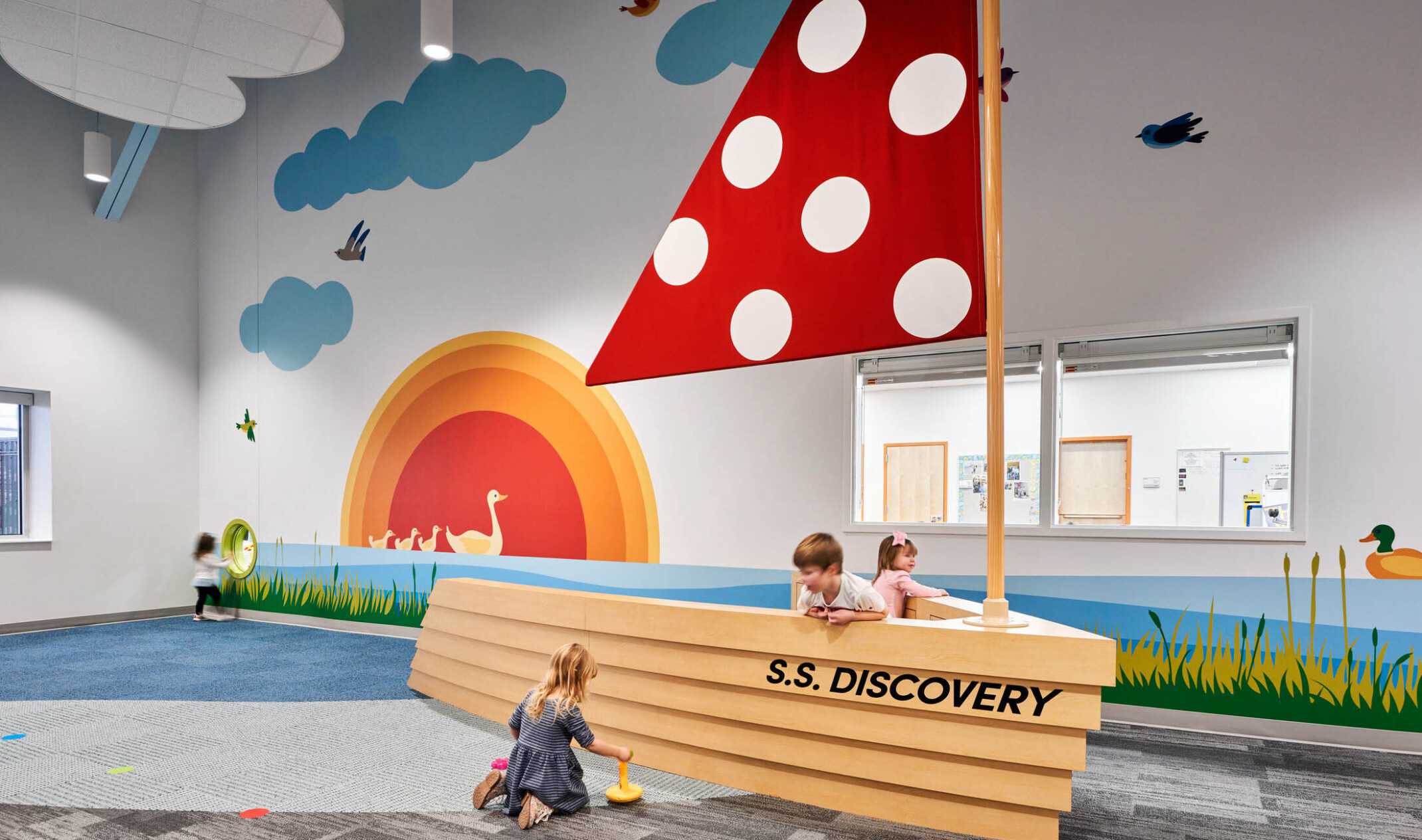
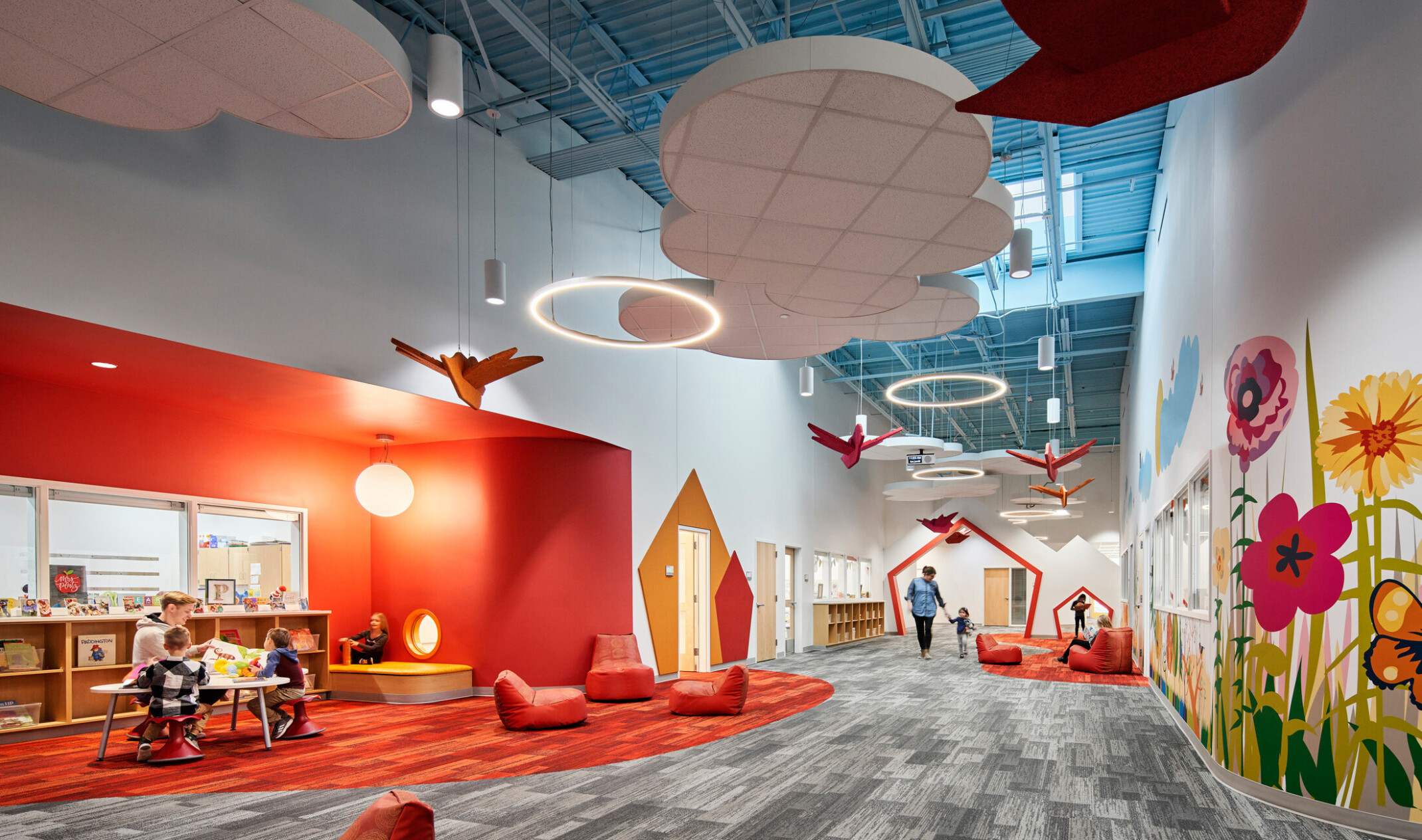
The learning process plays out in cycles. The spark of curiosity at the beginning of a lesson might give way to a time of quiet reflection or reading. Students who find something surprising in their book may want to join in a debate, and the lively discussion could grow to include the whole class in a shared moment of expression and energy. Research on learning has affirmed this ebb and flow in inquiry learning boosts student motivation by growing their sense of agency and ownership over their learning. We see these patterns in nature, with opportunities for discovery and refuge in all sorts of natural landscapes. For example, in North Kansas City’s Early Education Center we implemented nine-foot skylights to create open spaces full of natural light and opportunity. Each classroom also offers small, protected sensory spaces where students can tuck in for calm. The rhythm of opportunity and respite sustains learning in all its forms within the built environment.
Naturalness in Design Supports Quality Instruction
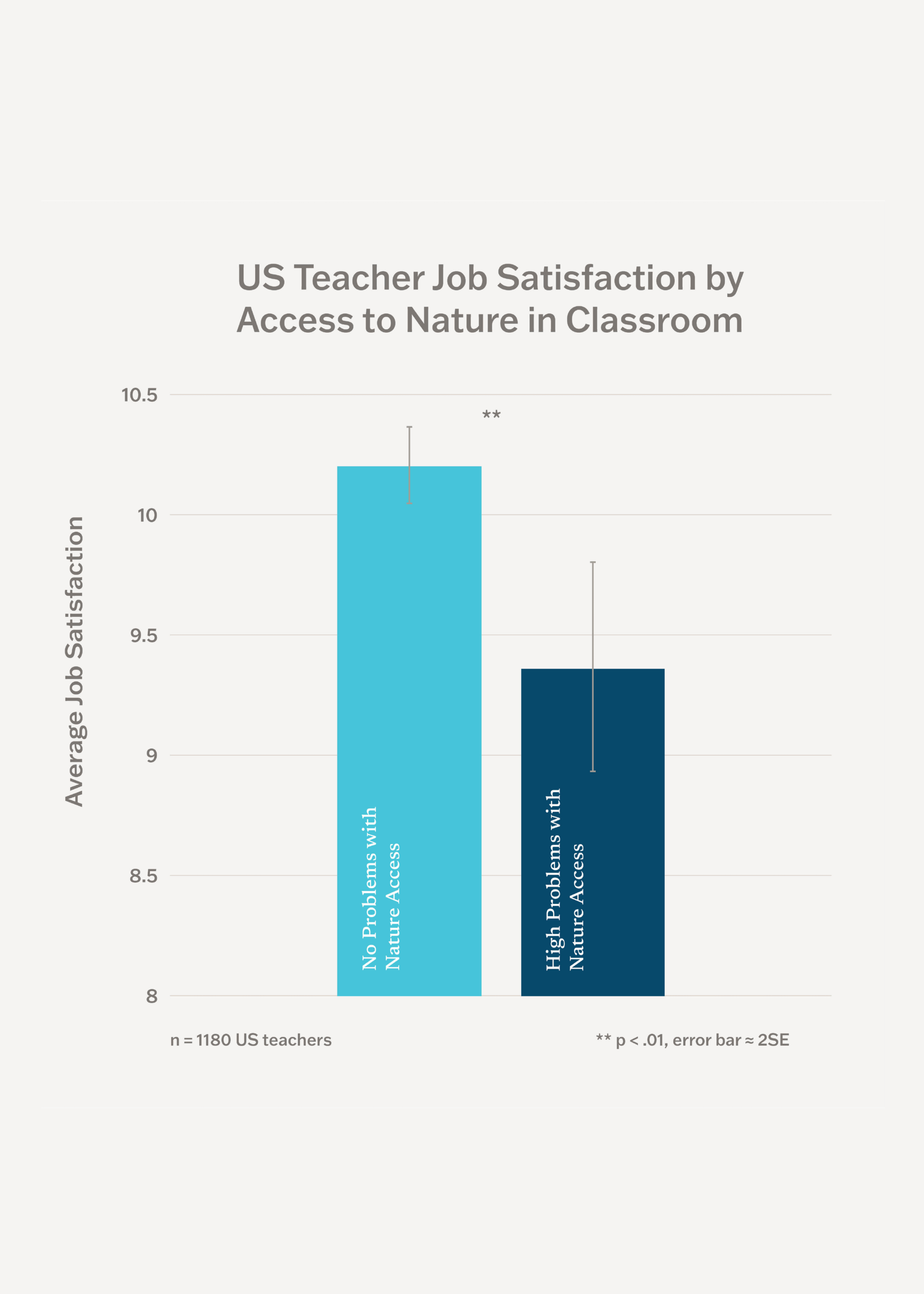
Designing with naturalness integrated throughout the architecture, the materials, and the furnishings supports the wellbeing of both the students and the teachers in the classroom. Data from OECD’s Teaching and Learning International Survey shows that teachers with access to nature in their environment have significantly higher levels of job satisfaction than those without it (Figure 1).
Access to nature also affects their students. Teachers who have the greatest ability to promote social and emotional development with their students frequently report lack of access to nature as a barrier to providing high quality instruction. How can we ensure teachers have what they need to help students grow emotionally and academically? The answer lies in the integration of nature and naturalness throughout school design.
Learners of all ages benefit from access to ample natural light and views to the outdoors. Seeing the sequence of the day in the movement of the sun and the activity outside cultivates a sense of connection to their surroundings and boosts healthy internal cycles within the human body. The use of materiality in the built spaces also blurs the lines between what is outside and what is inside. Architectural elements and color palettes that evoke nature offer the opportunity to engage student senses directly within the classroom.
For example, researchers have used photography from a natural landscape related to the project goals – in one case a lakeview set in the mountains. By extracting the color keys from the sky, rock, plants, and water they were able to assemble a color scheme for the ceiling, walls, and furniture that mirrored the lakeview landscape. These visual connections to natural landscapes can broaden our sense of what is possible within a learning space. Offering opportunities to quietly tuck into a reading nook or excitedly climb while playing indoors allows students to experience the emotional ups and downs of a learning cycle that our bodies are designed to experience in nature.
Cultivating Wonder Through Inquiry in Nature
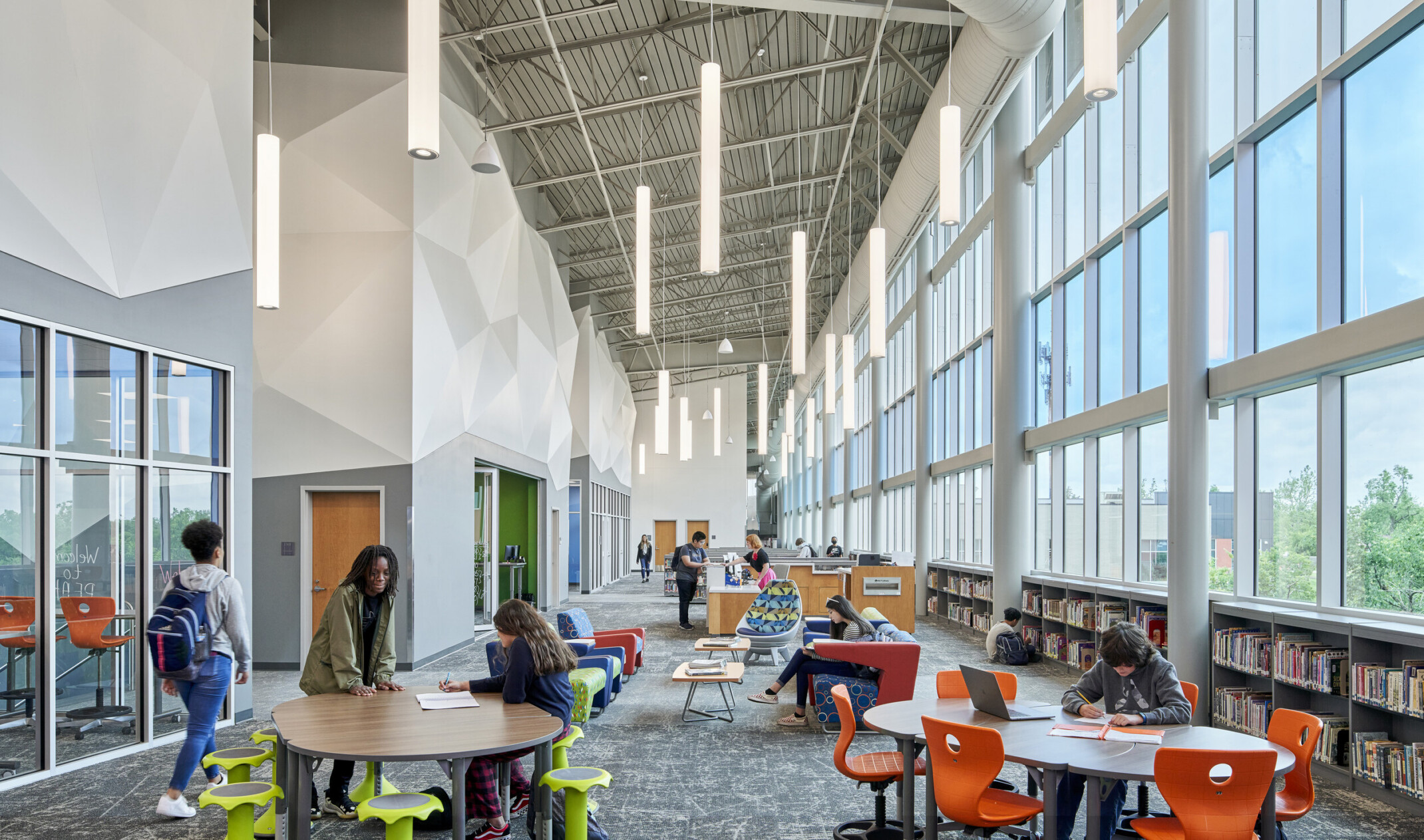
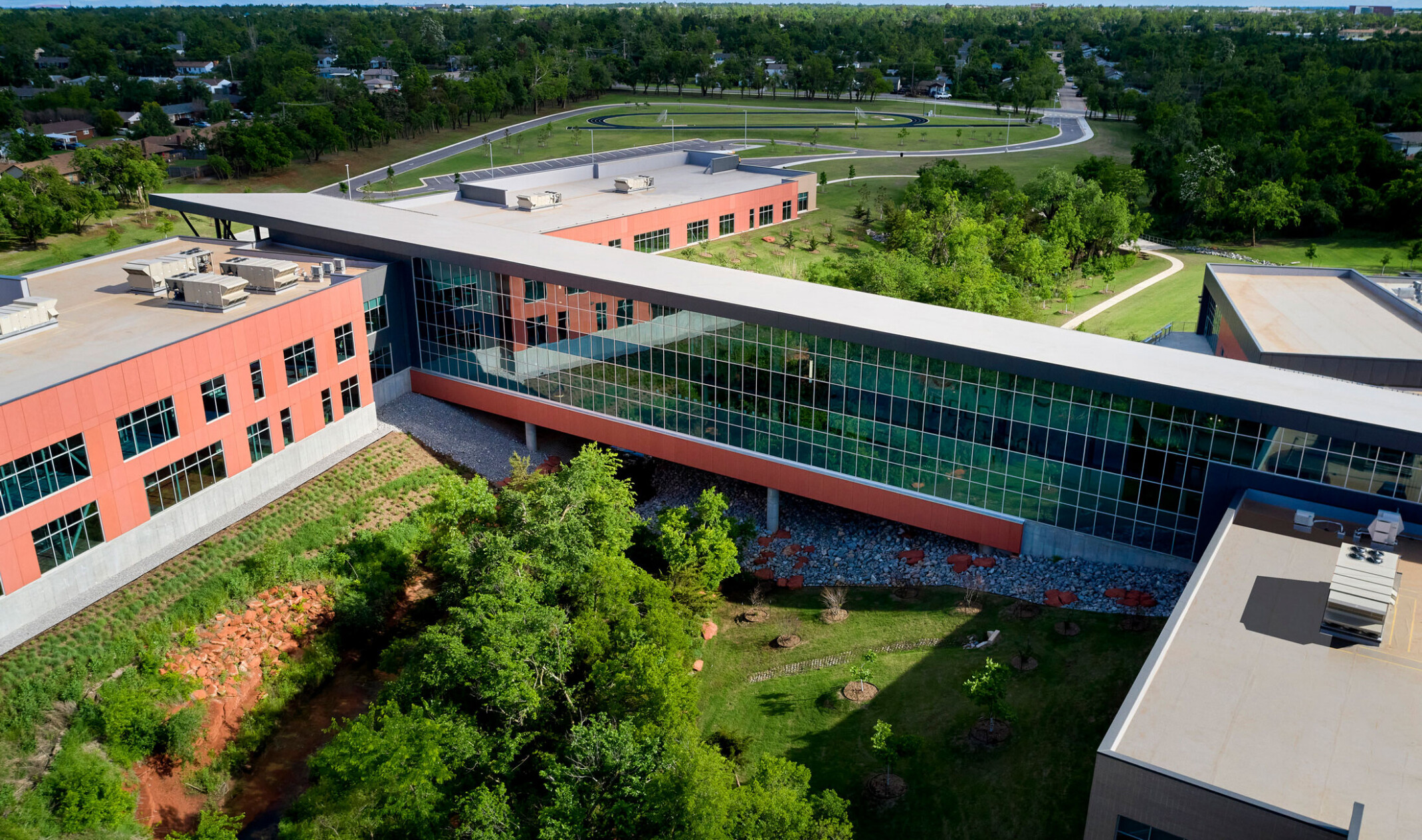
Designing with nature represents an opportunity to unlock the innate curiosity of children to engage them in learning. Students want to explore. They want to play. Their young minds are primed to grow through inquiry into the world around them. James L. Capps Middle School exemplifies how designing with nature can unlock the best parts of hands-on, inquiry driven learning. Working through DLR Group’s BOLD services, Capps Middle School was able to become a catalyst for elevated instruction within Putnam City Public Schools. The flexible environments provide strong visual connections to the outdoors in both classrooms and common spaces. A design that invites students to own their learning space boosts engagement and ultimately improves learning.
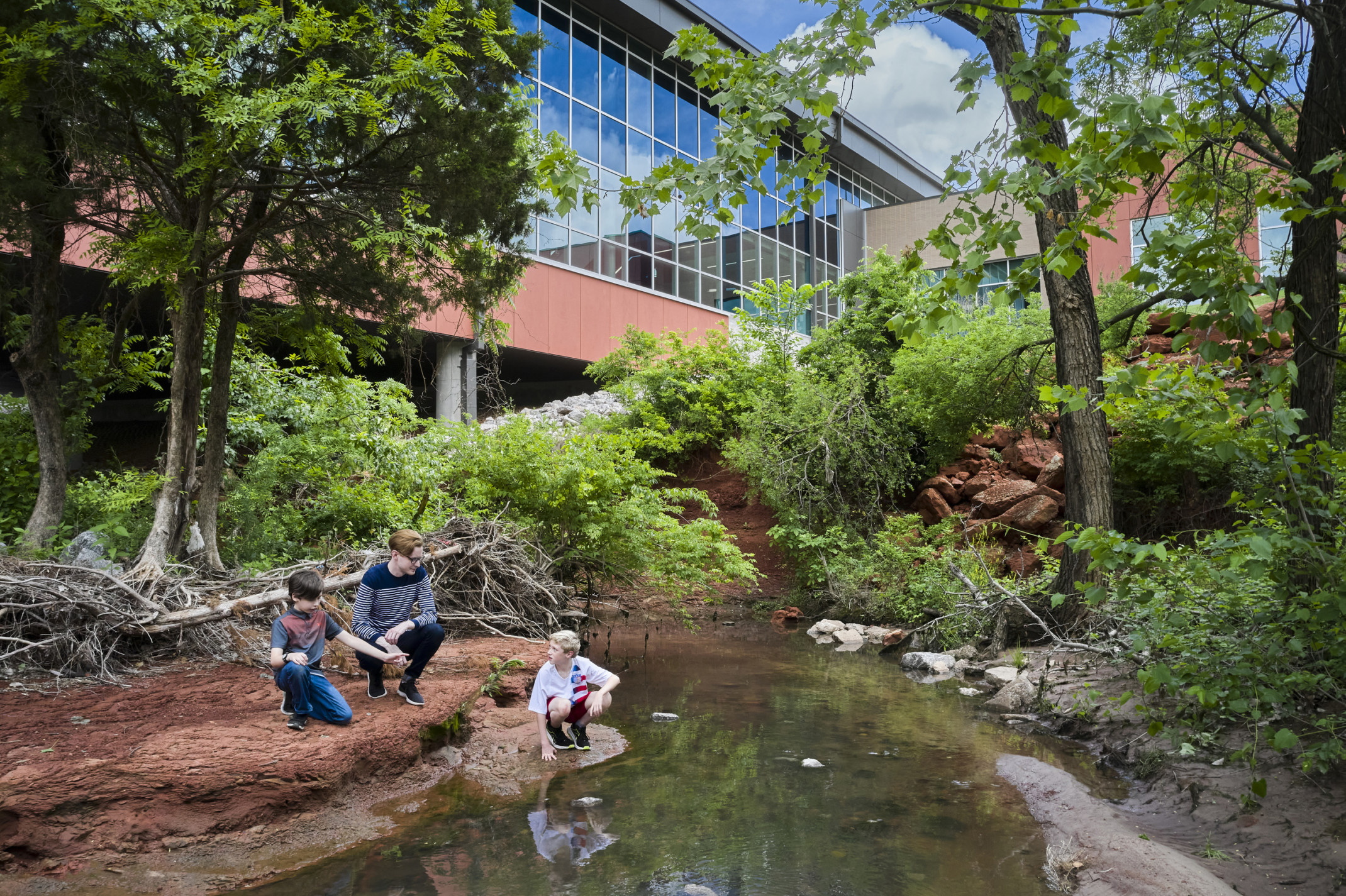
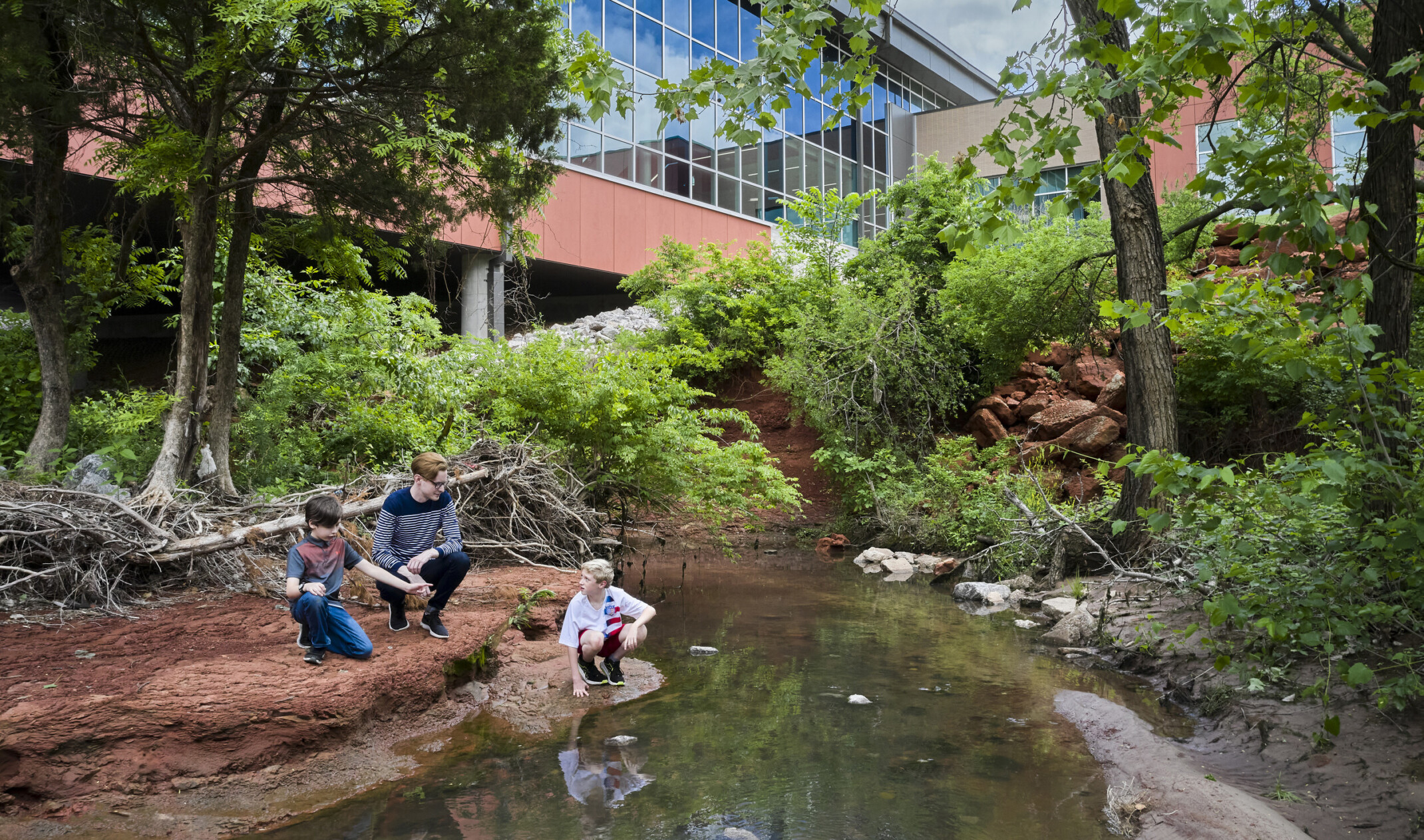
Capps Middle School also engages the surrounding world directly within instruction. One teacher told us, “We can’t build a better science classroom than the creek.” We integrated garage doors to make the outdoor learning opportunities at their creek easily available to teachers and students. We sited the building to preserve as much of the natural environment as possible so students can engage in project-based learning set directly within the natural processes they are studying.
Designing with nature represents a powerful opportunity to positively impact a wide variety of project outcomes: teacher job satisfaction, student learning, and human wellbeing for every person in the school community. Let’s find out how our integrated approach will work for your community, connecting research, design, and the change management necessary to engage nature at every level of project implementation.

Ideas
Recommended Reads