How Middle Eastern Cities Are Being Redesigned Around Everyday Life
Henrique Dias
Intl. Assoc. AIA
Middle East Hospitality Director
Henrique is our firm’s hospitality director in the Middle East.
Email +971 4 568 7742For decades, cities across the Middle East were designed around separation. Residential communities existed in one direction, business districts in another, retail destinations somewhere else, all connected through highways and infrastructure built for speed, expansion, and efficiency. The model reflected the ambitions of its time: rapid growth, scale, and economic acceleration.
Today, a different urban conversation is emerging across the region.
As lifestyles evolve and quality of life expectations shift, cities are increasingly being asked to support something they were not originally designed for: everyday human experience. People want cities that feel connected, walkable, social, flexible, and emotionally engaging. They want environments where work, lifestyle, wellness, retail, hospitality, and community life exist within closer proximity and feel naturally integrated into daily routines.
This transformation is becoming increasingly visible across cities such as Dubai; Riyadh, Saudi Arabia; Jeddah, Saudi Arabia; and Doha, Qatar, where urban strategies are prioritizing walkability, public realm, mixed-use density, and quality of life as central planning principles rather than secondary considerations. National frameworks, such as Saudi Vision 2030 Quality of Life Program and the Dubai 2040 Urban Master Plan, reflect a broader regional ambition to create cities that are not only economically competitive but genuinely livable and human-centered.
What makes this transformation particularly interesting from an architectural perspective is that it is changing not only how cities function, but how architecture itself is approached. The conversation is no longer simply about density or mixed-use. It is about how urban environments feel at the human scale, and that changes everything.
Rethinking Walkability
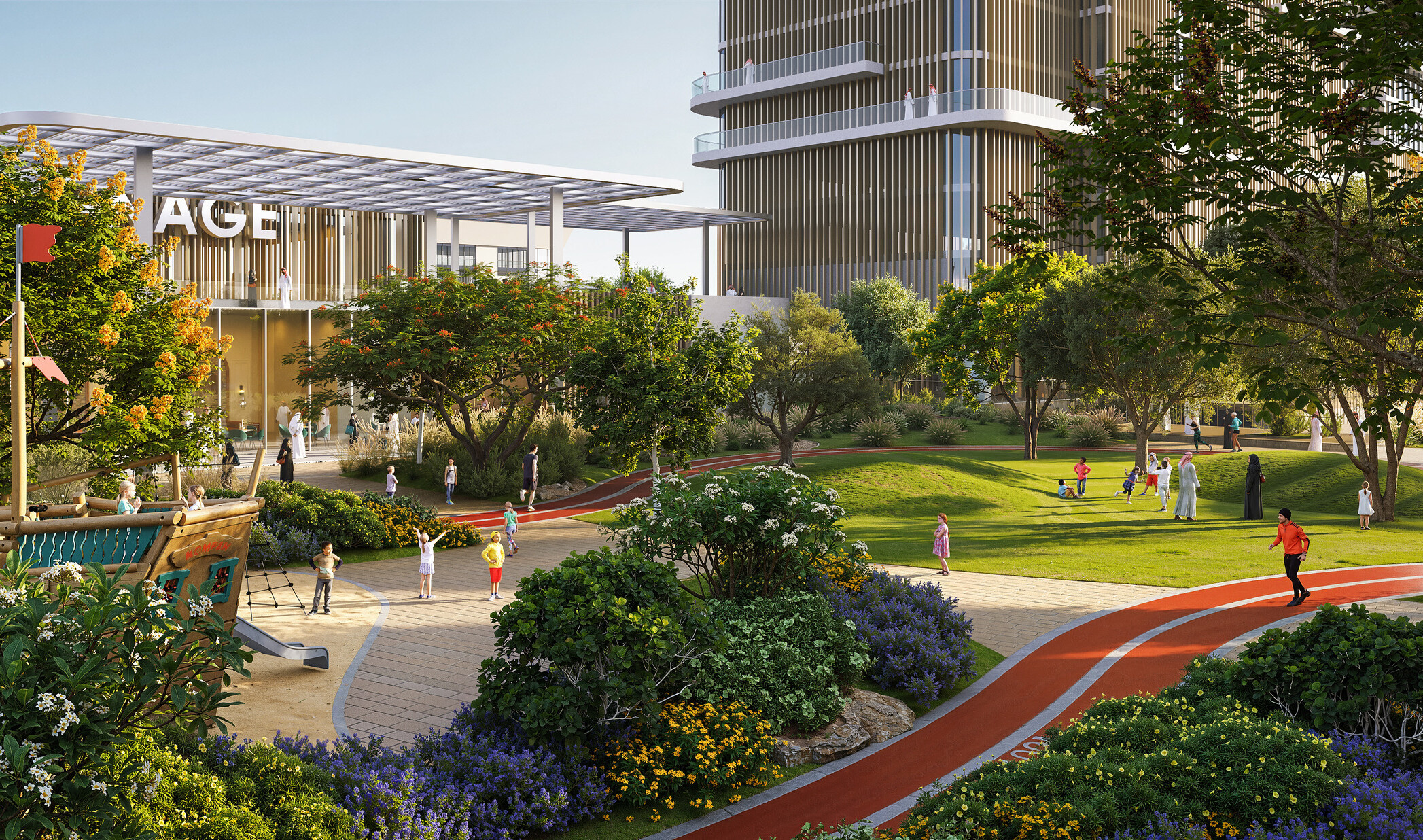
Walkability, for example, is often misunderstood as a mobility strategy. In reality, it is an architectural experience. The success of a walkable city is shaped by how streets feel, how shaded transitions are designed, how active the ground plane becomes, how buildings frame public life, and how comfortably people move between experiences throughout the day. Architecture becomes part of the choreography of movement.
This thinking is increasingly influencing regional urban policy. In Dubai, the Dubai Walk Master Plan proposes more than 6,500 kilometers of connected walkways intended to transform how pedestrians experience the city. Yet the success of these initiatives will depend less on infrastructure itself and more on the quality of spatial experience surrounding it. A shaded, activated, human-scaled street invites movement very differently than a corridor designed purely for circulation efficiency.
This is where architecture and urbanism begin to merge.
The Spaces In Between
The public realm is becoming one of the most important architectural discussions shaping Middle Eastern cities today. In many of the region’s most successful emerging districts, the defining experience is no longer the object building itself, but the life unfolding between buildings. Waterfront promenades in Jeddah, Saudi Arabia, pedestrian-oriented cultural districts in Doha, Qatar, and expanded green and recreational networks across Dubai all reflect a broader shift toward cities designed around interaction, movement, and collective experience.
What is changing is not simply urban planning policy. It is the role architecture plays within public life. For years, many developments across the region confused density with urbanity. They are not the same thing.
Buildings are increasingly being asked to contribute to activation rather than stand independently from it. Ground floors are becoming more permeable and socially active. Podiums are evolving into elevated public landscapes rather than static bases. The object-building mentality is beginning to lose relevance. Increasingly, what matters is not only the tower itself, but what it gives back to the street.
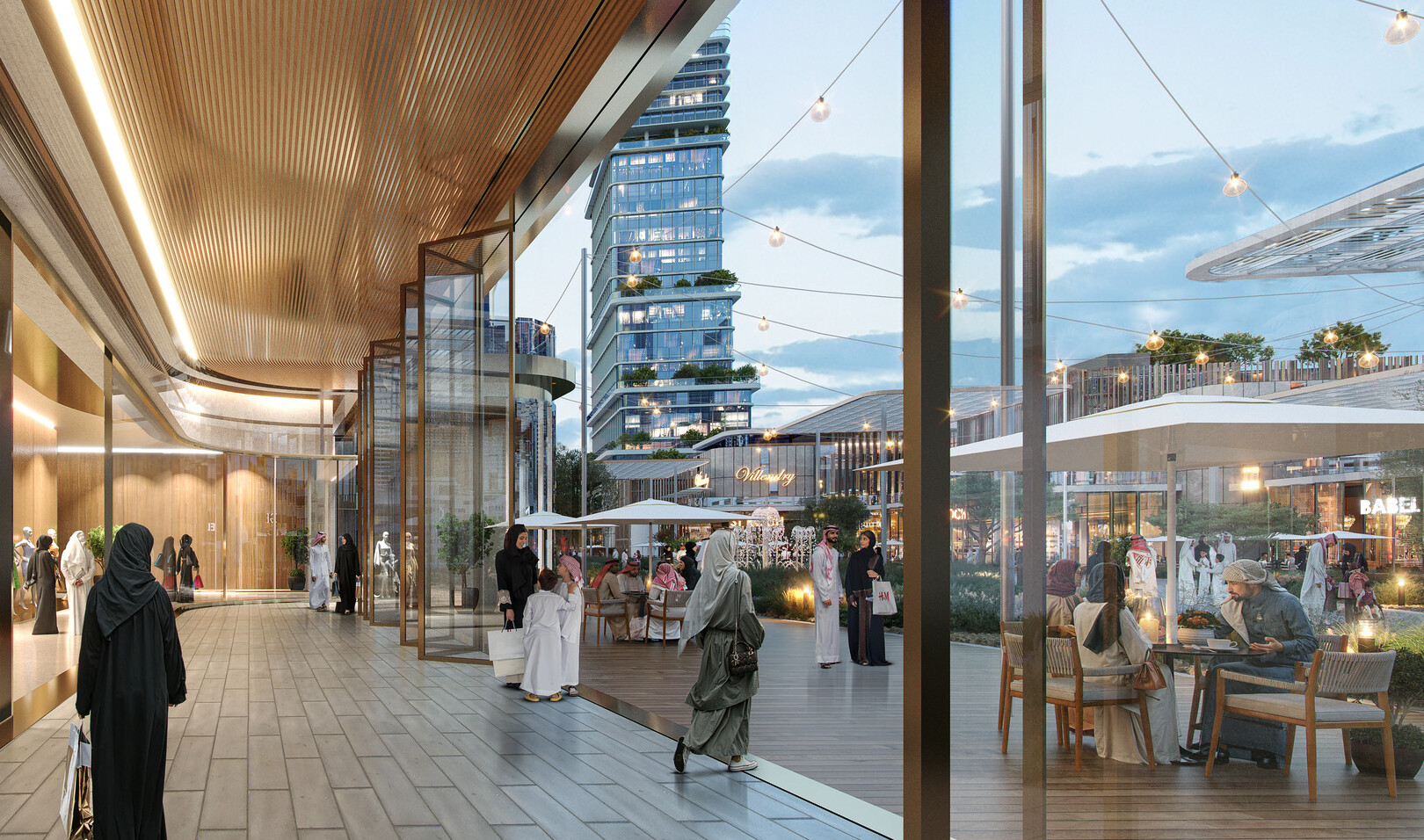
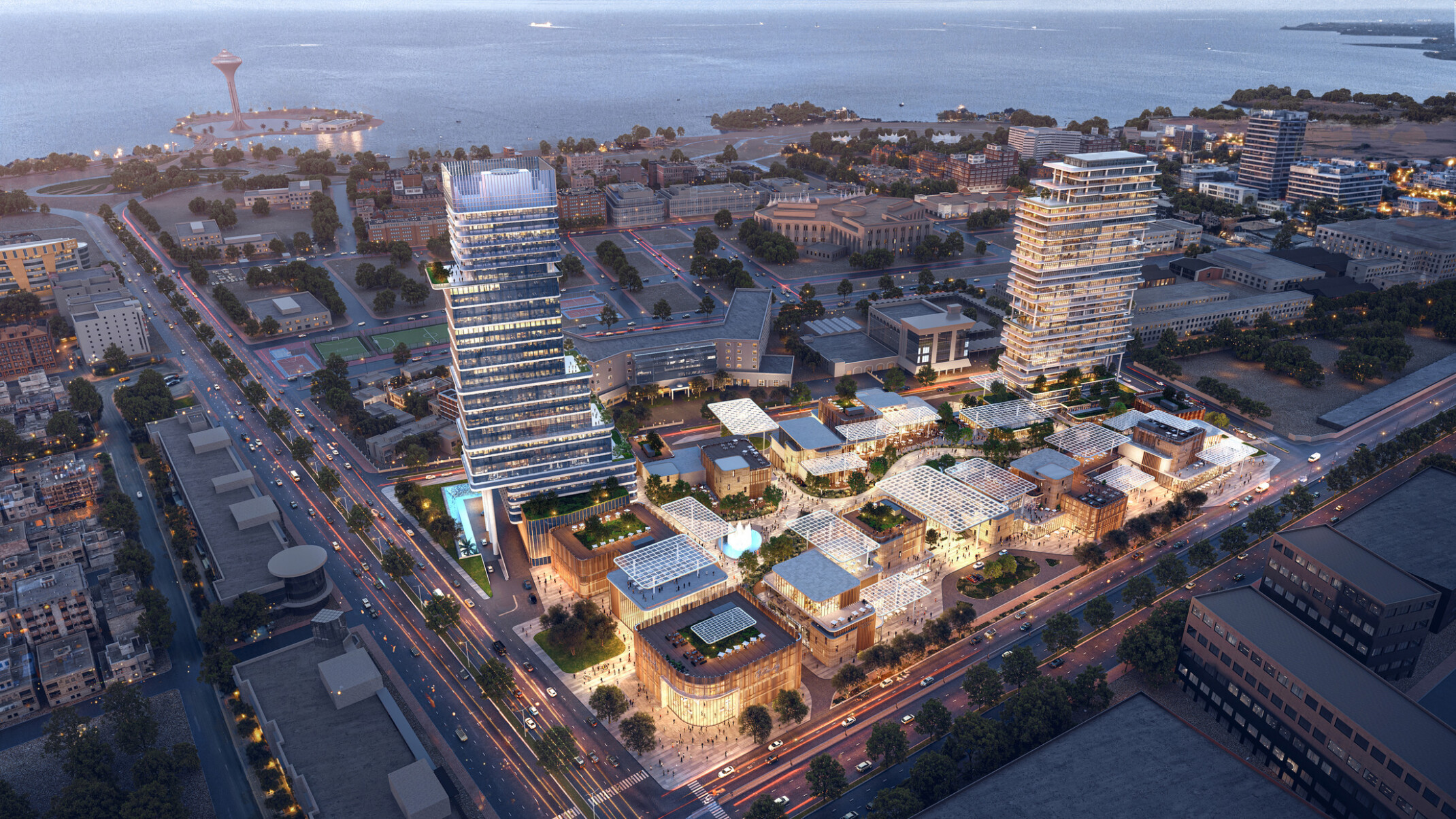
Projects such asSumou Center reflect aspects of this evolution. Rather than approaching mixed-use as a simple stacking of programs, the project explores how architecture, landscape, movement, and the public realm can operate as part of a connected spatial system. Retail, office, residential, and collective spaces are organized through layered public experiences, shaded pedestrian movement, activated edges, and a hierarchy of gathering environments designed to encourage interaction throughout the day.
The focus shifts from simply accommodating density to shaping how density is experienced. This distinction is becoming increasingly important across the region.
Redefining Urban Density
Density alone does not create urban energy. Without a carefully designed public realm, intuitive movement, environmental comfort, and opportunities for interaction, density can quickly become overwhelming and disconnected. Some of the world’s most memorable urban environments succeed not because they are dense, but because they make density feel human.
The Middle East is uniquely positioned within this global urban transformation because many cities across the region still have the ability to rethink urban life at scale. Unlike older global cities constrained by inherited infrastructure and fixed urban patterns, these cities have an opportunity to shape new forms of urbanism that respond more directly to climate, culture, lifestyle, and the expectations of future generations.
This is the real opportunity: not simply to build larger cities, but to build cities that people genuinely want to inhabit. Now, architects are being challenged to ask not only how buildings look, but how cities feel.
Future urban environments across the region will increasingly be defined by the quality of movement, public life, social interaction, environmental comfort, and everyday experience they create. Architecture will play a critical role in shaping those experiences – not only through individual buildings, but through the relationships between buildings, streets, landscape, and people.
Ultimately, the cities people remember most are rarely the ones designed only for efficiency or spectacle. They are the ones designed around life.
Ideas
Recommended Reads