
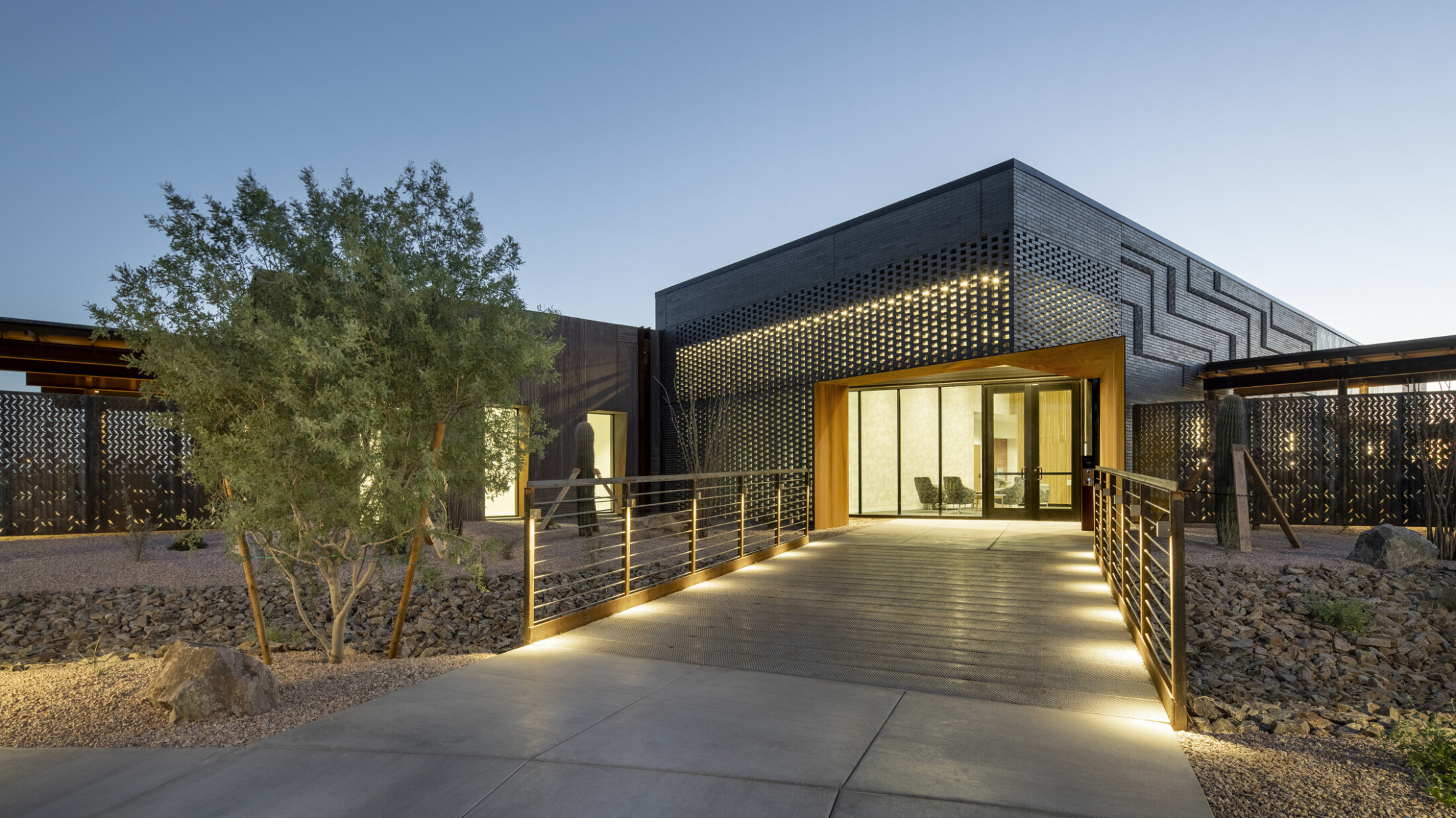
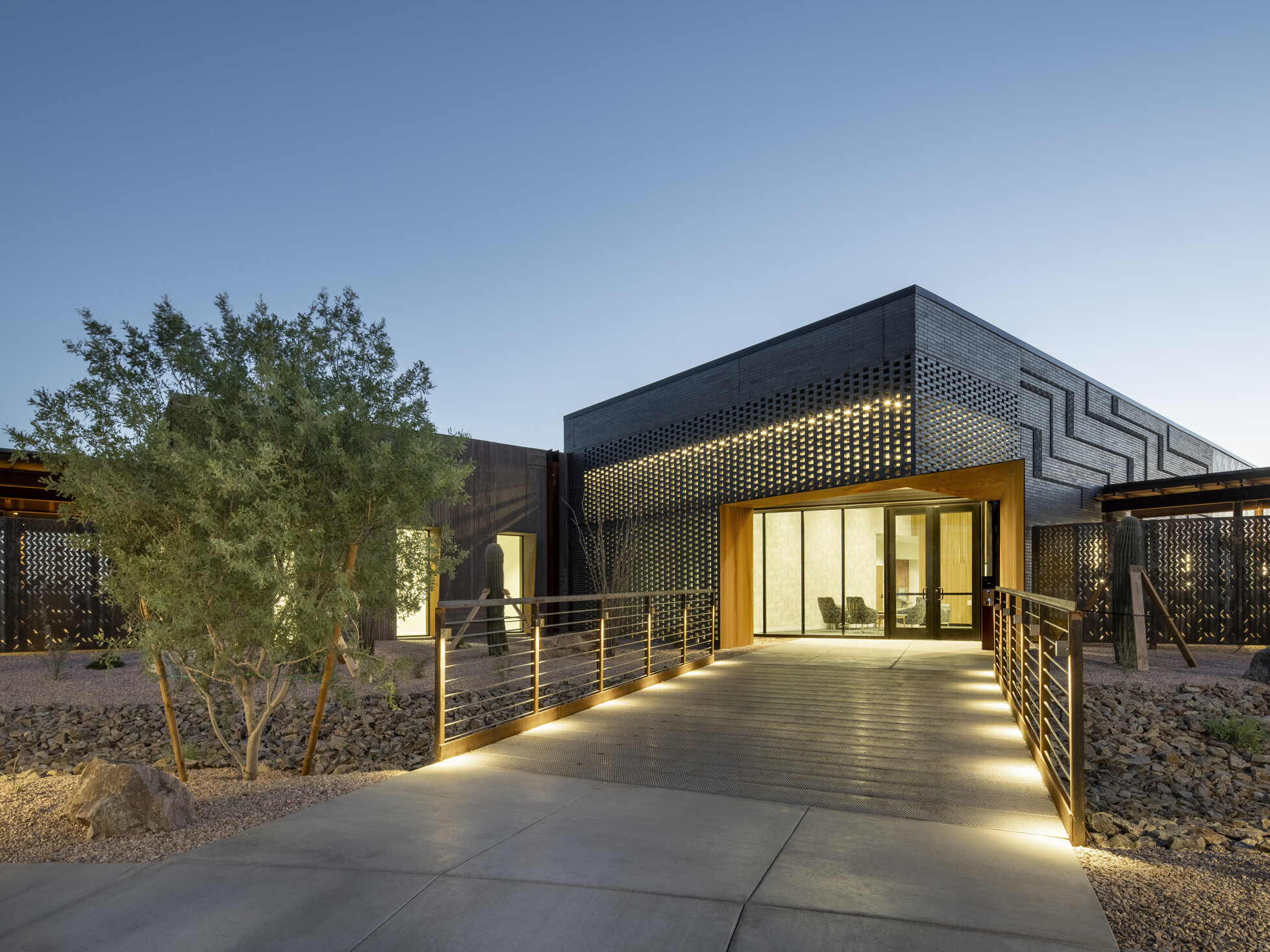
- Salt River Pima-Maricopa Indian Community Journey to Recovery Residential Treatment Campus

To activate the built environment's capacity as a supportive element of healing, we map architecture and interior design practices to the five established Trauma-Informed Care principles.
A design strategy called prospect and refuge helps support a felt sense of safety. Visual clarity is key, such as clear sightlines – visibility to exits – within comfortable seating or nooks. Predictable layouts, symmetry, and non-threatening spatial cues reduce hypervigilance. Blues, greens, purples – colors found abundantly in nature – can have a calming effect.
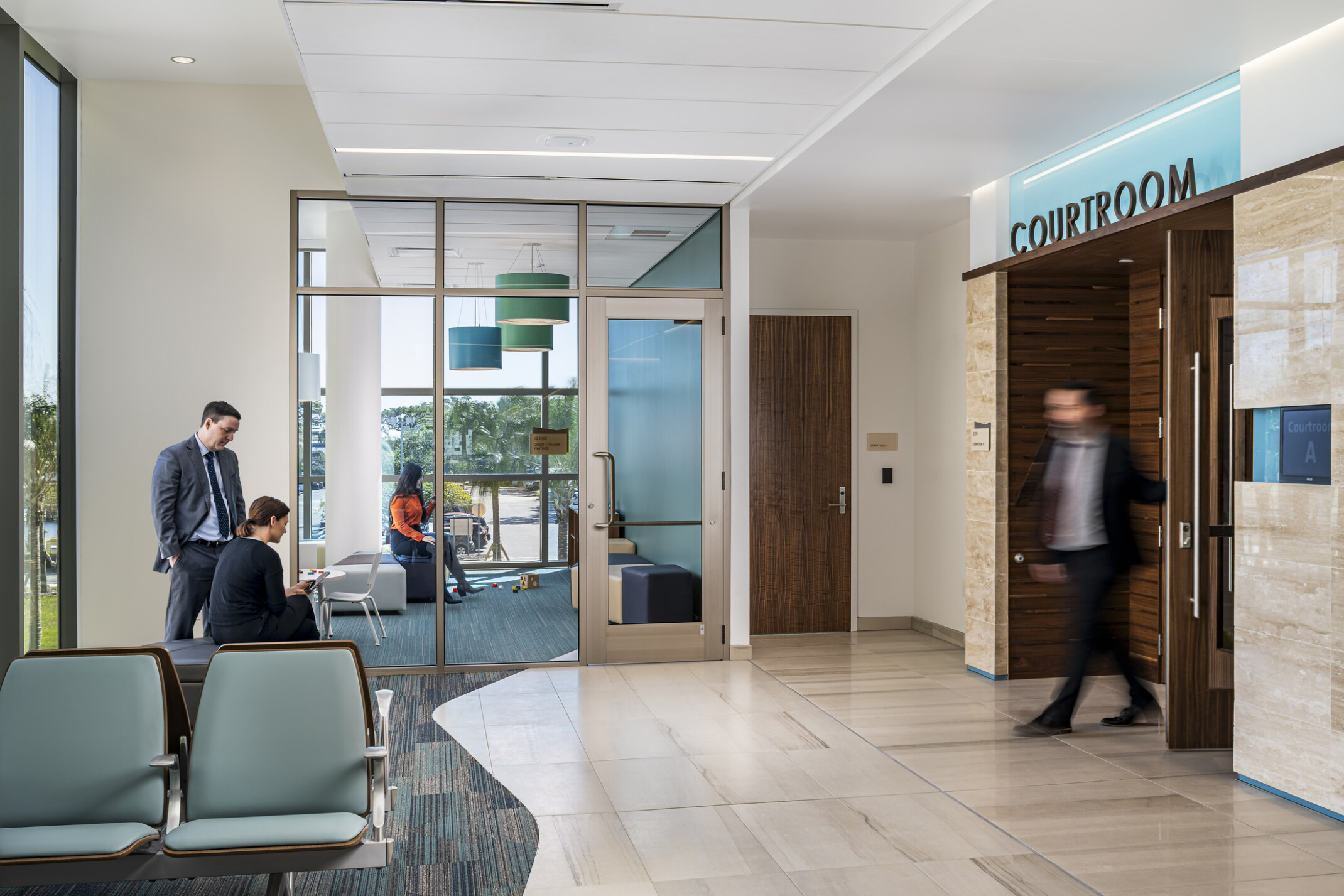
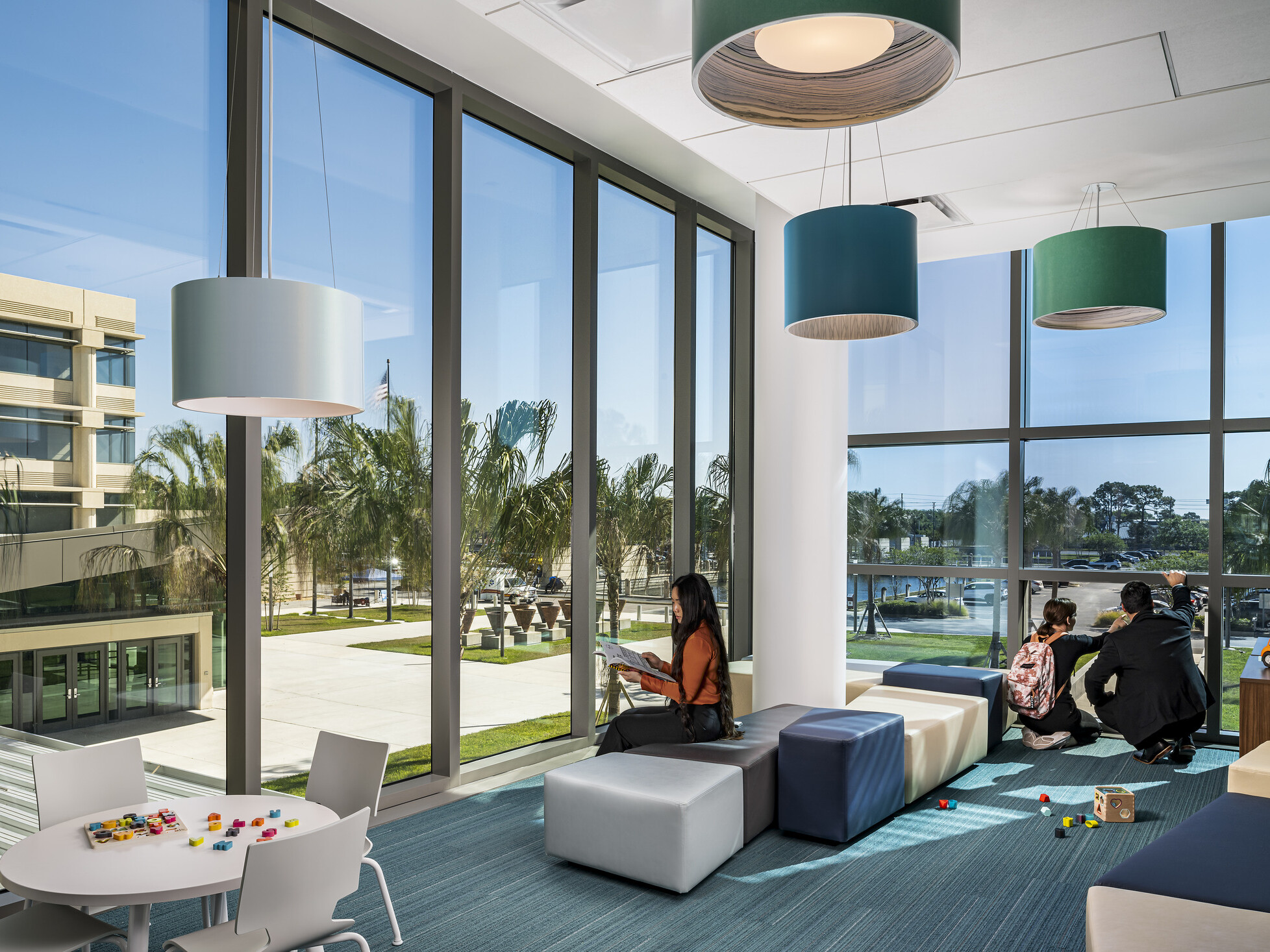
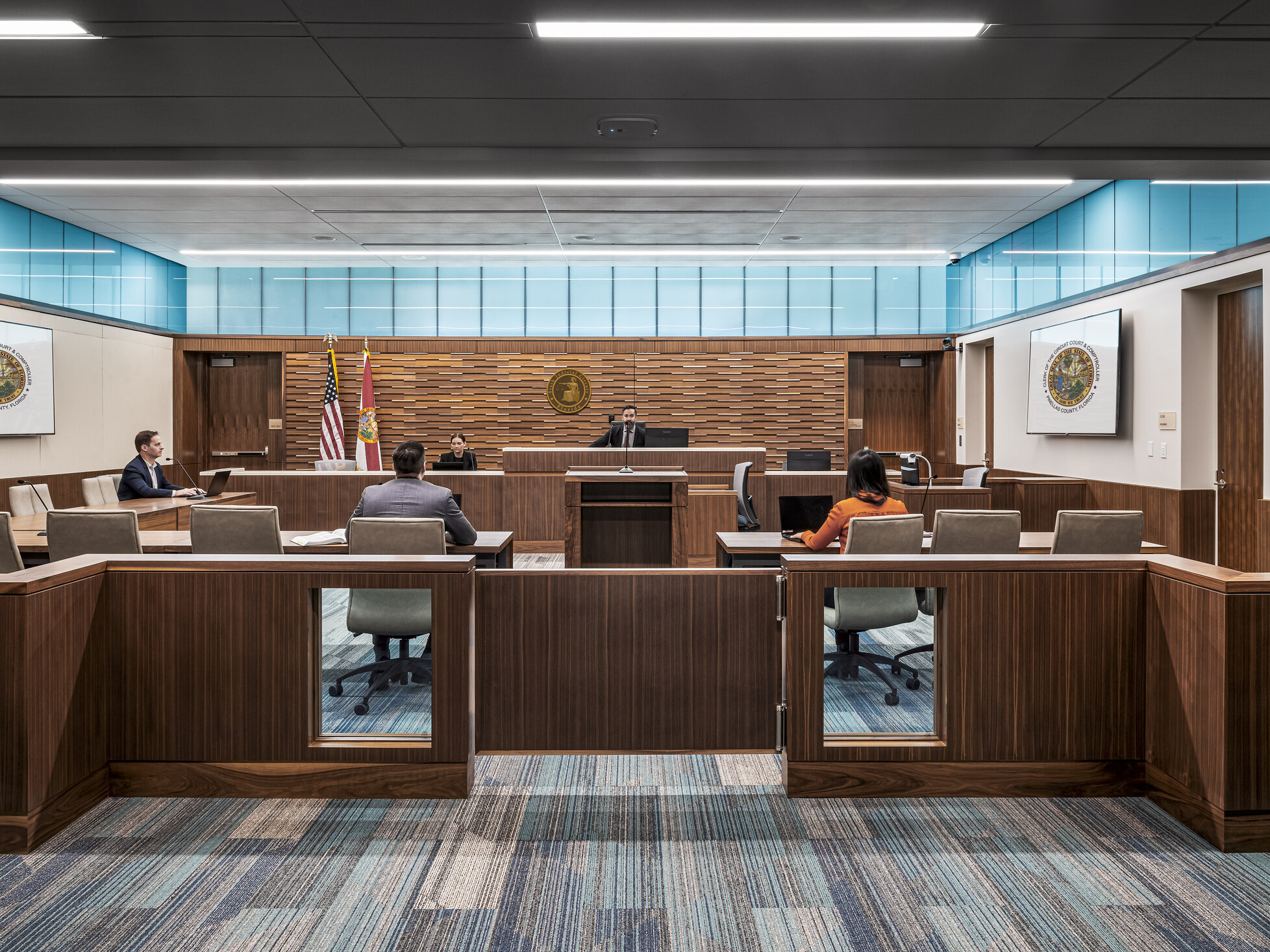
The design of Pinellas County Family Courts in Clearwater, FL, understands the complex emotions in a judicial setting involving children. Extensive daylighting and views connect to nature, and a blue-green palette with soft furnishings provide a calming, familiar coastal feeling.
Agency over one’s body, movement, and sensory input helps counter feelings of powerlessness often associated with trauma. A design strategy called nested layers creates variation so people can choose their level of interaction and sensory experience. This can be as simple as varied or reconfigurable seating types, or extend into user environmental controls of lighting, temperature, and acoustics.
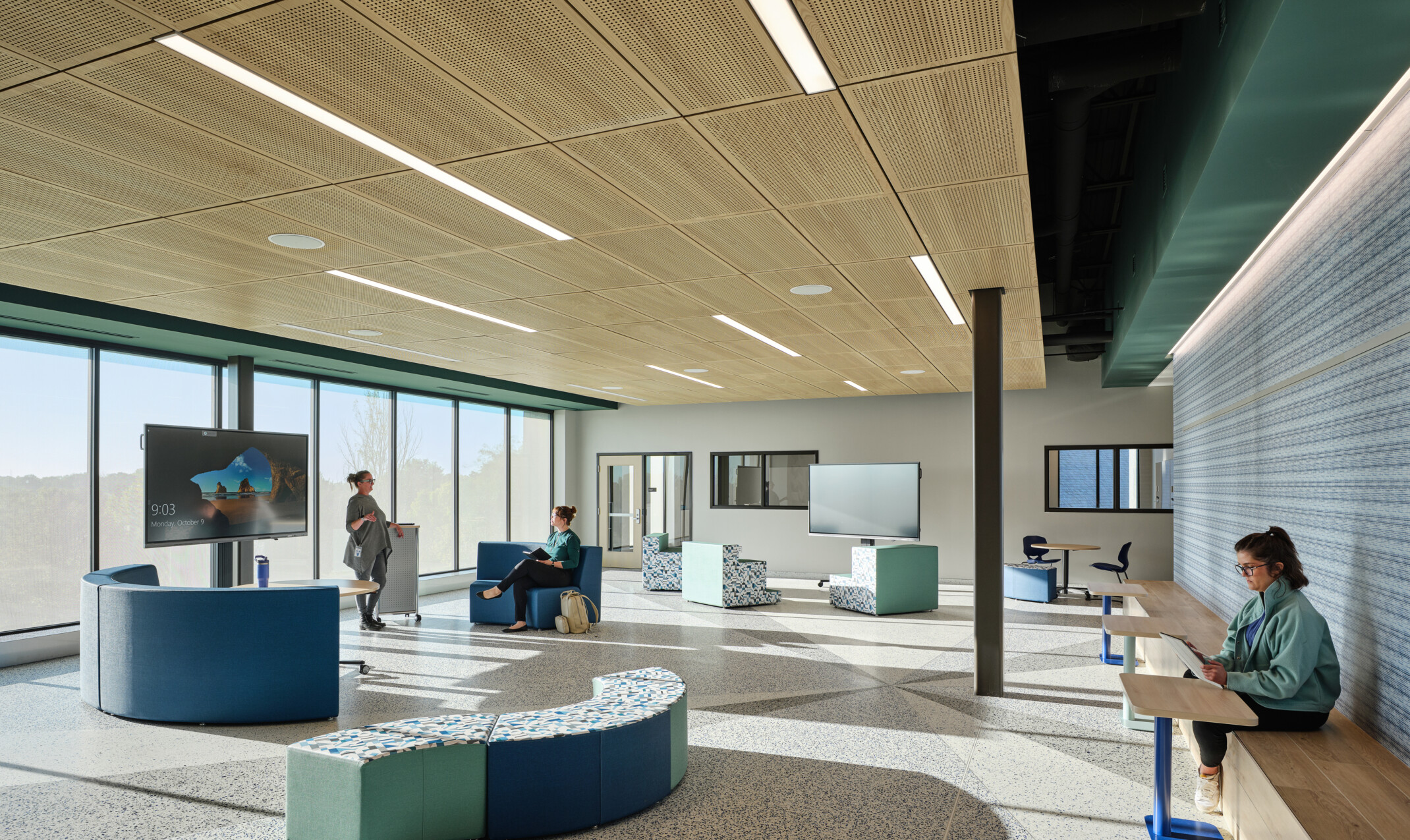
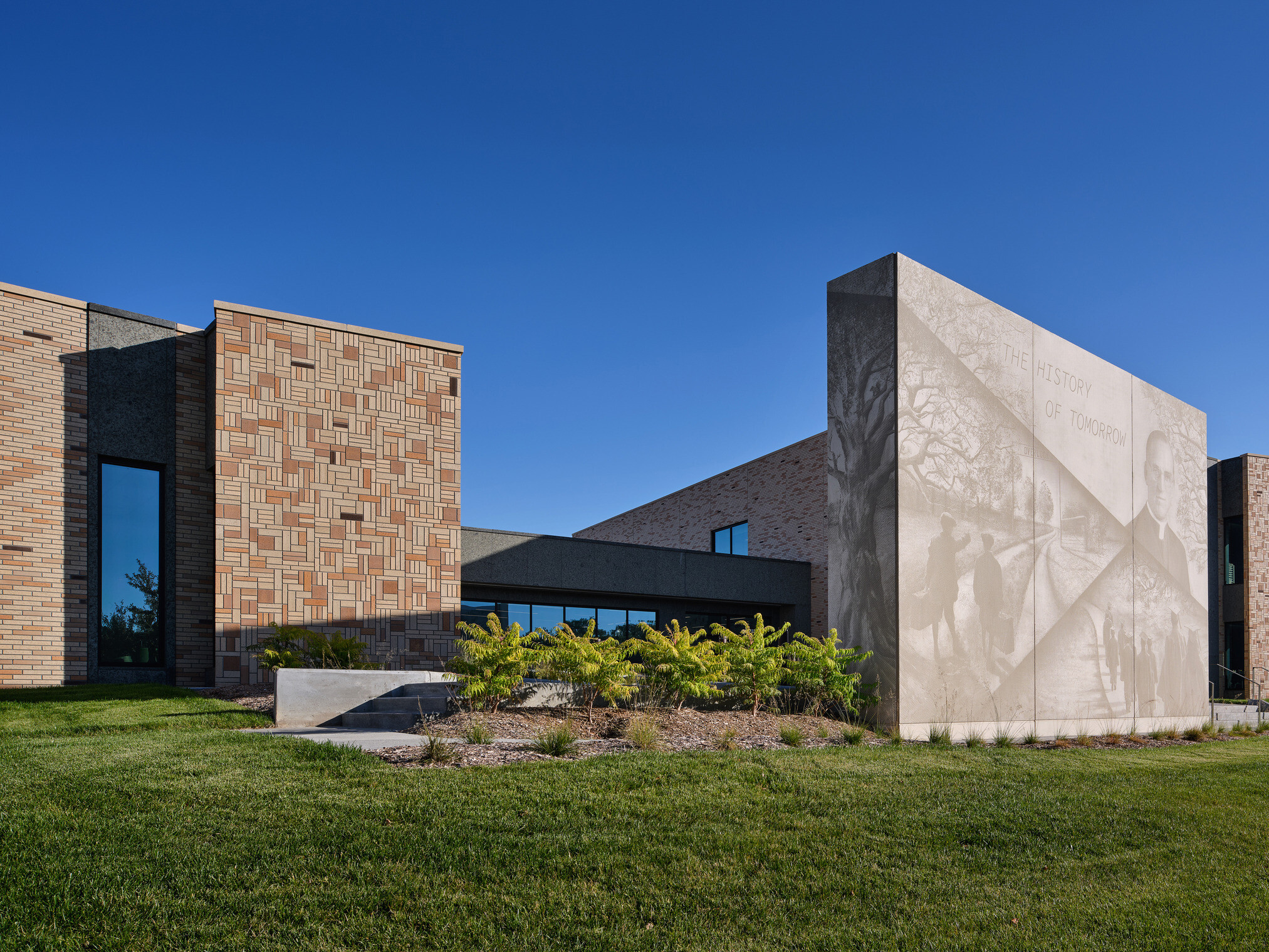
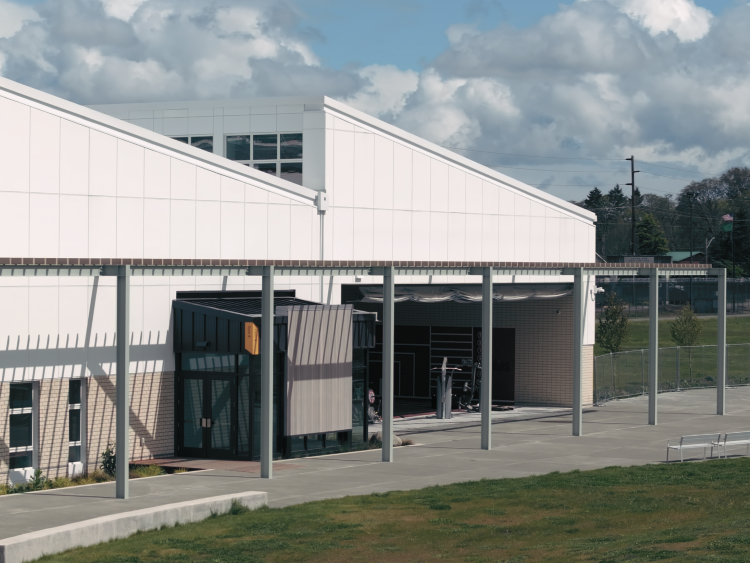
At Boys Town Education Center in Omaha, NE, thermal comfort through the individual control of heating and cooling, ample seating choices, and student-led artwork all contribute to the positive learning experience.
Environments should support independence, self-expression, and everyday decision-making. A design strategy called identity anchors encourages autonomy and instills pride. Personalization opportunities offer self expression, while murals or art installations can connect via a mosaic of familiar imagery or symbology. Clear signage and wayfinding provide opportunities for predictability and self-reliance.
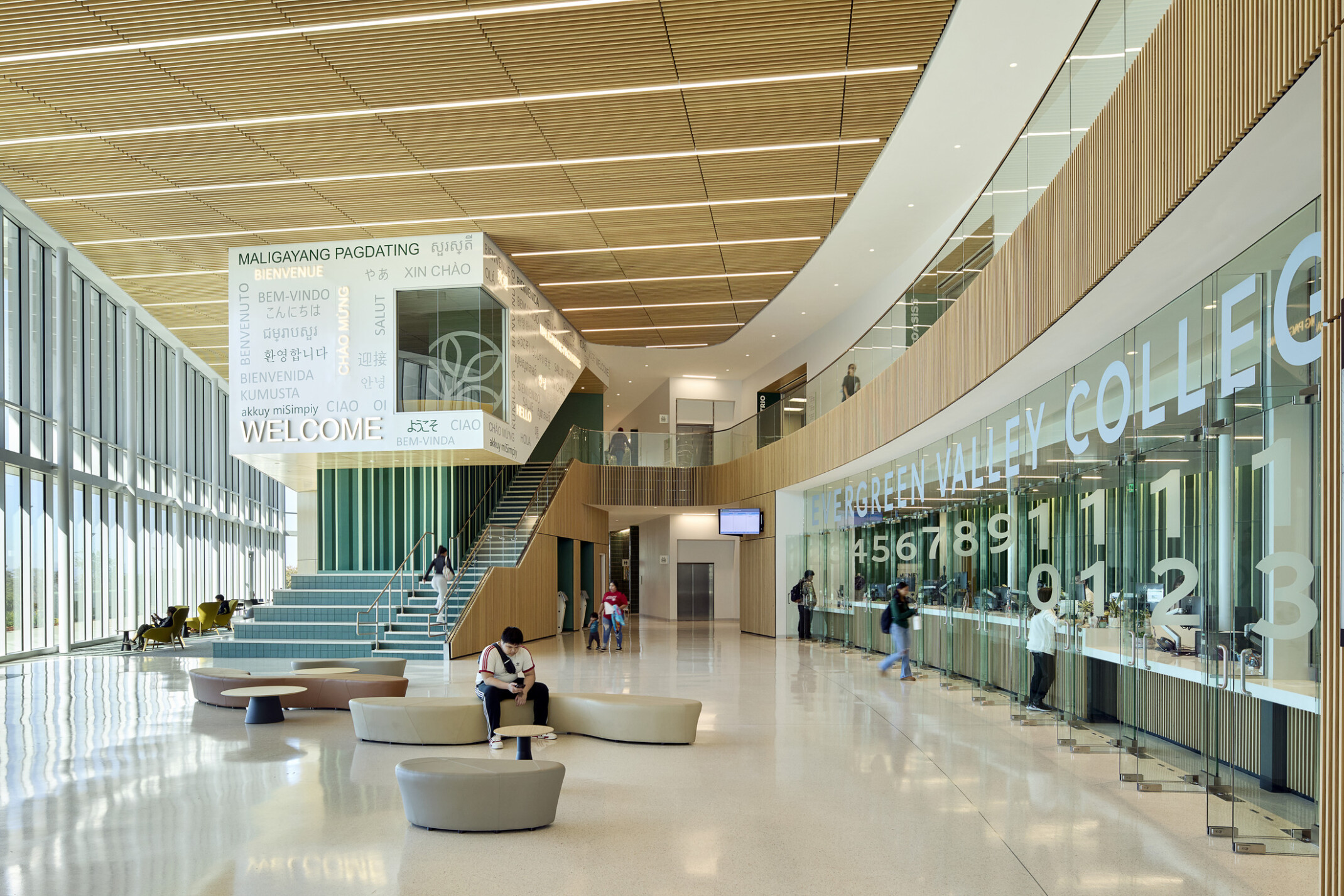
Inclusive wayfinding is a priority at the Student Services Complex at Evergreen Valley College in San Jose. Visual cues, color-coded side walls at department entrances, and a multilingual “Welcome Wall,” create an easy-to-navigate environment regardless of English-reading skills.
When spaces are experienced as expected, defensiveness is reduced. Function patterns, like the way doors open or lights work, should remain consistent. Selecting and arranging furniture to feel communicative rather than authoritative can contribute to relaxation and positive engagement.
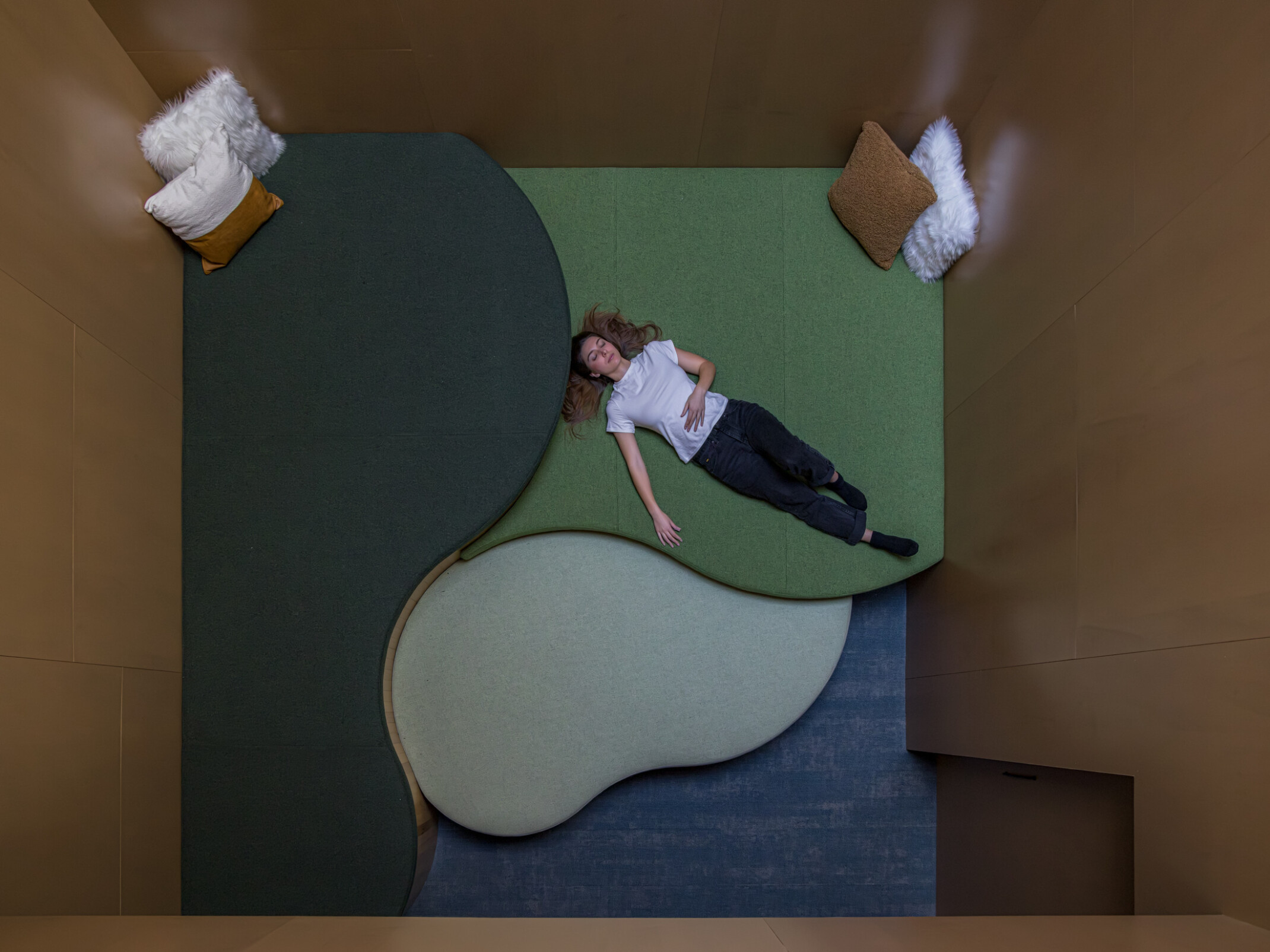
Trauma reminders exist even in settings most people experience as benign, like workplaces. Spaces for self-regulation, like this confidential technology company's private escape pod, reassure that all emotions have a place.
In design, meaningful solutions begin by collaborating with and listening deeply to the unique gender, culture, and socio-economic needs of the people who will use the space.
Mutual support can be a lifeline when it isn't forced. Central commons or anchor spaces with visual connections between spaces make community visible and available, by choice. The impact is passive belonging.
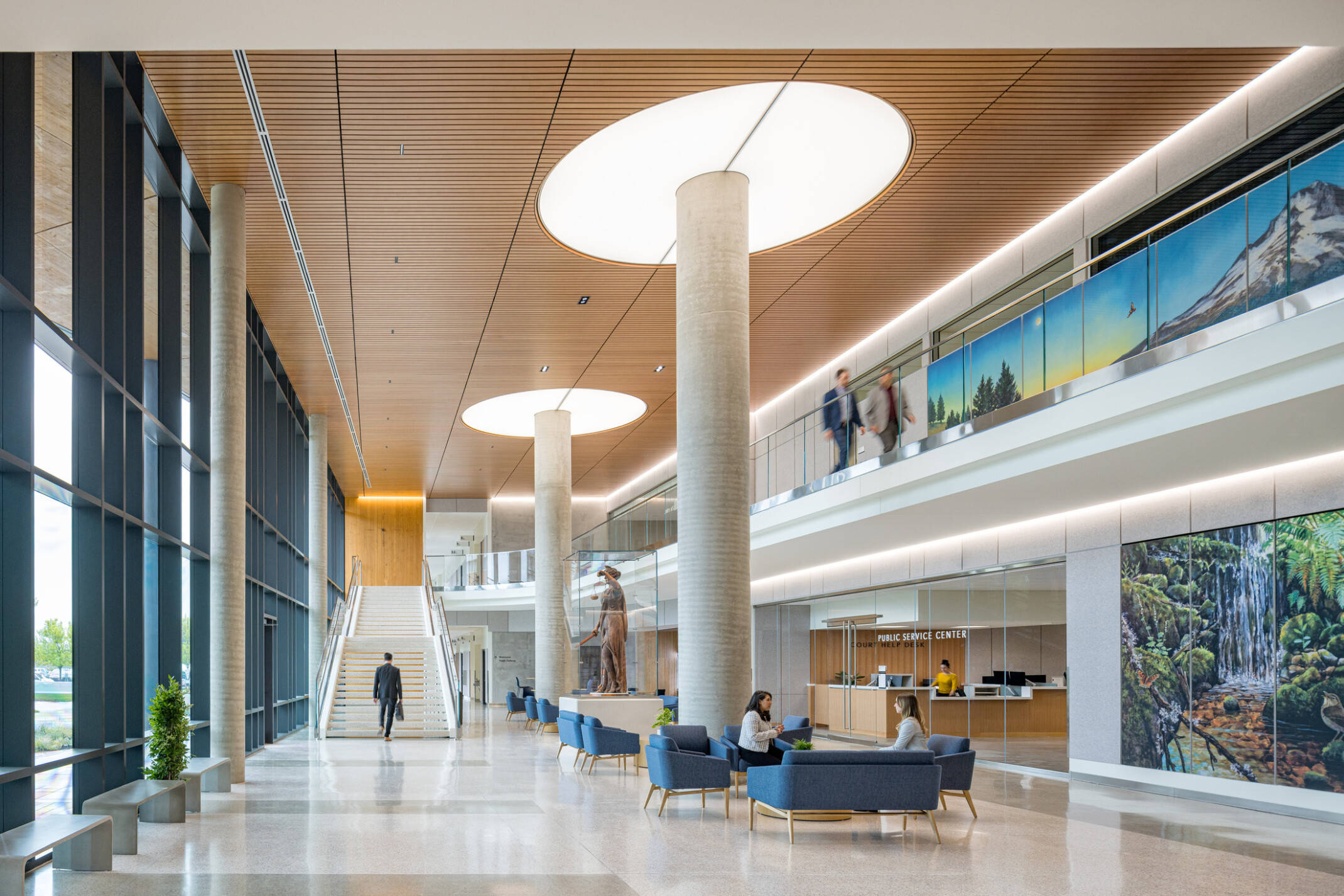
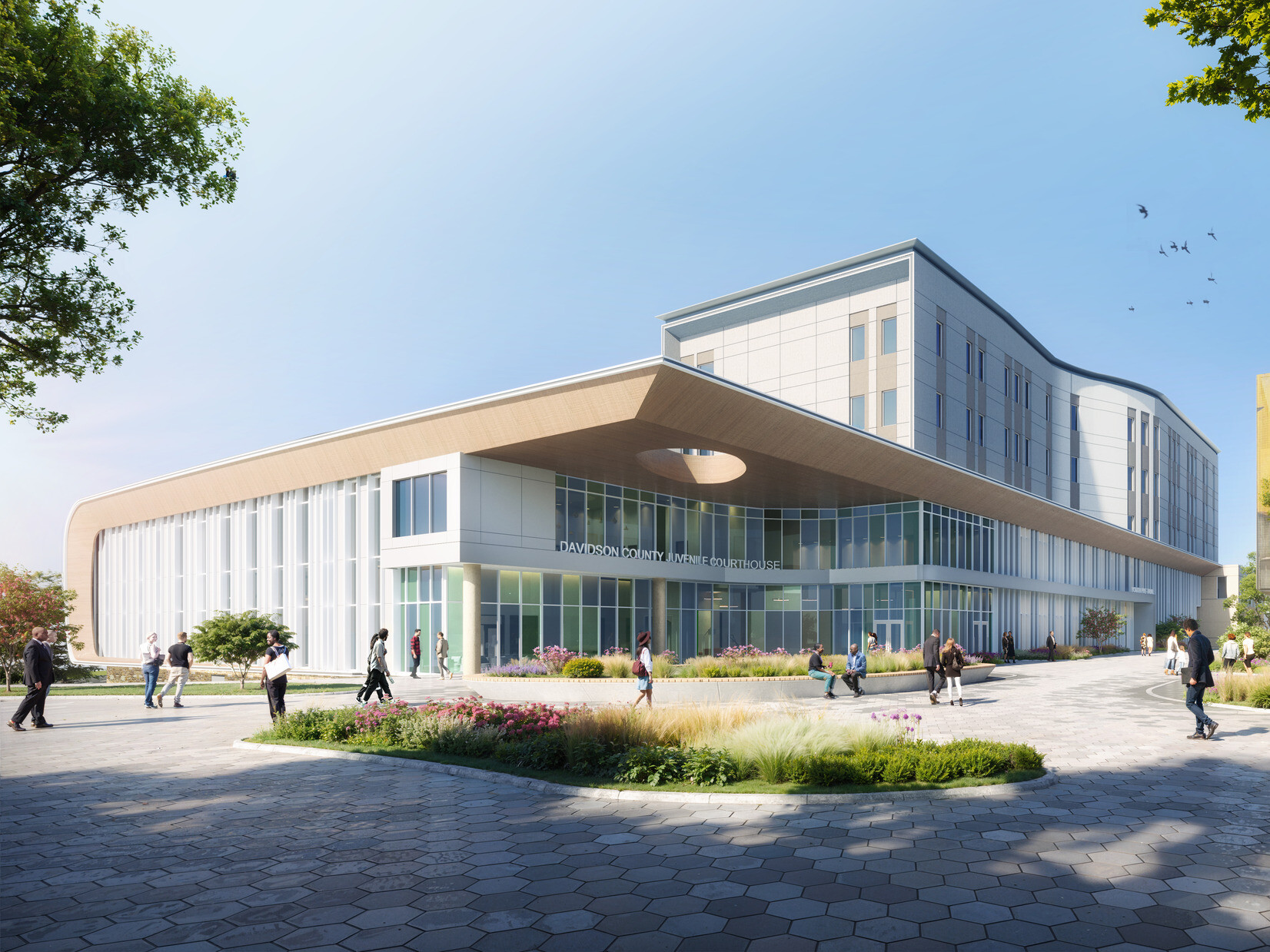
The central atrium at Clackamas County Courthouse is visible from every public circulation zone and serves as an anchor point and shared visual reference.


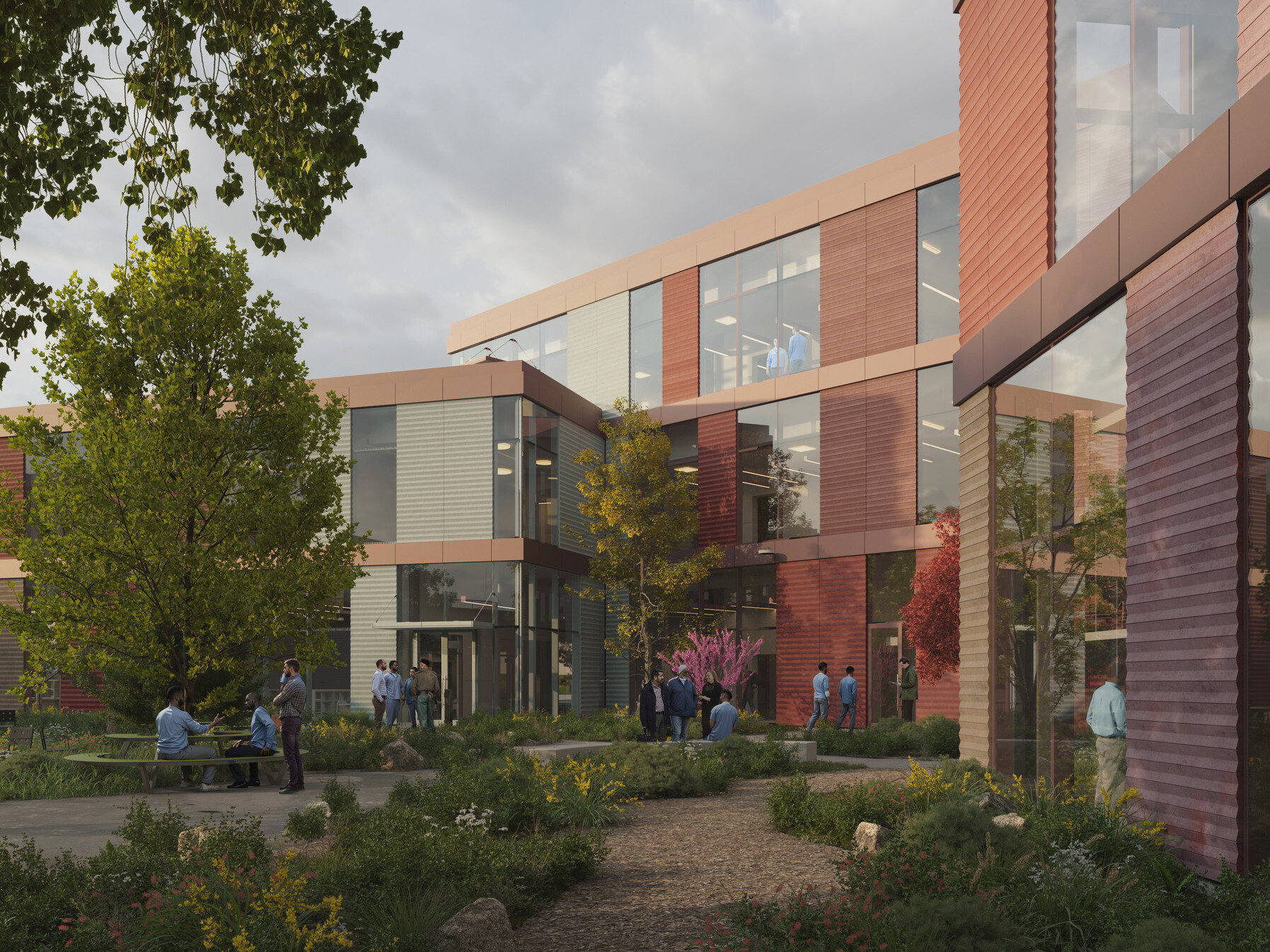
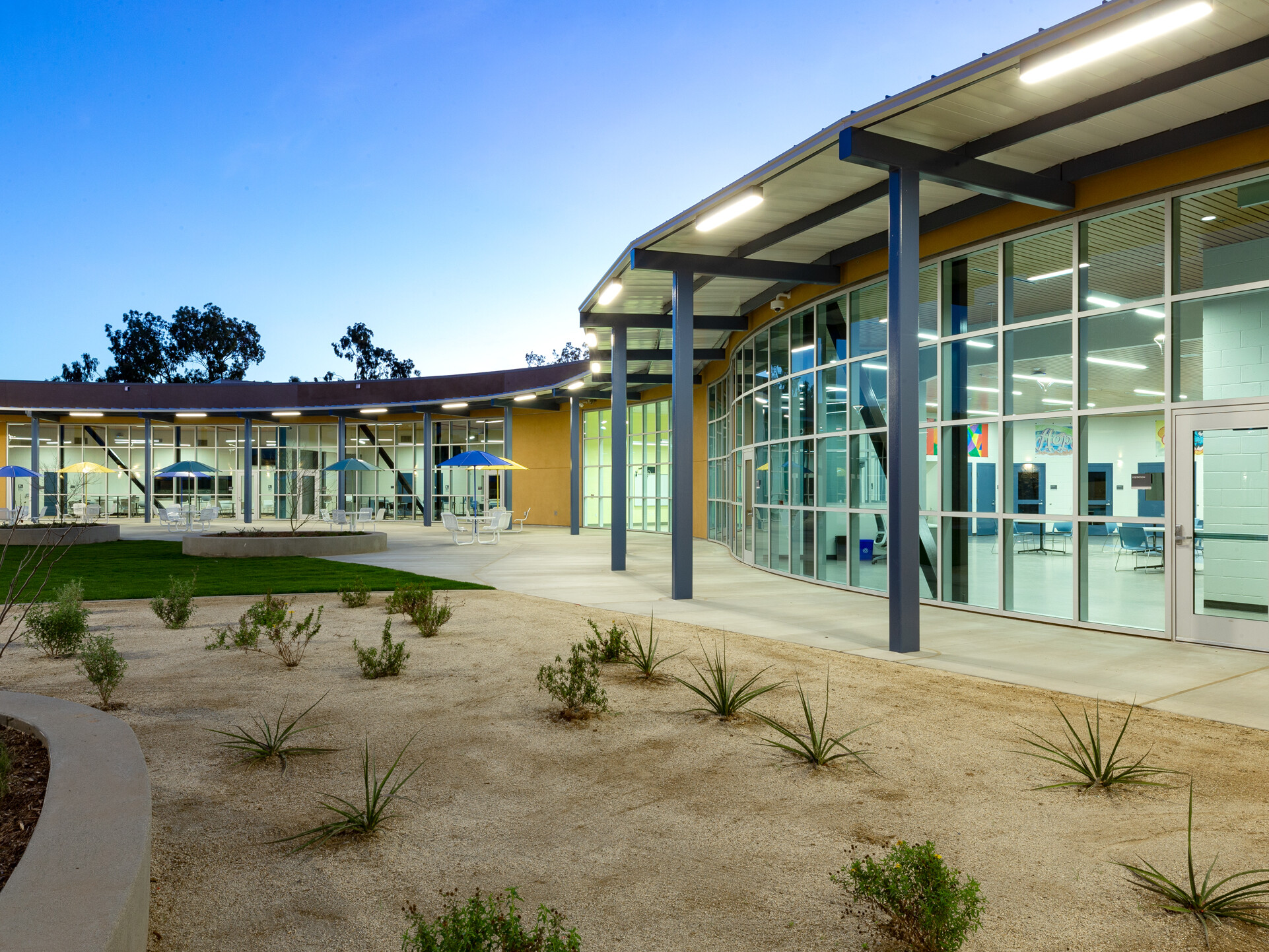

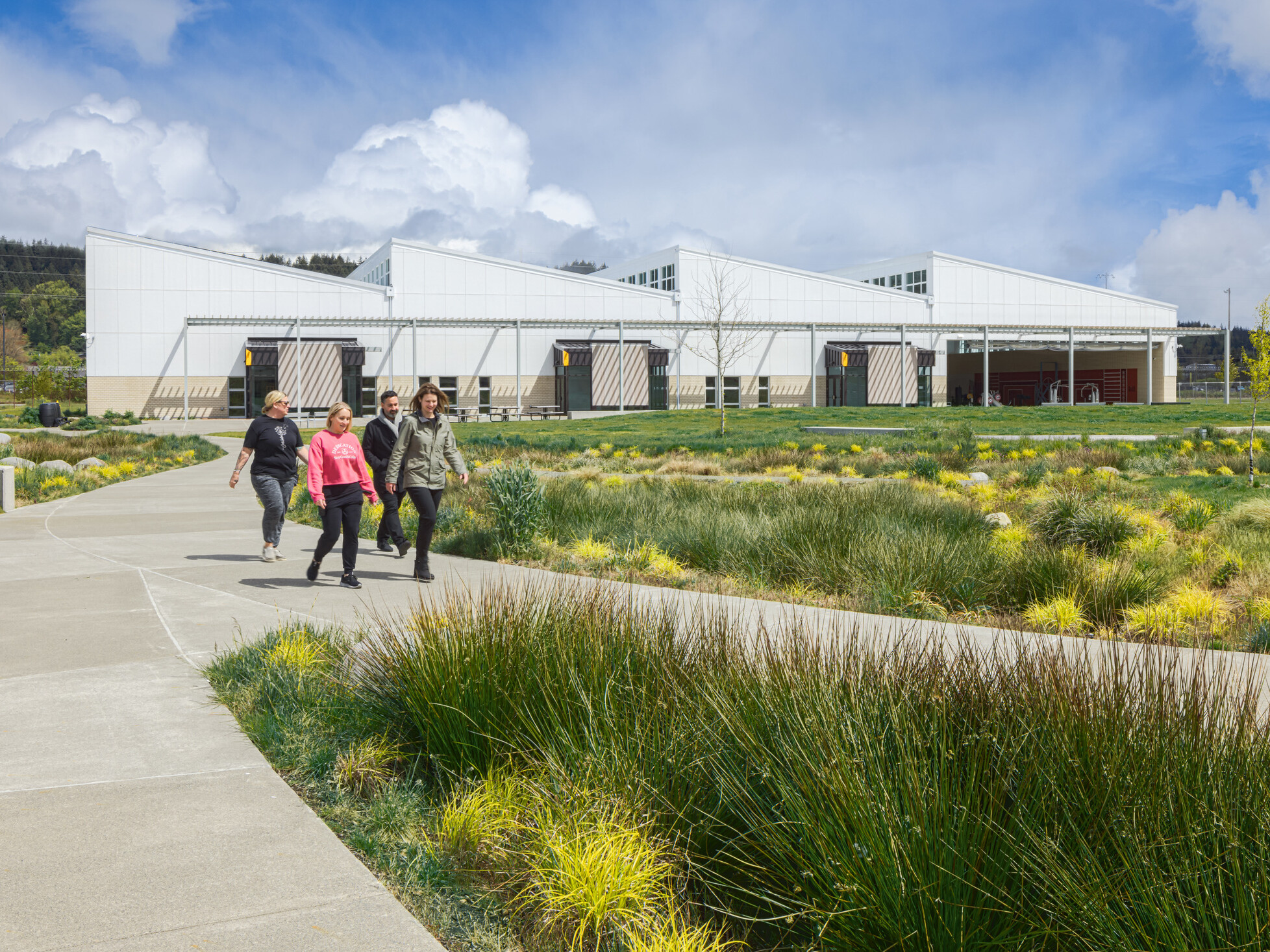
DLR Group is actively developing and sharing trauma-informed design practices by hosting symposiums, funding research grants, and publishing reference materials. Trauma-informed design belongs everywhere: hospitals and shelters, schools, workplaces, libraries, and civic buildings.
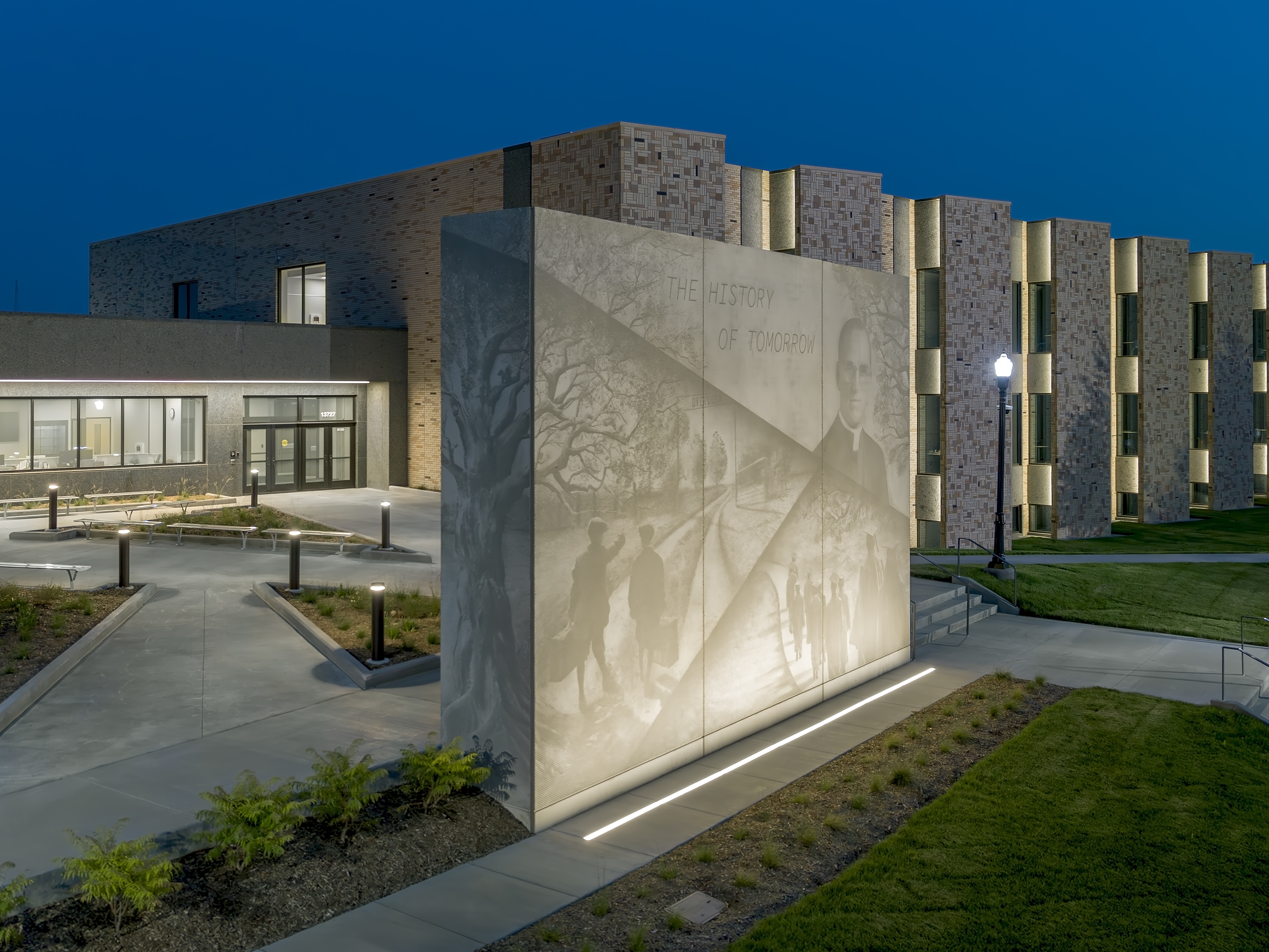
Our sector, discipline, and executive leaders are dispersed to mentor the next generation of employee-owners, counsel clients, and share their design voice in their local communities.
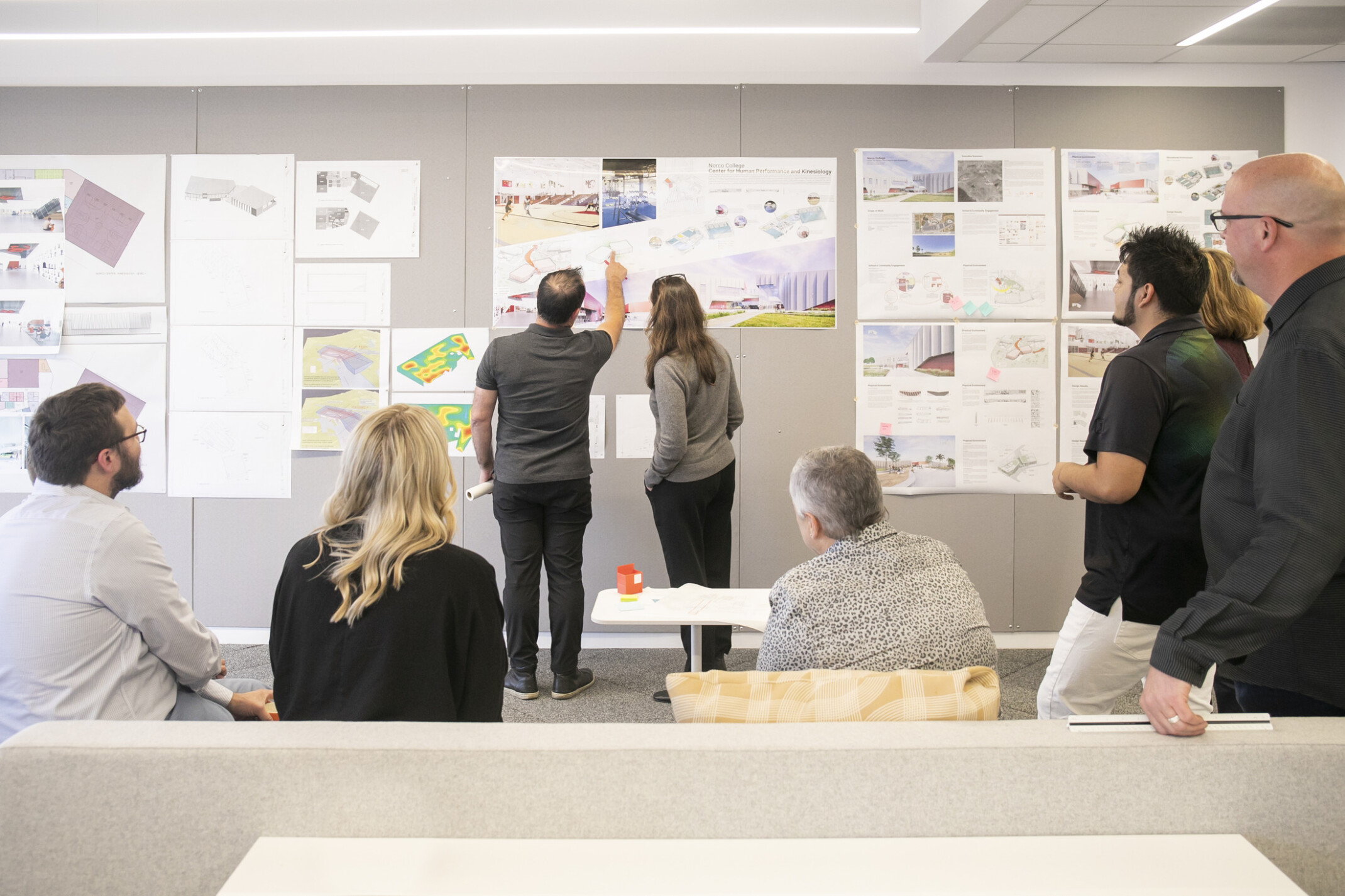
The concept of ownership, its importance to our culture, and the immense benefits are rather simple. Driven by opportunity, we make decisions that impact not only our success but also that of our clients and partners.